
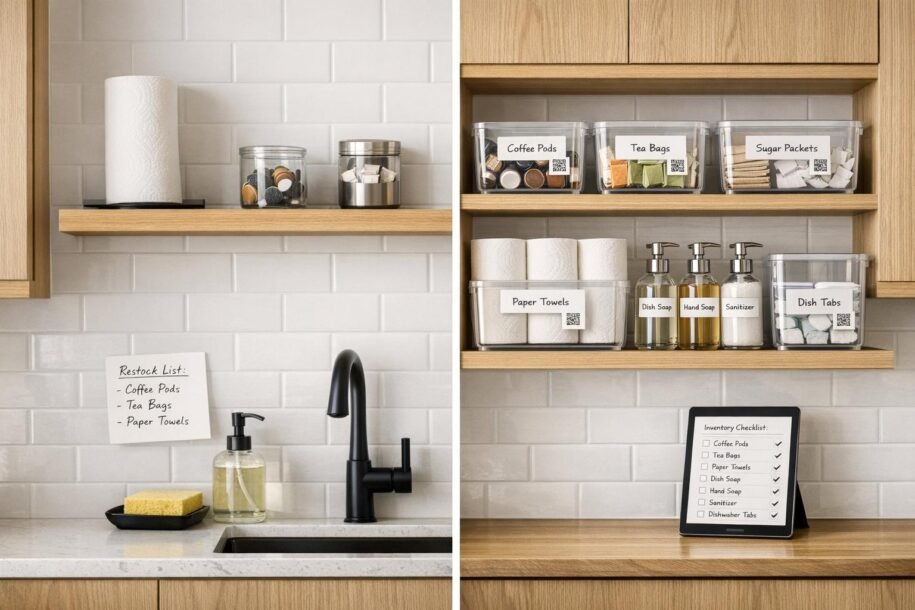
Managing an Airbnb property involves more than just great photos and a prime location. The key to a five-star guest experience often lies in how well you handle inventory: from fresh linens to stocked essentials. You have two choices – DIY restocking or professional inventory management.
DIY Restocking gives you control but requires significant time and effort. You’ll track supplies, shop for items, and handle turnovers yourself. While it saves on management fees, it often leads to errors, missed restocks, and burnout as your workload grows.
Professional Inventory Management automates the process, ensuring your property is always ready for guests. Experts handle supply tracking, restocking, and coordination, freeing up your time and improving guest satisfaction. While it involves fees (10–40% of revenue), it supports scalability and higher revenue potential.
Quick Comparison
| Factor | DIY Restocking | Professional Inventory Management |
|---|---|---|
| Time Required | 20–40 hours/week | Minimal; hands-off for owners |
| Cost | Supply costs only | 10–40% of rental revenue in fees |
| Scalability | Challenging as properties grow | Easily handles multiple listings |
| Guest Satisfaction | Prone to errors and missed items | Consistent and reliable |
| Revenue Impact | Limited growth potential | 39% higher monthly revenue on average |
If managing supplies feels overwhelming or you’re ready to grow your portfolio, professional inventory management can save time and improve your property’s performance.
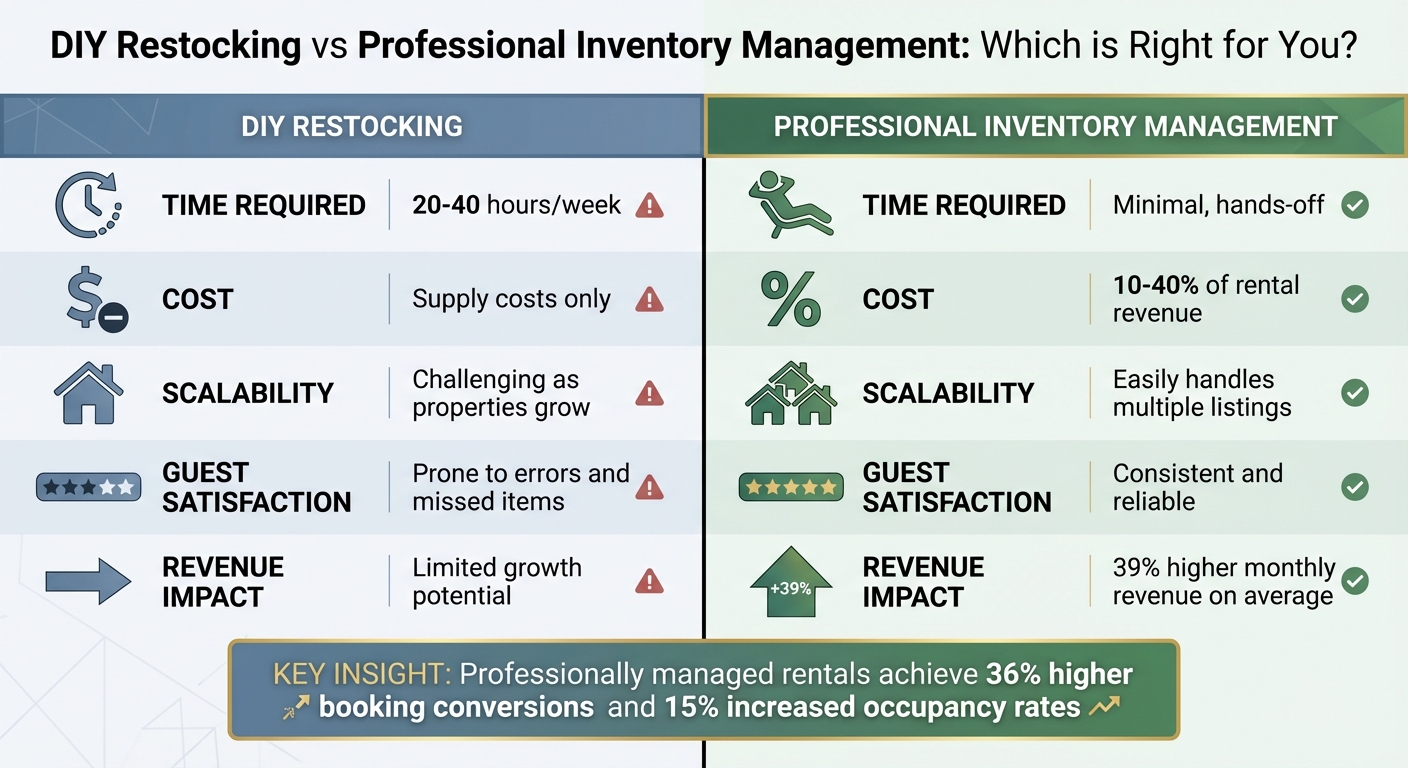
DIY vs Professional Airbnb Inventory Management Comparison
Airbnb Supply Closet Management… Pro Tips + Newbie Mistakes
sbb-itb-103bddb
What is DIY Restocking?
DIY restocking is all about personally managing inventory, sourcing supplies, and restocking essentials between guest stays. There’s no automated system or third-party service involved – it’s entirely up to you to ensure that items like toilet paper, coffee, and tea are ready for the next check-in.
What DIY Restocking Involves
It starts with inventory tracking. Most hosts use spreadsheets or physical checklists to keep tabs on what’s available and what needs replenishing. After each checkout, you’ll need to inspect every room for depleted supplies, missing items like utensils, or worn-out linens. You might also consider Airbnb design services to ensure your property’s aesthetic remains fresh and competitive.
Next comes procurement, which means sourcing all the necessary items. Many hosts head to warehouse stores like Costco or Sam’s Club to take advantage of bulk pricing. Some use subscription services to automate deliveries, but even then, you’ll need to monitor shipments and ensure you have what you need. Don’t forget to set up a secure on-site storage space for backup supplies.
Then there’s the turnover reset, which happens between stays. High-use items like toilet paper, hand soap, trash bags, and coffee need frequent replacement. A professional turnover for a one- to two-bedroom property typically takes 2.5 to 3 hours [1]. If you’re not doing the cleaning yourself, you’ll need to hire and train cleaners, making sure they follow your specific restocking procedures.
Here’s an example of a typical DIY inventory setup:
| Category | Essential Items | Recommended Minimum Stock |
|---|---|---|
| Bathroom | Toilet paper, hand soap, body wash, towels, tissues | 8 rolls TP / 2 bottles soap per bath |
| Kitchen | Coffee/tea, sugar, dish soap, paper towels, trash bags | 3 servings coffee / 4 rolls paper towels |
| Bedroom | Linens, extra pillows, blankets, hangers | 2 sets of linens per bed |
| Cleaning | Multi-surface cleaner, disinfectant wipes, detergent | 2 bottles of each primary cleaner |
You’re also in charge of safety inventory, which includes items like fire extinguishers, first aid kits, and replacing batteries in smoke and carbon monoxide detectors [5]. Overlooking safety essentials can lead to guest complaints – or worse, liability issues.
While this hands-on approach gives you control, it also introduces several challenges that can impact the guest experience. These hurdles often make DIY restocking a tricky balancing act.
Problems with DIY Restocking
The most obvious challenge is the time commitment. Between messaging, scheduling, and inventory tracking, managing 1–2 properties can take up 5–10 hours a week [1]. That doesn’t even include the time spent shopping or physically restocking supplies.
Running out of essentials is another major issue. Imagine guests arriving to find no toilet paper or an empty coffee canister. These oversights can quickly turn into negative reviews, hurting your property’s reputation [1].
"A well-stocked Airbnb isn’t just convenient, it’s a reflection of how seriously you take your hosting game." – BNB Guardians [3]
Tracking errors are also common. Spreadsheets don’t sync with booking calendars, so it’s easy to overlook restocking before a same-day turnover. Without automated alerts for low inventory, you might only realize there’s a shortage when it’s too late – after a guest or cleaner points it out.
Finally, there are cost inefficiencies. While DIY hosting avoids management fees (which typically range from 10% to 40% of booking revenue [4]), it often means paying higher retail prices for supplies. Frequent shopping trips waste time, fuel, and money. Plus, being on-call 24/7 for emergencies makes it nearly impossible to scale your operation or take a break without risking service failures [4].
What is Professional Inventory Management?
Professional inventory management means entrusting the entire process of tracking and restocking supplies to a dedicated team. Instead of wrestling with spreadsheets or making last-minute shopping runs, you depend on automated systems and skilled staff to ensure your property is always ready for guests. This hands-off approach eliminates the guesswork and constant oversight that come with managing inventory yourself.
What Professional Inventory Management Includes
This service goes beyond simple supply tracking. It uses smart sensors and digital reports to monitor inventory levels in real time and flag low supplies automatically [6][7].
Additionally, professional teams handle turnover coordination, working closely with cleaning crews to integrate restocking into the property turnover process. This ensures there are no missed items or last-minute scrambles. For instance, companies like Rank One Stays offer full-service solutions, bundling inventory management with housekeeping, maintenance, and guest support for seamless operations.
How Professional Management Saves Time and Reduces Errors
One of the biggest advantages of professional inventory management is the time it saves. By taking over tracking and restocking, these services free you up to focus on other responsibilities.
Automated systems also reduce the chance of human error. With real-time monitoring, missed restocks or overlooked supplies during turnovers become far less likely. This proactive approach catches potential issues before they escalate, leading to fewer guest complaints and better reviews.
Guest satisfaction often improves as well. When a property is consistently well-stocked and turnovers are flawless, guests notice – and that attention to detail can result in higher booking rates and increased revenue.
Another key benefit is scalability. Whether you’re managing one property or a growing portfolio, these systems handle inventory across multiple locations with ease. Full-service management fees typically range from 15% to 40% of booking revenue, while co-hosting services cost between 10% and 20% [4].
Up next, we’ll compare these benefits directly with the DIY approach to see how they measure up.
DIY Restocking vs Professional Inventory Management: Side-by-Side Comparison
Keeping your Airbnb inventory in top shape is essential for delivering a five-star experience. Here’s a closer look at how DIY restocking stacks up against professional inventory management. The differences can directly influence your time, earnings, and ability to grow.
Comparison Table
| Factor | DIY Restocking | Professional Inventory Management |
|---|---|---|
| Time Required | 20–40 hours per week [8] | Minimal; near 100% hands-off for the owner [8][9] |
| Cost | No management fees; pay only for supplies and tools [8][9] | 15%–30% of rental revenue in commission fees [9] |
| Ability to Grow | Challenging; workload increases with each property [8] | Scalable; managers handle multiple listings with ease [9] |
| Guest Satisfaction | Personalized but prone to errors or missed messages [2] | Professional, standardized, and 24/7 availability [2][9] |
| Performance | Reactive; risks include outdated pricing or calendar gaps [8] | Proactive; optimized pricing and professional marketing [8][9] |
DIY hosting might save you the cost of management fees, but it demands a significant time commitment – often as much as a full-time job. On the flip side, professional inventory management frees up your time entirely, though it comes with commission fees.
"Hands-on homeowners can expect to spend anywhere from 20-40 hours per week managing their property, which can increase further if you’re managing remotely." – Hometime [8]
The performance gap is striking. Professionally managed rentals in Australia report 39% higher monthly revenue, a 36% boost in booking conversions, and a 15% increase in occupancy rates compared to DIY-managed properties [8]. In competitive markets like Denver or Pittsburgh, these advantages can easily outweigh the cost of professional management.
Ultimately, efficient inventory management is crucial for maintaining guest satisfaction and scaling operations. While DIY hosting becomes harder to sustain as you grow, professional systems make it possible to expand without sacrificing your personal time or peace of mind.
Next, we’ll dive into when it makes sense to switch to professional inventory management.
When to Use Professional Inventory Management
Signs You Should Switch to Professional Management
Managing restocking and inventory on your own might work for a single property, but things get tricky as your portfolio expands. With more listings, the time and effort required for DIY restocking can spiral out of control, making it harder to maintain consistent quality.
Frequent turnovers and managing properties remotely add even more challenges. Handling back-to-back turnovers, especially on busy weekends, can leave you scrambling to restock supplies or deal with last-minute emergencies in the middle of the night[8]. If you’re feeling stretched thin, missing important tasks, or simply burning out, it might be time to consider professional management.
The numbers speak for themselves: professionally managed rentals generate 39% more monthly revenue and achieve 43% higher daily rates[8]. In competitive markets like Scottsdale and Denver, these gains often far outweigh the cost of management fees. The core challenge for many Airbnb hosts lies in balancing quality with scalability, and professional management can help solve that.
For hosts looking to ease the workload and improve performance, professional management offers a practical solution.
How Rank One Stays Can Help
This is where Rank One Stays steps in, offering a range of services designed to simplify your operations and help your business grow. From inventory tracking and housekeeping coordination to 24/7 guest support, they handle the details so you can focus on scaling your rental portfolio. On average, property owners working with Rank One Stays see a 38% increase in revenue compared to the market average[8]. Plus, their management fee is just 10%, significantly lower than the typical 15% to 50% charged by other full-service managers[2][4].
Rank One Stays operates in key markets like Scottsdale, Arizona, Denver, Colorado, Pittsburgh, Pennsylvania, and Lighthouse Point, Florida. Their services go beyond inventory management to include dynamic pricing, listing optimization, damage claims processing, and even vacation rental interior design for investors seeking turnkey solutions.
If you’re ready to grow your rental business without sacrificing your time and energy, professional management can take the operational load off your shoulders while boosting your bottom line.
Conclusion
Managing inventory for your Airbnb doesn’t have to drain your time and energy. While handling restocking yourself might work in the beginning, professional inventory management can take the hassle out of last-minute supply runs, reduce guest complaints, and ensure a consistent experience across all your properties. As STR Specialist Prayas explains, "Operations and logistics are the invisible foundation of guest satisfaction” [1].
Professional services help maintain proper stock levels, use visual tools to guarantee consistency, and handle 24/7 guest communication – freeing you up to focus on growing your rental business. For instance, achieving Superhost status requires that 90% of stays remain free of operational issues [1]. Meeting this standard becomes far more manageable with expert support.
For hosts managing multiple properties or planning to scale, the advantages are clear. Property owners working with Rank One Stays see 38% higher revenue than the market average, with management fees starting as low as 10%. Their services cover more than just inventory management, offering dynamic pricing, optimized listings, and round-the-clock guest support in markets like Scottsdale, Denver, Pittsburgh, and Lighthouse Point.
If managing supplies is eating into the time you could spend growing your business, consider how professional property management can streamline your operations. With the right partner, you can leave the details in capable hands and focus on building a thriving, scalable rental portfolio.
FAQs
What are the advantages of using professional inventory management for my Airbnb?
Using professional inventory management for your Airbnb ensures your property stays stocked with all the essentials, delivering a smooth, hassle-free experience for your guests. This helps avoid the inconvenience of running out of key items or scrambling for last-minute restocking, saving you both time and energy.
These services can also take care of tasks like tracking inventory and managing damage claims, freeing you up to focus on what matters most – keeping your guests happy. By simplifying operations, you can cut down on stress, work more efficiently, and even boost your property’s profitability. Partnering with experts can lead to stronger reviews, loyal repeat guests, and a thriving rental business.
How can professional inventory management enhance the guest experience?
Professional inventory management ensures your Airbnb is always stocked with the essentials – think toiletries, kitchen supplies, and more – creating a smooth and welcoming experience for your guests. By keeping inventory levels consistent and replenishing items promptly, it eliminates those small inconveniences that could otherwise disrupt a guest’s stay.
This kind of proactive system not only saves hosts valuable time but also boosts guest satisfaction, which can lead to glowing reviews and repeat bookings. For property owners, teaming up with a service like Rank One Stays means these responsibilities are handled seamlessly, letting you focus on getting the most out of your rental while ensuring every guest has a standout experience.
How do I know when it’s time to switch from managing my Airbnb inventory myself to hiring a professional service?
If managing your Airbnb properties is starting to feel like a full-time job – or worse, it’s eating into your profits – it might be time to think about hiring a professional management service. As your rental portfolio grows, handling restocking and operations on your own can get tricky, leading to mistakes, missed opportunities, or even burnout.
A professional service can take over tasks like managing inventory, coordinating cleanings, and communicating with guests. This frees up your time to either focus on growing your investments or simply enjoy some well-earned personal time. If turnovers and inventory management are becoming overwhelming or negatively affecting the guest experience, outsourcing these responsibilities can make a big difference. Many property owners find that this move not only lowers stress but also helps increase their overall income.