
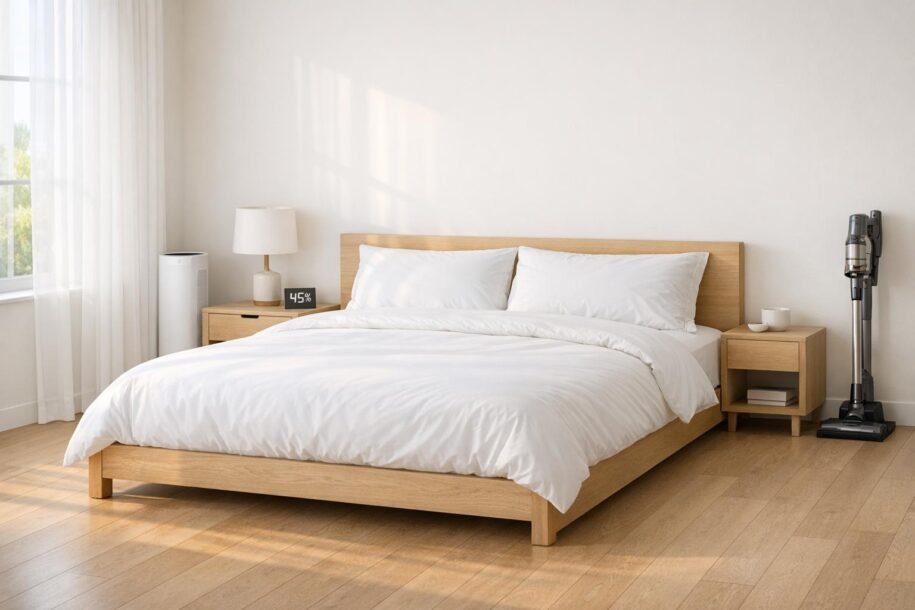
Want to attract more guests and boost reviews on Airbnb? Focus on creating an allergen-free rental. Allergy-sensitive travelers are on the rise, with cases increasing by 30% over the past decade. These guests are willing to pay more for properties that prioritize their health.
Here’s how you can make your rental allergy-friendly:
- Eliminate allergens: Dust mites, pet dander, mold, pollen, and harsh chemicals are the main culprits. Use HEPA-filter vacuums, steam cleaners, and hypoallergenic cleaning products to target these.
- Upgrade furnishings: Choose non-porous materials like leather or wood, hypoallergenic bedding, and washable curtains. Avoid high-pile carpets and feather-filled items.
- Improve air quality: Use air purifiers with HEPA filters, maintain HVAC systems, and keep humidity below 50% to prevent mold and dust mites.
- Deep clean regularly: Pay attention to hidden spots like air vents, baseboards, and behind furniture. Wash bedding at 130°F and clean high-touch surfaces thoroughly.
- Block outdoor allergens: Seal windows and doors, and use air conditioning on recirculate during peak pollen seasons.
Properties with high cleaning standards average better ratings (4.89 stars vs. 4.84) and command higher nightly rates. Professional cleaning services can ensure consistent results and save time, especially in high-demand markets.
How to allergy proof your Airbnb (cleaning tips)
sbb-itb-103bddb
Common Allergen Sources in Airbnb Properties
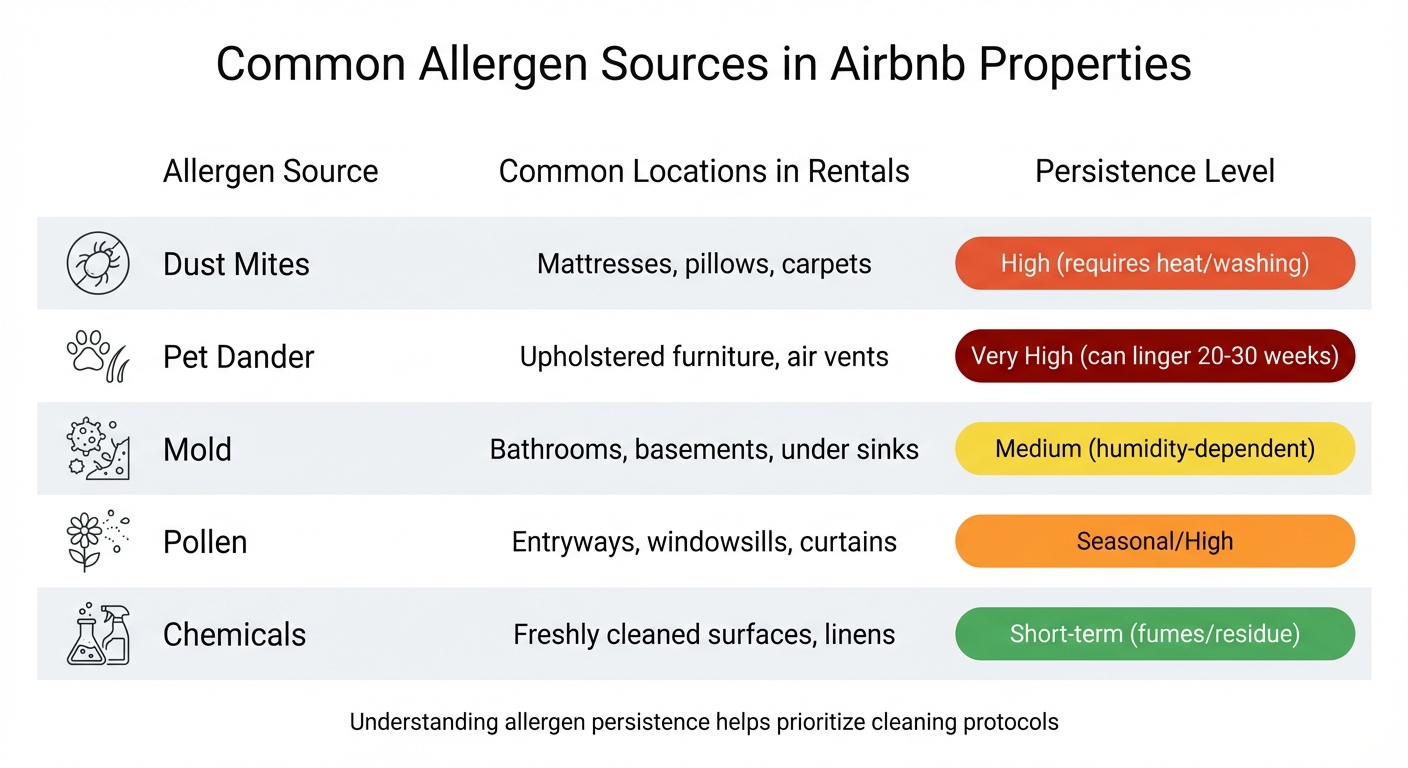
Common Allergen Sources in Airbnb Rentals: Locations and Persistence Levels
Primary Allergen Sources
Pinpointing allergen triggers is a key step in ensuring a safer stay for guests. In vacation rentals, some of the most frequent offenders include dust mites, tiny creatures that thrive in mattresses, pillows, carpets, and upholstered furniture. These mites feed on human skin cells and can be difficult to eliminate [11]. Another common issue is pet dander – tiny skin flakes and proteins from cats and dogs. These particles cling to fabrics and linger in the air long after pets are gone. According to the American College of Allergy, Asthma & Immunology, about 1 in 10 people experience allergic reactions to cats and dogs [10].
Mold spores are another concern, particularly in damp areas like bathroom grout, window frames, under-sink cabinets, and refrigerator drip pans [5]. Pollen, which gets into homes through open windows or attaches to clothes, shoes, and pets, is another frequent allergen [6]. Even cleaning products can be a problem. Synthetic air fresheners, laundry detergents, and harsh chemicals like bleach or ammonia often trigger respiratory issues or skin irritation in sensitive individuals [8].
| Allergen Source | Common Locations in Rentals | Persistence Level |
|---|---|---|
| Dust Mites | Mattresses, pillows, carpets | High (requires heat/washing) |
| Pet Dander | Upholstered furniture, air vents | Very High (can linger 20–30 weeks) |
| Mold | Bathrooms, basements, under sinks | Medium (humidity-dependent) |
| Pollen | Entryways, windowsills, curtains | Seasonal/High |
| Chemicals | Freshly cleaned surfaces, linens | Short-term (fumes/residue) |
These allergens can quickly accumulate, making specialized cleaning practices essential for rental properties.
How Allergens Build Up in Rental Properties
Understanding how allergens accumulate is crucial for effective cleaning. Vacation rentals face unique challenges due to frequent guest turnover, which increases the chance of allergens being brought in with each new visitor. Sasha Xarcenka from Atmotube highlights this issue:
Indoor allergens are substances found inside buildings that can trigger an immune reaction in people who are sensitized [8].
Some allergens, like cat dander, are especially persistent, remaining in a property for up to 20 to 30 weeks [10]. Many of these particles settle into "dust reservoirs" such as wall-to-wall carpets, heavy curtains, and upholstered furniture, where they can be difficult to remove [8]. As Vella Clean explains:
Standard cleaning methods merely relocate allergens instead of eliminating them [11].
Humidity levels also play a big role. High indoor humidity (above 50%) creates the perfect conditions for dust mites and mold to thrive [5]. HVAC systems can also contribute to the problem, as they can trap and recirculate allergens if filters aren’t high-efficiency or changed regularly [6]. For property owners in humid areas – whether managing a beachfront rental in South Florida or a mountain getaway in Denver – controlling moisture levels is especially important to keep allergens at bay.
Cleaning Methods to Reduce Allergens
Using Hypoallergenic Cleaning Products
For guests with allergies, hypoallergenic cleaning products are a must. Look for labels like "fragrance-free", "non-toxic", or "plant-based" to avoid volatile organic compounds (VOCs) that can leave irritating residues in the air. As NW Maids puts it:
Avoid harsh chemicals. Choose hypoallergenic cleaning products that are labeled ‘fragrance-free’ or ‘non-toxic.’ These reduce exposure to irritating fumes that could bother allergy sufferers [9].
Brands like Branch Basics and Bon Ami are excellent choices – they clean thoroughly without introducing airborne irritants [11]. For laundry, unscented detergents or mineral-based laundry eggs can clean fabrics effectively while avoiding chemical residues that may irritate skin or respiratory systems.
To freshen up spaces naturally, skip synthetic plug-ins, candles, or aerosol sprays. Instead, try essential oil diffusers with scents like lavender or eucalyptus, or simply open windows to let fresh air circulate. GuestReady emphasizes the importance of addressing unpleasant odors at the source:
"If you are trying to get rid of a bad smell in your home – try to address the cause rather than mask it with perfume" [1].
Once the air is clear, focus on using specialized tools to tackle residual allergens.
Cleaning Tools That Remove Allergens
The right tools can make a big difference in eliminating allergens. A HEPA-filter vacuum is indispensable – it traps 99.97% of particles as small as 0.3 microns. As TIDY explains:
A vacuum with a HEPA filter ensures that you’re not just moving allergens around but actually removing them from your space, making for cleaner, healthier air for your guests [6].
Steam cleaners are another great option, especially for deep-cleaning carpets, upholstery, and mattresses. The high heat not only kills dust mites but also sanitizes without the need for harsh chemicals [9]. When washing bedding and linens, set your water temperature to at least 130°F (54°C) to effectively eliminate dust mites [5].
For surface cleaning, microfiber cloths are ideal because they trap allergens rather than spreading them around. Always use a damp cloth to minimize airborne particles. For hard-to-reach spots like ceiling fans and cabinet tops, an extendable duster works wonders. If you’re dealing with humid conditions – like in South Florida or other moisture-heavy areas – a dehumidifier is essential. Keeping indoor humidity below 50% helps prevent mold growth and reduces dust mite activity [5].
Deep Cleaning High-Traffic and Hidden Spots
Allergens often hide in high-traffic and overlooked areas, so deep cleaning these spots is crucial. Start from the top and work your way down – clean ceiling fans, door frames, and light fixtures first to ensure falling dust is captured when you finish with the floors [5]. Pay close attention to baseboards, window sills, and air vents, which tend to collect dust and pollen.
Don’t forget to clean beneath and behind furniture. In bathrooms, focus on grout lines and seals, as these are prone to mold growth [5]. Running exhaust fans during and after showers can also help reduce humidity and discourage mold [5].
For high-touch surfaces like remotes, light switches, and doorknobs, plant-based disinfectants or UV sanitizing lamps are excellent options for reducing allergens on items that can’t be easily washed. Finally, replace HVAC air filters at least once a month during peak allergy seasons to maintain clean air circulation [5]. These deep-cleaning steps go beyond routine tasks, ensuring every corner of your space is as allergen-free as possible.
Furnishings and Materials for Allergy-Sensitive Rentals
Selecting Hypoallergenic Bedding and Linens
To create an allergy-friendly space, start by using zippered encasements for mattresses, pillows, and box springs. Look for fabrics tightly woven to about 5.3 microns, as these effectively block allergens like dust mites, mold, and bed bugs. As Bargoose Bedding explains:
"The organic, chemical-free cotton is tightly woven to 5.3 microns with a 233-thread count. This compact nature of the threads… keeps allergens including, but not limited to, dust mites, mold, and bedbugs away." [4]
Avoid feather-filled pillows and duvets, as they tend to trap allergens. Instead, choose non-allergenic synthetic fills or organic cotton options. For sheets and bed covers, natural fibers like cotton or linen work best because they can handle high-temperature washing, which is essential for eliminating allergens. Pair these with waterproof mattress pads to prevent moisture buildup, reducing the risk of mold growth [4].
Once the bedding is addressed, it’s time to focus on furniture and flooring choices to further reduce allergen exposure.
Furniture and Flooring Options
When selecting furniture, prioritize non-porous materials like leather, wood, or synthetic fabrics. These materials don’t trap dust mites and can be easily wiped clean [2] [1]. Upholstered furniture, especially with traditional fabric, should be swapped out for these alternatives to minimize allergen retention.
For flooring, hardwood, tile, or low-pile carpets are better choices than high-pile carpets, which can harbor allergens [1]. This is especially important in humid areas, like Lighthouse Point, Florida, where mold growth can be a concern. Window treatments also play a role – heavy drapes tend to collect airborne allergens, so consider replacing them with blinds or lightweight, washable curtains that can be cleaned regularly [4] [6]. If you’re furnishing a new property or updating an existing one, professional vacation rental design services can guide you in selecting allergy-conscious materials from the beginning.
Reducing allergens in furnishings pairs perfectly with a clutter-free environment for easier cleaning.
Reducing Clutter for Easier Cleaning
Clutter creates extra surfaces for allergens to settle, making cleaning more difficult. As TIDY explains:
"By minimizing clutter in your Airbnb, you reduce the number of surfaces where allergens can settle, making it easier to keep the space clean and allergen-free." [6]
Limit non-essential decor, such as ornaments, books, and dried flowers, to cut down on allergen-prone surfaces. Opt for streamlined furniture with simple designs and hard surfaces, as these are quicker and easier to clean [2] [6]. Providing guests with practical storage options – like closets or bins – also helps keep personal belongings organized, reducing potential clutter. A less crowded space means fewer opportunities for allergens to accumulate.
Maintaining Air Quality in Allergy-Sensitive Rentals
Air Purifiers and HVAC System Maintenance
Good air quality starts with the right tools. High-efficiency particulate air (HEPA) filters are key for capturing allergens like pollen, pet dander, and dust mites [13][10]. To effectively reduce allergens, air purifiers should deliver at least 6 air changes per hour (ACH), meaning the air in a room is refreshed every 10 minutes [12]. As Danny Ashton, Founder of HouseFresh, puts it:
"For your allergies? That’s like trying to empty a sinking boat with a teaspoon. Sure, it eventually cleans the old pollen, but in that same hour, a whole new batch of allergens will make their way into the room." [12]
If you’re looking for tested models, here are a few that combine efficiency with quiet operation:
- CleanAirKits Luggable XL-7: Priced at $229, it runs at a whisper-quiet 38.8 dBA.
- AirFanta 3Pro: A budget-friendly option at $159.99, operating at 43.3 dBA.
- Coway Airmega ProX: Ideal for larger spaces, priced around $820, with a noise level of 44.4 dBA.
All these models keep noise under 45 decibels, ensuring they won’t disturb guests [12].
Equally important is maintaining the HVAC system. Filters certified as Asthma & Allergy Friendly® can capture up to 98% of allergen particles [14]. During allergy seasons, HVAC filters should be cleaned or replaced at least monthly, and floor vents should be vacuumed regularly to remove accumulated fur and dust [5][10]. These steps are essential for creating an allergen-free environment that meets the expectations of allergy-sensitive guests. Pairing these efforts with strategies to block outdoor allergens completes a well-rounded approach.
Keeping Outdoor Allergens Out
Once indoor air is properly filtered, the next step is to keep outdoor allergens from sneaking in. Pollen, a major culprit, can enter through open windows, doors, and even on clothing. To minimize exposure:
- Keep windows and doors closed during peak pollen seasons (spring and fall) [5][14].
- Run air conditioning on the "recirculate" setting to filter indoor air without pulling in unfiltered air from outside [14].
The Asthma and Allergy Foundation of America advises:
"Keep your windows and doors closed. Turn your air conditioner on recirculate. These steps can help reduce outdoor allergens like pollen and mold." [14]
Seal cracks in window frames and door sills to prevent pests and airborne allergens from entering [5]. Sweep porches, patios, and balconies regularly, and clean doormats between stays to avoid tracking in irritants from outside [7]. Open windows only when local pollen counts are low [6]. In humid areas like Lighthouse Point, Florida, using dehumidifiers can help maintain optimal humidity levels and discourage mold growth [5][9].
Before each guest check-in, run air filtration systems at high speeds to clear lingering allergens [12]. Replace HEPA filters every 6 to 18 months, depending on usage [12]. For pet-friendly properties, enforce grooming protocols and keep animals out of sleeping areas. This is especially important since about 6 out of 10 people in the U.S. are exposed to cat or dog dander, which can carry outdoor pollen indoors [14].
Professional Cleaning and Management Support
Benefits of Professional Housekeeping Services
Professional housekeeping services go beyond basic cleaning – they ensure consistent, high-quality standards across all properties. By using specialized equipment like HEPA-filter vacuums and hypoallergenic products, along with deep-cleaning techniques, these services maintain allergen-free environments. What sets them apart is their rigorous training and quality control systems, which guarantee these protocols are followed meticulously at every property turnover.
The benefits of professional oversight extend beyond cleanliness. Properties managed professionally often see 20–40% higher returns compared to those handled solely by owners. Additionally, listings with cleanliness ratings above 4.8 stars tend to earn 10–15% higher nightly rates [15]. Perhaps most valuable, professional services save property owners 20 to 40 hours per week – an incredible time-saving advantage for hosts juggling multiple rentals or operating in competitive markets like Scottsdale and Denver. This approach not only boosts cleanliness ratings but also simplifies the overall property management process.
How Rank One Stays Supports Allergy-Friendly Hosting

Rank One Stays ensures top-tier housekeeping for all managed properties in Scottsdale, Denver, Pittsburgh, and Lighthouse Point. Our teams follow strict cleaning protocols, using HEPA-certified equipment and hypoallergenic products to tackle everything from high-traffic upholstery to HVAC filter upkeep. This commitment guarantees that every turnover meets the highest standards.
But cleaning is just one part of the equation. Rank One Stays also handles essential maintenance, such as scheduling HVAC filter replacements, air duct cleanings, and gutter upkeep to prevent mold and other allergens. On average, property owners partnering with Rank One Stays earn 38% more revenue than the market average, with management fees starting at just 10%. By integrating professional cleaning with full-service management, we streamline operations and free up your time, allowing you to focus on other priorities. Interested in maintaining allergy-friendly properties without the weekly workload? Explore our property management services to see how we can help you achieve your hosting goals.
Conclusion
Key Cleaning Strategies to Keep in Mind
Creating an allergen-free rental requires more than just surface cleaning – it demands a thorough and systematic approach. Start with HEPA-filter vacuums to trap allergens effectively, and wash all bedding in water heated to at least 130°F to eliminate dust mites [5][6]. Steer clear of synthetic air fresheners and scented products; instead, opt for fragrance-free, non-toxic cleaning solutions [11][1]. Also, choose materials and layouts that make cleaning easier and help minimize allergen buildup. Keeping indoor humidity below 50% and replacing HVAC filters monthly are additional steps that can prevent mold growth and improve air quality [5][6].
"A clean room is not the same as an allergen-free room." – Vella [11]
These practices not only safeguard guest health but also enhance your property’s reputation. Properties with high cleanliness standards tend to perform better, averaging 4.89 stars compared to 4.84 for those without clear cleaning protocols [3].
To consistently uphold these standards, professional cleaning support often becomes a necessity.
The Importance of Professional Support for Allergen-Free Hosting
While mastering these cleaning methods is important, professional cleaning services ensure they’re carried out effectively and consistently. Professionals use HEPA-certified vacuums, focus on often-overlooked areas like ceiling fans and baseboards, and follow strict protocols to meet medical-grade cleanliness standards [6][11].
Companies like Rank One Stays excel in delivering these specialized cleaning services. For hosts operating in competitive markets such as Denver or Pittsburgh, professional management simplifies the coordination of cleaning tasks while ensuring the level of care allergy-sensitive guests expect. Achieving allergen-free conditions between bookings can be challenging without the proper equipment and expertise. However, this investment pays dividends through premium pricing opportunities, reduced liability risks, and the confidence of knowing your property offers a genuinely safe and welcoming environment for all guests.
FAQs
How can I prove my Airbnb is allergy-friendly?
If you want to make your Airbnb more appealing to guests with allergies, it’s essential to show them the steps you’ve taken to create a cleaner, more comfortable environment. Here’s how you can do that:
- Use hypoallergenic products: Opt for cleaning supplies and detergents specifically designed to minimize allergens.
- Invest in dust-mite-proof bedding: Covers for mattresses and pillows can help keep dust mites at bay.
- Upgrade your cleaning tools: Use HEPA filters when vacuuming carpets and cleaning upholstery to trap dust and other particles effectively.
- Maintain air quality: Focus on reducing dust, pet dander, mold, and pollen in your space.
To build trust, document your efforts. Keep receipts for allergy-specific products, take photos of allergen-proof bedding, and maintain cleaning records. Highlight these details in your Airbnb listing to reassure potential guests that their health and comfort are a priority.
What’s the fastest way to reduce pet dander between stays?
To cut down pet dander fast, start by vacuuming carpets and furniture using a vacuum equipped with a HEPA filter. Wash bedding, curtains, and other fabrics in hot water every week to eliminate trapped allergens. For hard surfaces, use a damp microfiber cloth to capture dander effectively, and consider steam cleaning upholstery for a deeper clean. Adding a HEPA air purifier can help clear airborne dander, improving air quality. Finally, keeping pets well-groomed reduces shedding and dander buildup. These actions can make your space more comfortable for allergy-sensitive guests.
What are the most affordable upgrades to reduce allergens?
Using HEPA filter vacuums is one of the most cost-effective ways to tackle allergens in your home. These vacuums are great for cleaning carpets, rugs, and upholstery, helping to reduce dust mites, pet dander, and pollen. If possible, consider swapping out carpets for hard flooring, as it’s easier to clean and doesn’t trap as much dust.
For cleaning, choose hypoallergenic products and steer clear of synthetic fragrances that can irritate allergies. Regularly washing bedding and curtains with allergy-friendly detergents is another simple way to improve air quality without breaking the bank. Small changes like these can make a big difference in keeping allergens at bay.