

Owning an Airbnb means keeping your property in top shape year-round. Seasonal maintenance not only prevents costly repairs but also improves guest satisfaction, leading to better reviews and higher earnings. Here’s a quick breakdown of what you need to know:
- Why It Matters: Small issues like dripping faucets or dusty air filters can hurt guest reviews and rebooking rates. Regular maintenance ensures your property stays appealing and safe.
- Regional Needs: Maintenance varies by location. For example:
- Northeast: Prepare for frozen pipes and ice dams.
- Southeast: Address mold risks and hurricane prep.
- Southwest: Focus on HVAC systems in extreme heat.
- Mountain Areas: Handle snow and rapid temperature changes.
- Checklist Benefits: A structured checklist simplifies tasks, tracks progress, and helps with budgeting. Digital tools like Turno or Host Tools can streamline this process.
Seasonal Focus:
- Spring: HVAC tune-ups, smoke detector checks, and deep cleaning.
- Summer: AC efficiency, mold inspections, and pool maintenance.
- Fall: Gutter cleaning, chimney inspections, and winter prep.
- Winter: Insulate pipes, snow removal, and emergency kit prep.
By staying proactive and organized, you’ll maintain your property’s value, improve guest experiences, and avoid last-minute emergencies. For busy hosts, professional management services can handle these tasks efficiently.
10 Things to Get Ready for the Season
sbb-itb-103bddb
Seasonal Maintenance Checklist Overview
A maintenance checklist helps you organize, assign, schedule, and monitor tasks effectively.
Checklist Structure and Categories
Divide tasks by property area and system type, aligning them with seasonal needs. This approach ensures nothing gets overlooked. Key categories to focus on include safety systems, mechanical systems (like HVAC, plumbing, and electrical), interiors, exteriors, and guest amenities.
| Category | Key Tasks | Frequency |
|---|---|---|
| Safety | Smoke/CO alarm testing, fire extinguisher checks | Monthly/Seasonal |
| Interior | Appliance testing, deep cleaning, furniture hardware tightening [5][6] | Turnover/Monthly |
| Exterior | Roof and gutter inspection, landscaping, walkway safety | Seasonal |
| Amenities | Pool/hot tub chemical balance, grill cleaning, furniture stability [1][3] | Weekly/Seasonal |
"Well-maintained listings reduce cancellations, complaints, and refunds." – Airbnb [7]
Since cleanliness is often the top factor influencing guest reviews and rebookings [1], it’s smart to prioritize interior and amenity-related tasks when building your checklist.
Once your checklist is structured, the next step is to assign responsibilities and budget appropriately for each task.
Assigning Responsibilities and Setting a Budget
After categorizing tasks, assign them based on expertise. Owners and hosts can manage simple DIY tasks like vacation rental design touch-ups, landscaping, and restocking supplies [4]. More technical jobs, such as electrical or HVAC repairs, should be left to licensed professionals. Cleaners can also play a role by identifying issues during turnovers. To save money and avoid last-minute trips, stock up on consumables like lightbulbs, air filters, and cleaning supplies in bulk [4].
Plan for a seasonal maintenance budget as part of your operating expenses. This helps you handle unexpected repairs without disrupting your finances.
Once roles are assigned and the budget is set, it’s time to focus on tracking progress effectively.
Using Digital Tools to Track Maintenance
While spreadsheets might work for managing a single property, they can become impractical as your portfolio grows. Digital tools like Turno simplify inventory management by tracking cleaning supplies and task completions during turnovers [1]. For hosts juggling multiple properties, platforms like Host Tools offer automated calendars that sync maintenance schedules across booking platforms, reducing the risk of conflicts [4].
The key is to pick a tool that you’ll consistently use – whether it’s a shared Google Sheet, a property management software, or specialized short-term rental tools. Digital tracking not only ensures consistent maintenance but also creates a record that can be invaluable. For instance, it can help document damages for Airbnb’s AirCover protection [7]. This digital record reinforces your overall maintenance strategy and keeps everything running smoothly.
Seasonal Maintenance Checklists
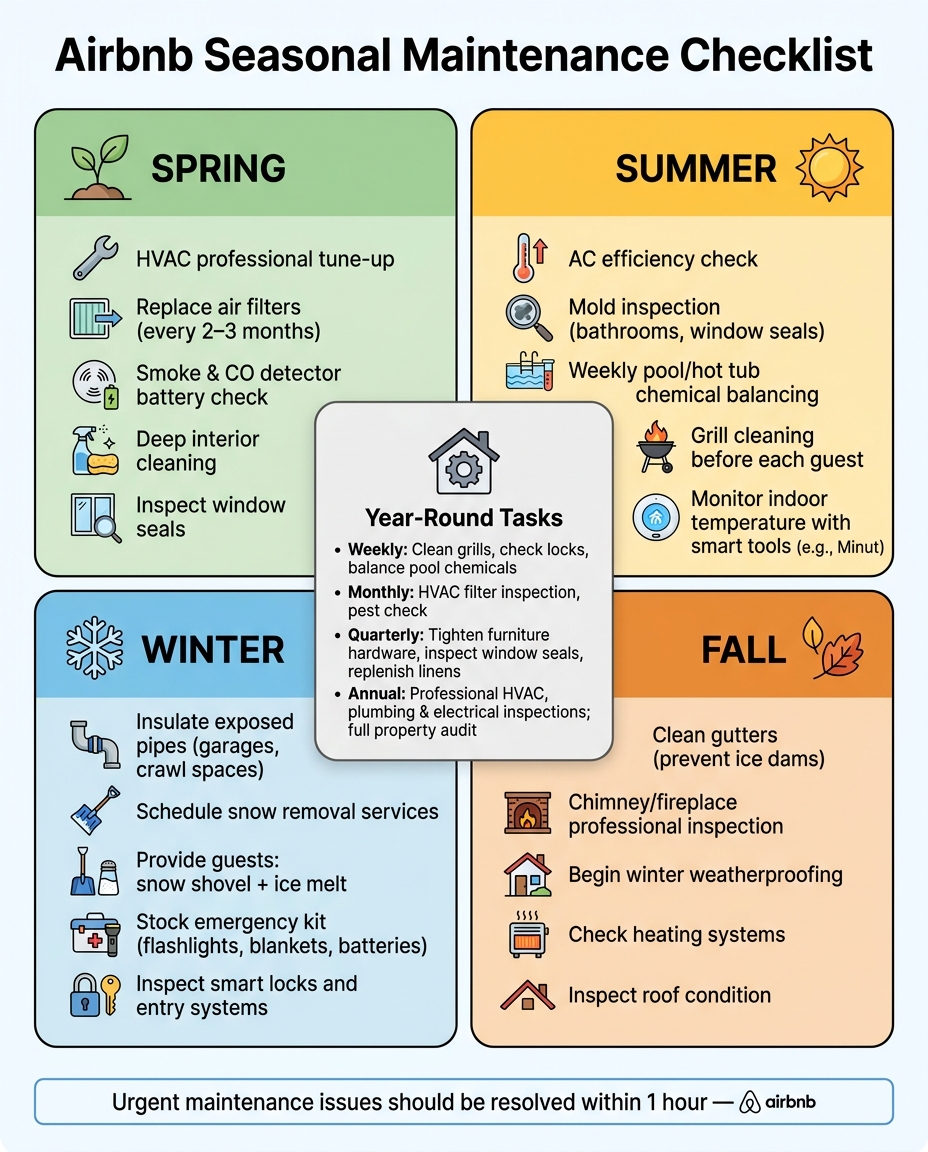
Airbnb Seasonal Maintenance Checklist: Year-Round Property Care Guide
Once you’ve outlined your checklist and assigned responsibilities, it’s time to dive into seasonal tasks that keep your property in great shape for guests. Each season brings its own challenges, and this guide ensures you’re ready for them all.
Spring Checklist: Getting Ready for Peak Travel Season
Spring is the perfect time to prepare for the busy travel months ahead. Start by giving your HVAC system some attention – schedule a professional tune-up and replace air filters. If pets are allowed on your property, plan to change filters every two months; otherwise, every three months should suffice[2]. Inside the home, check and replace batteries in smoke and carbon monoxide detectors as needed[1].
With spring prep done, you’ll be ready to shift gears and focus on summer comfort.
Summer Checklist: Keeping Guests Cool and Comfortable
Summer maintenance is all about ensuring guests stay cool and safe. Start by checking that your AC is running efficiently – nothing ruins a vacation faster than a poorly functioning air conditioner. In humid areas like South Florida, inspect bathrooms and window seals for any signs of mold caused by excess moisture[2][3]. If you have a pool or hot tub, test and balance chemical levels weekly. Also, make sure the grill is clean and fully operational before each guest arrives. Consider using smart monitors like Minut, which can notify you of sudden indoor temperature spikes, allowing you to address issues before they escalate[1].
As summer winds down, fall becomes your chance to get ahead of potential winter problems.
Fall Checklist: Preparing for Colder Weather
Fall is the time to tackle tasks that can save you from expensive repairs during winter. For properties in mountain areas like Denver, this season is especially critical since peak winter bookings leave little room for maintenance delays. Clean gutters thoroughly to prevent ice dams from forming. If your property has a fireplace or wood stove, arrange for a professional chimney inspection and cleaning before the cold sets in[8].
Once fall tasks are done, you can shift your focus to safeguarding your property for the winter months.
Winter Checklist: Protecting Against Freeze Damage
In colder regions, preventing frozen pipes is a top priority. Insulate any exposed pipes in unheated areas like garages or crawl spaces. If your property is in a snowy area, schedule regular snow removal services and provide guests with essentials like a snow shovel and ice melt[3][8]. It’s also wise to stock an emergency kit with flashlights, extra blankets, and batteries to prepare for power outages[3].
Year-Round Maintenance Tasks
Some tasks require attention throughout the year to keep everything running smoothly. Regularly check for plumbing leaks and make sure all locks, including smart locks, are functioning properly[1][5]. Tighten furniture hardware quarterly, inspect window seals, and replace linens as needed. On an annual basis, schedule professional inspections for HVAC, plumbing, and electrical systems, and conduct a full property audit[5]. This is also an ideal time to consider professional design services to refresh your space and maximize its appeal.
| Frequency | Key Tasks |
|---|---|
| Weekly | Clean grills, check locks, tidy entrances, balance pool/hot tub chemicals |
| Monthly | Inspect HVAC filters, check for pests |
| Quarterly | Tighten furniture hardware, inspect window seals, replenish linens |
| Annual | Schedule professional HVAC, plumbing, and electrical inspections; complete a property-wide audit |
"By addressing minor issues early, you can avoid costly repairs down the line." – Alice Dodd, Minut[1]
Building a Maintenance Plan for Your Property
Your maintenance plan should reflect the specific needs of your property. For instance, a beachfront condo in South Florida will have vastly different requirements compared to a mountain cabin near Denver. Starting with a customized checklist can save you time, money, and unnecessary stress. By aligning this tailored approach with seasonal checklists, you’ll create a maintenance plan that covers all the bases.
Adjusting for Property Type and Location
The type of property you own dictates the scope of maintenance. A single-family home with a yard, pool, and multiple HVAC systems will demand more upkeep than a small one-bedroom condo. If your property is a luxury villa, the expectations are even higher – guests will notice and expect immediate fixes for even minor cosmetic issues.
Location plays an equally critical role. Properties in high-humidity areas are prone to mold and quicker wear on window seals. Desert homes, like those in Scottsdale, face challenges like dust, extreme heat, and UV damage, which can fade furniture and degrade outdoor surfaces. In colder climates, freezing pipes and heavy snow loads are common concerns. Tailor your checklist to tackle the specific challenges posed by your property’s environment.
Prioritizing Tasks by Impact and Urgency
After customizing your maintenance checklist, it’s time to prioritize. Start with tasks that impact safety, such as checking smoke or CO detectors, locks, and electrical systems. Next, focus on issues affecting guest comfort, like fixing air conditioning or addressing leaks. According to Airbnb, urgent maintenance problems should be addressed within 1 hour to maintain high service standards [7].
"Well-maintained listings reduce cancellations, complaints, and refunds." – Airbnb [7]
Cosmetic updates – like repainting walls or replacing worn-out decor – are important too but can wait for slower periods when occupancy is low. By focusing on safety first and then tackling comfort issues, you’ll avoid feeling overwhelmed when the to-do list grows.
Tracking Maintenance Progress and Costs
To keep everything organized, use a digital log to track completed tasks, expenses, and recurring problems. Tools like Breezeway help you monitor maintenance tasks and inventory, while PriceLabs identifies low-demand periods – perfect for scheduling major repairs without cutting into peak-season revenue [9][10]. For smaller operations, even a shared Google Calendar with recurring reminders can do the trick.
Document each task with details like the date, cost, and contractor used. Over time, this log will reveal patterns, such as an HVAC unit that frequently breaks down, and provide a clearer view of your annual maintenance expenses. This makes budgeting for the next year much easier. As Lizzie Griffin of Breezeway explains:
"Regular maintenance isn’t just about fixing what’s broken; it’s about preventing issues before they occur." [9]
Using Professional Management to Handle Maintenance
When maintenance starts to impact guest satisfaction, managing it yourself can quickly become overwhelming. Keeping track of vendors, scheduling inspections, and addressing repair issues between guest stays takes a lot of time. And when something gets missed, it often shows up in your reviews. If you’re seeing repeated complaints about unresolved problems, it’s a clear sign your current approach isn’t cutting it. The challenges grow even more if you’re managing multiple properties or coordinating repairs from out of state. This is where professional management can make a real difference.
How Rank One Stays Handles Seasonal Maintenance
Rank One Stays takes the hassle out of maintenance coordination. Their full-service management includes everything from scheduling vendors to conducting property inspections and ensuring repairs are completed – nothing falls through the cracks. They also use smart tools like Minut to monitor noise levels, cigarette smoke, and environmental changes such as temperature and humidity in real time [1]. For example, if there’s a sudden spike in humidity that could lead to mold, the system flags it before it turns into a costly issue.
The Benefits of a Managed Maintenance Program
With a solid maintenance program in place, you’re not just avoiding problems – you’re creating a better experience for your guests. Proactive management keeps your property in excellent shape, which translates to happier guests and higher revenue. Partnering with a full-service vacation rental management company ensures your property gets regular, reliable upkeep instead of just addressing problems as they arise.
Rank One Stays customizes maintenance plans to suit your property’s unique needs. Whether it’s a waterfront rental in Lighthouse Point that deals with high humidity or a desert home in Scottsdale exposed to intense sunlight, they’ve got it covered. With management fees starting at just 10% of rental income and property owners earning 38% more revenue than the market average, professional management often pays for itself in no time.
Conclusion: Keeping Your Airbnb in Good Shape All Year
Taking care of your property is more than just upkeep – it’s about protecting your income. Cleanliness and maintenance directly impact guest reviews and rebooking rates [1]. Plus, staying on top of repairs and upkeep helps cut down on cancellations, complaints, and refund requests, boosting your earnings over time.
A seasonal checklist can be your secret weapon. From tightening furniture every few months to sealing windows before winter or checking for moisture after a rainy spring, these small, consistent efforts help maintain your property’s value. And don’t forget – Airbnb tends to reward well-maintained listings with better search visibility [7].
Think of this checklist as your go-to guide for keeping your property in top shape all year. By addressing potential issues early, you’ll not only avoid headaches but also create a better experience for your guests. Whether you’re updating your maintenance plan or considering professional help from Rank One Stays, this guide sets the stage for success, season after season.
FAQs
How much should I budget for seasonal maintenance?
Seasonal maintenance costs can differ based on what your property requires. A smart way to manage these costs is by prioritizing preventive maintenance. Regular check-ups and fixing small issues early can save you from expensive emergencies that could impact your net operating income. If you’re looking for a hands-off option, Rank One Stays provides full-service management. They take care of routine upkeep and handle damage claims, all while helping property owners boost their revenue by 38% compared to the market average.
What maintenance tasks should I always hire a pro for?
Always rely on professionals for jobs that demand safety and technical know-how. Tasks like HVAC servicing, plumbing, and electrical work require skilled expertise to ensure everything is done correctly and safely. Similarly, pest control, chimney inspections, and snow removal – especially during risky seasonal conditions – are best left to trained experts. Companies like Rank One Stays provide comprehensive property management services, covering everything from routine maintenance to emergency repairs. This means you can maintain your property in top shape while enjoying a hassle-free, income-generating investment.
What’s the easiest way to track maintenance across seasons?
The easiest approach is to use a recurring maintenance calendar that blends daily turnover tasks with monthly, quarterly, and yearly checklists. This proactive system helps you tackle wear and tear early, saving you from expensive repairs down the line. If you’d prefer a hands-off option, Rank One Stays provides full-service management, including expert maintenance oversight, keeping your property in top shape and ensuring guests have a great experience all year long.