
A deep clean is how I protect 5-star cleanliness, lower wear, and catch small issues before they turn into bad reviews or repair bills. This proactive approach works best when paired with professional vacation rental design that prioritizes durable, easy-to-clean materials. In short: I treat turnover cleaning, deep cleaning, and seasonal maintenance as three separate jobs with different timing.
Here’s the full picture in plain English:
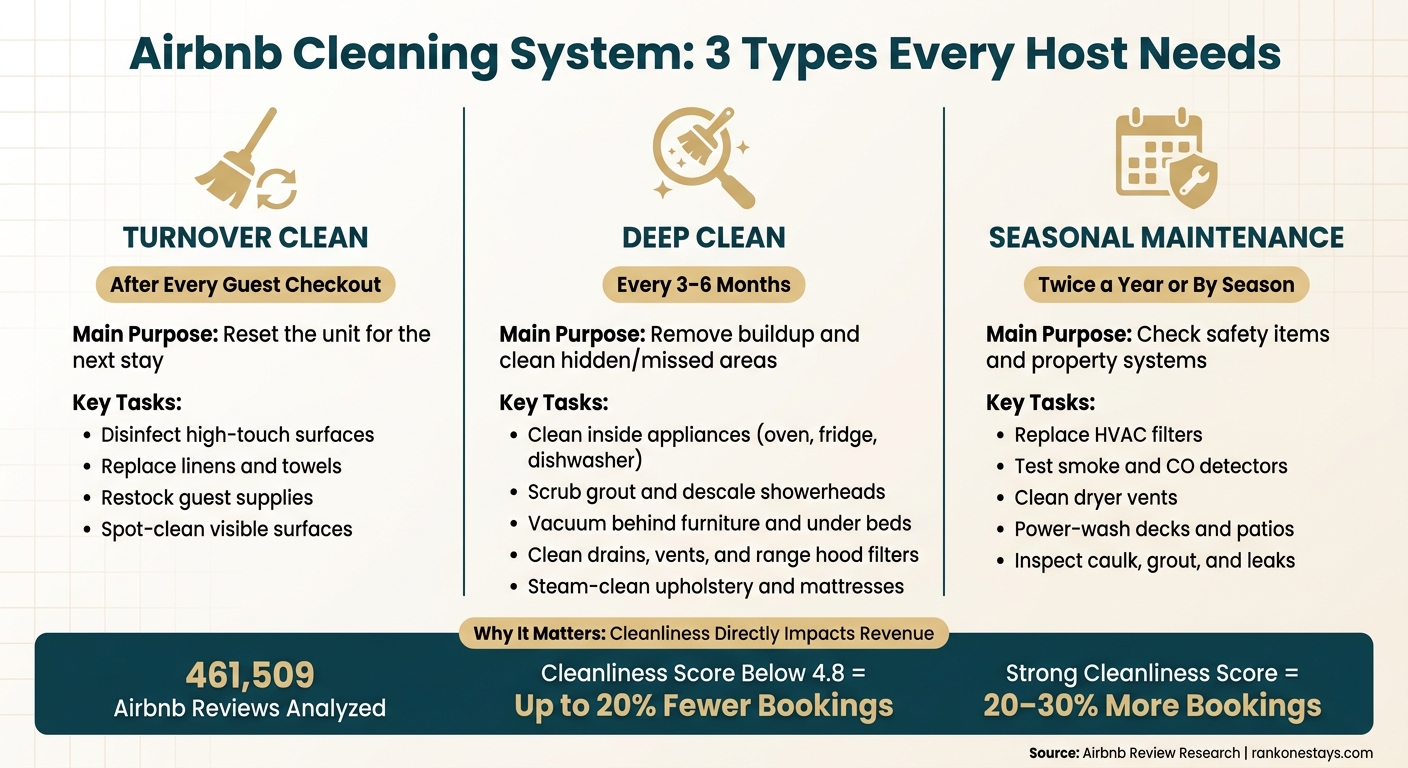
- Turnover cleaning happens after every checkout and handles the guest reset.
- Deep cleaning usually happens every 3 to 6 months and targets hidden dirt, grease, dust, grout, drains, and inside appliances.
- Seasonal maintenance covers safety and property care, like HVAC filters, smoke/CO detectors, dryer vents, windows, grills, and outdoor surfaces.
The article also makes one point very clear: cleanliness has a direct link to bookings. It cites research on 461,509 Airbnb reviews and notes that listings with cleanliness scores below 4.8 can see up to 20% fewer bookings, while strong cleanliness scores can support 20% to 30% more bookings.
If I had to boil the checklist down to the jobs that matter most, it would be this:
- Clean high-touch surfaces the right way, including label dwell time for disinfectants
- Go beyond visible surfaces and clean behind furniture and appliances
- Deep clean the kitchen and bathroom first, since those rooms shape guest perception fast
- Check laundry, vents, drains, grout, caulk, and leaks
- Add outdoor areas, windows, entry points, and HVAC tasks to the schedule
- Keep a photo log with dates like 06/30/2026 for tracking and claims
- Put every task on a monthly, quarterly, semi-annual, or annual schedule
A short side-by-side view helps:
| Cleaning type | When it happens | Main purpose |
|---|---|---|
| Turnover clean | After every guest | Reset the unit for the next stay |
| Deep clean | Every 3–6 months | Remove buildup and clean missed areas |
| Seasonal maintenance | Twice a year or by season | Check safety items and property systems |
So this isn’t just a cleaning list. It’s a simple system for keeping the rental guest-ready, keeping reviews steady, and spotting trouble early.
Airbnb Cleaning Types: Turnover vs. Deep Clean vs. Seasonal Maintenance
7 Overlooked Things to Clean in Your Airbnb This Spring
sbb-itb-103bddb
Supplies, Safety, and Tracking Before You Start
Before you dive in, get your supplies together, protect yourself, and set up a simple cleaning log. That small bit of prep makes the whole job smoother, especially if you aren’t using professional property management to handle these deep cleans. You can move room by room and still keep track of high-touch spots without doubling back.
Core Cleaning Products and Equipment
A turnover clean usually leans on all-purpose cleaners and disinfectants. A deep clean is different. It calls for heavier products like oven cleaner, grout cleaner, and degreaser that you may use ONLY during deeper service.
Use this standard kit for every deep clean.
| Supply/Tool | Common Use | Unit/Notes |
|---|---|---|
| EPA-Approved Disinfectant | High-touch surfaces: remotes, handles, switches | Keep the surface wet for the label dwell time [4] |
| Heavy-Duty Degreaser | Stovetops, range hoods, oven exteriors | Use in well-ventilated areas; often sold in 32 oz. spray or gallon-size refills |
| Oven Cleaner | Interior oven walls and racks | Deep clean use only; requires ventilation |
| Grout Cleaner | Bathroom tile and kitchen backsplashes | Use with a stiff scrub brush |
| Glass Cleaner | Mirrors, windows, glass tabletops | Streak-free formula with a microfiber cloth or squeegee |
| Enzyme Drain Treatment | Sinks, showers, and tubs | Less harsh than caustic drain cleaners; use monthly or quarterly |
| Stainless Steel Polish | Fridge, oven, and dishwasher exteriors | Wipe with the grain of the metal |
| HEPA Vacuum | Carpets, upholstery, mattress surfaces | Essential for allergen removal, especially in pet-friendly rentals [2] |
| Steam Cleaner | Upholstery, curtains, tile grout | Use distilled water to prevent mineral scale; recommended quarterly |
| Color-Coded Microfiber Cloths | All-purpose wiping and dusting | Use separate colors by zone – e.g., red for toilets, blue for glass, yellow for counters – to prevent cross-contamination [1][2] |
A few tools here do more work than people expect. Color-coded microfiber cloths help stop cross-contamination. A HEPA vacuum matters a lot in pet-friendly rentals, where hair, dander, and dust settle into soft surfaces [2]. And if you use a disinfectant, the big rule is simple: let it sit wet for the full label dwell time [4].
Safety Steps and Deep-Clean Documentation
Start with basic safety. Wear gloves, open windows, and run exhaust fans before you clean. Then leave the fans on for 20–30 minutes after you’re done. If you’re cleaning around or behind appliances, unplug them first, especially the refrigerator and oven. Moving a gas stove? Check the gas line connection before pushing it back into place [3].
Disinfectants need time to do their job. If the label says the surface must stay wet, let it stay wet for the full dwell time before it air-dries [4]. Spraying and wiping right away cuts down how well it works.
You should also document each deep clean as you go. Use the U.S. date format, like 06/30/2026, and keep timestamped photos. Those photos can matter if you ever need to file an AirCover or insurance claim for property damage [4]. A simple log is enough:
- Date
- Initials
- Issues found
- Before/after photos
Next, use this setup to work through each room in order.
Room-by-Room Airbnb Deep Cleaning Checklist
Work from top to bottom and from the far corner toward the exit. That way, dust drops onto surfaces you haven’t cleaned yet instead of the ones you just finished.
Entry, Living Areas, and Bedrooms
Begin at the ceiling. Slip a pillowcase over each ceiling fan blade and wipe it down so the dust stays inside the fabric instead of floating across the room. Then dust crown molding, the tops of picture frames, doorframes, window tracks, and air vents.
After the higher areas are done, move the furniture. Pull sofas, beds, and dressers away from the wall and vacuum underneath. Clean the gap between the headboard and the wall, along with under sofa cushions and other easy-to-miss spots. Once you’ve vacuumed, disinfect high-touch surfaces like light switch plates, outlet covers, remote controls, game controllers, thermostat controls, and door handles. Clean inside closets and drawers as well.
For soft items, wash mattress protectors, duvet covers, and shams, and clean pillows based on the manufacturer’s directions. Vacuum the mattress surface and rotate it. Steam-clean upholstery and area rugs. Then finish up with the window tracks and sills, and spot-clean scuff marks on walls and doorframes.
Next comes the kitchen, where grease and appliance buildup can pile up fast.
Kitchen and Dining Areas
Start with the oven interior, then move to the refrigerator. Clean the inside shelves and door gaskets, then pull the fridge away from the wall and vacuum the coils underneath.
Degrease the range hood filter, wipe out every cabinet and drawer interior, and clean the dishwasher filter. Descale the coffee maker and kettle. Deodorize the garbage disposal with ice, salt, and vinegar. Wipe all cabinet pulls and appliance handles, and check cookware for chips or damage.
Bathrooms, Laundry, and Utility Spaces
Start with grout, scale, drains, and fan buildup. Scrub grout lines with an oxygen bleach solution and a stiff brush. Soak the showerhead in white vinegar to remove hard-water buildup. Use a drain snake to clear hair from the drain. Clean the exhaust fan cover by removing it, washing it, and wiping the inside area. Scrub behind the toilet base and around the floor bolts, where grime tends to build up.
Check shower door tracks for mold and soap scum. Wipe under the sink rim and inside the cabinet below. Wash bathmats and replace or clean the shower curtain liner on a set schedule.
In the laundry area, run a cleaning cycle on the washing machine and wipe the drum interior and detergent tray. Clean the lint trap and the full vent line during every deep clean. Pull the machines away from the wall and check for dust, leaks, and mildew. Any utility closet or mechanical space should get the same kind of check: look for moisture, leaks, or mold.
After the interior is done, move on to windows, entry points, outdoor surfaces, and HVAC checks.
Exterior and Seasonal Deep Cleaning Tasks
Once the interior is done, shift outside and to the systems guests notice right away. The exterior sets the tone before anyone even walks in, and it helps shield the property between stays.
Outdoor Areas, Windows, and Entry Points
Wipe down exterior light fixtures and swap out any burnt-out bulbs. Clean exterior window glass and screens, then vacuum debris from sliding door tracks before scrubbing them with a baking soda paste. It’s a small job, but it helps doors glide better and can cut down on drafts.
Sweep first, then power-wash patios, decks, and porches. Wipe down outdoor furniture, wash removable cushion covers, and check each piece for wear or damage. Give the grill a full deep clean too: remove the grates, then degrease the inside and outside. At the entry, disinfect the spots guests touch most, like door handles, keypads, and lockboxes.
Plan major outdoor deep cleans for March–April and again in October–November. If the property is near the coast, window washing and deck upkeep may need to happen more often because of salt spray and humidity [3][2].
HVAC, Filters, Detectors, and Preventive Maintenance Checks
After the outside surfaces, check the systems that affect air quality, safety, and smell. Clean vents and registers to cut down on dust and odors. Replace HVAC filters monthly during peak season and every three months in the off-season [5]. Vacuum vent covers and registers as part of the same pass.
Test smoke and carbon monoxide detectors every month, and replace batteries every six months [3]. Check caulk and grout for gaps or separation. Also look for leaks under sinks and around toilets. These are the kinds of small issues that can turn into big headaches if they sit too long.
Use this schedule to keep exterior and system tasks on track:
| Frequency | Task |
|---|---|
| Monthly | Replace HVAC filters (peak season), test smoke/CO detectors, check all light bulbs, inspect first aid kit |
| Quarterly | Deep-clean grill, clean window tracks and sills, inspect outdoor furniture for wear, descale showerheads and faucets |
| Semi-Annual | Full window washing (interior and exterior), launder outdoor cushion covers, replace smoke/CO detector batteries, flush water heater |
| Annual | Power-wash deck and patio, professional HVAC servicing and duct cleaning, professional dryer vent cleaning |
Skipping dryer vent cleaning is a bigger risk than many hosts think. It contributes to about 2,900 U.S. dryer fires each year [3]. Putting it on the calendar once a year, ideally during a fall reset, helps protect both guests and the property.
How to Turn the Checklist Into a Repeatable System
Set a Monthly, Quarterly, and Seasonal Cleaning Schedule
A checklist works best when it lives on a fixed schedule. Once you have your room-by-room checklist, turn it into a recurring system your team can follow without guesswork.
Run the checklist on a set cadence: monthly, quarterly, semi-annual, and annual. Use monthly cleanings for high-use items, quarterly cleanings for hidden buildup, semi-annual cleanings for HVAC and seasonal work, and annual cleanings for major maintenance. Tie each task to open gap days so deep cleans don’t get in the way of revenue.
It also helps to sync your cleaning calendar with your booking calendar or PMS. That way, same-day turnovers don’t slip through the cracks. Open gap days are the right time to schedule deep cleans without blocking revenue.
Reference photos make a big difference too. Give cleaners photos of each room staged exactly the way it should look after a clean. That keeps standards steady across crews and cuts down on back-and-forth. During deep cleans, ask cleaners to flag anything that needs attention, like:
- loose hardware
- leaks under sinks
- cracked caulk
- worn grout
- pillows that no longer spring back
Those notes should become repair tasks before the next guest arrives.
If you manage more than one property, group nearby units on the same deep-clean day to cut travel time by 20–30% [3].
When to Use Professional Vacation Rental Management
Self-managing one property with a dependable local cleaner can work. But the moment you’re remote, running multiple units, or dealing with uneven cleaning quality, it gets much harder to keep the system on track.
Cleanliness affects revenue, so steady deep cleaning helps protect both bookings and pricing. For owners who want this handled end to end, Rank One Stays coordinates professional housekeeping and maintenance tracking as part of full-service vacation rental management.
Conclusion: Key Tasks That Protect Reviews and Revenue
Once the cadence is in place, the checklist becomes something you can repeat across every stay and every season. A deep cleaning checklist only helps if it’s tied to a system people will actually follow. Fixed timing, reference photos, and maintenance handoffs keep standards steady. When deep cleans happen on schedule and issues are handled fast, the property stays in better shape, guests leave better reviews, and small problems are less likely to turn into expensive repairs.
FAQs
How do I know when my rental needs a deep clean sooner?
Schedule a deep clean every 3 to 6 months to deal with buildup that standard turnovers often miss.
If you’re in a high-turnover urban market, aim for every 3 months. In seasonal markets or rentals with longer stays, every 4 to 6 months is usually enough.
It also makes sense to deep clean sooner after long guest stays or an extended vacancy. And if all of this starts to feel like too much to juggle, Rank One Stays can help with professional housekeeping and full-service management.
What deep-cleaning tasks matter most for guest reviews?
Cleanliness can make or break a guest review.
Bathrooms usually get the closest look. Guests notice the small stuff fast: hair in drains, soap scum on shower glass, smudged mirrors, and any grime they can see right away.
Kitchens shape first impressions too. A greasy stovetop, crumbs hiding in drawers, or a messy coffee station can leave the place feeling off, even if the rest of the home looks fine.
And then there are the basics guests always judge: spotless, well-made beds and thoroughly vacuumed floors, including under furniture. If those areas are clean, the whole space tends to feel better cared for.
Should I deep clean myself or hire professional help?
It depends on your time, the size of your portfolio, and how much consistency you need.
Doing it yourself gives you direct control. But deep cleans often take 4 to 8 hours per property, which can eat up a big chunk of your day fast.
Hiring professionals gives you a more scalable and consistent setup. That can help keep each property in top shape and support 5-star ratings. If you want a turnkey option, Rank One Stays provides professional housekeeping and management in several U.S. markets.