
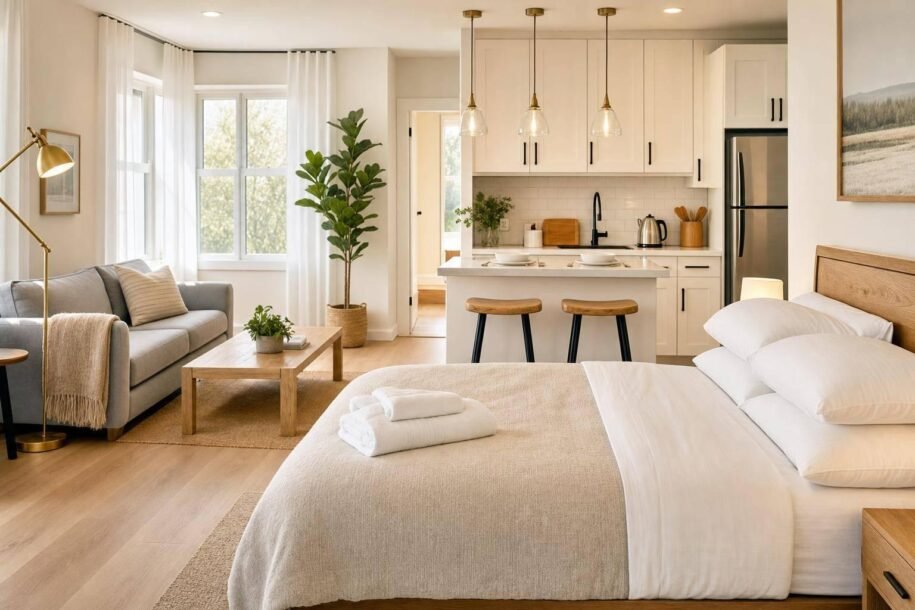
Better photos can drive more bookings, so I’d spend on the rooms guests notice first. If I were setting up a rental on a tight budget, or working with Lighthouse Point vacation rental management, I’d put my money into the bedroom, living room, lighting, towels, and kitchen basics before I spent much on décor.
Here’s the short version:
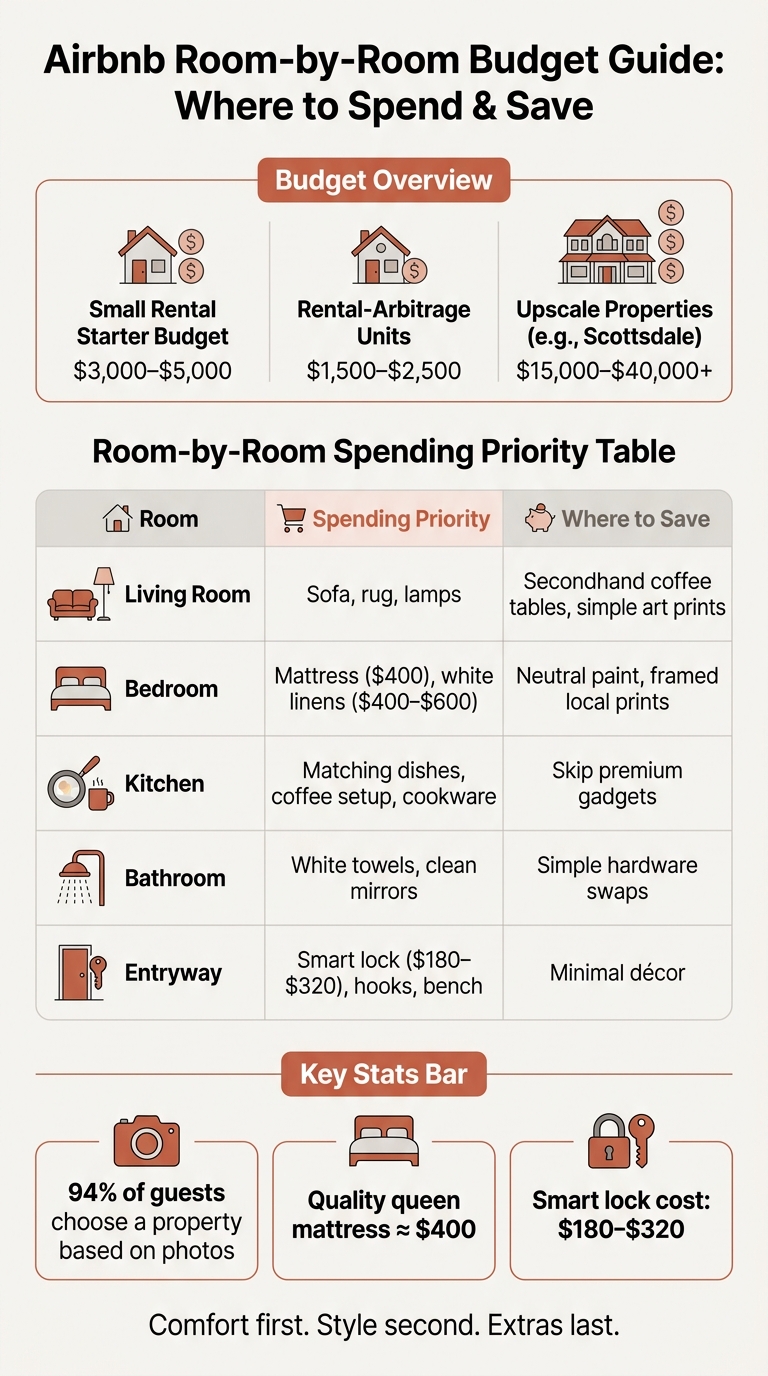
- I’d start with a total furnishing budget, often $3,000–$5,000 for a small rental
- I’d give the biggest share to the bedroom and living room
- I’d buy mattress, white linens, seating, lamps, towels, and cookware before art or extras
- I’d use Facebook Marketplace, estate sales, TJ Maxx, and HomeGoods to keep costs down
- I’d keep the look simple with one neutral, one second tone, and one accent
- I’d match the design to the market: light and resort-style in Scottsdale, warm and durable in Pittsburgh
A few numbers stand out. The article notes that 94% of guests choose a property based on photos, a queen mattress may cost about $400, white linen sets can run $400–$600, and a smart lock often costs $180–$320. That tells me where the first dollars should go.
What matters most is simple: comfort first, style second, extras last. If a guest can sleep well, get in with no hassle, and see a clean, photo-ready space, the design is doing its job.
Airbnb Decor Budget Breakdown From a Designer
sbb-itb-103bddb
Set Your Budget Before You Buy
Airbnb Room-by-Room Budget Guide: Where to Spend & Save
Set a room-by-room budget before you buy anything. If you don’t, décor tends to eat up the money and the basics get squeezed.
For a small rental, a starter furnishing budget often lands between $3,000 and $5,000. Rental-arbitrage units can sometimes be furnished for $1,500 to $2,500 with a mix of new and secondhand pieces[3]. In places like Scottsdale, larger or more upscale properties can climb to $15,000 to $40,000+, depending on size and finish level[1][2].
Once you have your total, break it up by room and buy based on guest impact.
Room-by-Room Spending Priorities
Put the biggest share of your budget into the bedroom and living room. A good mattress is worth about $400, and two to three sets of white cotton linens usually run $400 to $600[3]. Lighting is another smart place to spend. Swapping builder-grade fixtures and adding a few lamps often costs less than $500, and it can change how the place looks in listing photos[1].
Start with the spaces guests notice first and use the most.
| Room | Spending Priority | Where to Save |
|---|---|---|
| Living Room | Sofa, rug, lamps | Secondhand coffee tables, simple art prints |
| Bedroom | Mattress, white linens | Neutral paint, framed local prints |
| Kitchen | Matching dishes, coffee setup, cookware | Skip premium gadgets and specialty appliances |
| Bathroom | White towels, clean mirrors | Simple hardware swaps |
| Entryway | Smart lock, hooks, bench | Keep décor minimal to avoid clutter |
For case goods like dining tables, dressers, and coffee tables, Facebook Marketplace and estate sales are solid places to find durable pieces. Then use discount retailers for smaller accents. Save your new-item budget for the stuff guests touch and notice most: bedding, towels, seating, and lighting.
DIY Setup vs. Professional Design Support
DIY furnishing can work well when you’re on a tight budget, testing a new market, or setting up a simple layout[2]. But there’s a common trap here: using personal favorites that don’t help the rental. Sentimental items, dark colors, or mismatched furniture can make a space feel busy in photos[5].
Professional design support gives the unit a clear visual identity that tends to photograph better and takes a lot of decision-making off the owner’s plate[1]. A partner like Rank One Stays handles turnkey sourcing, setup, and photography-ready staging.
| DIY Setup | With Rank One Stays | |
|---|---|---|
| Owner Time | High | Low – turnkey service |
| Design Cohesion | Variable | Intentional, market-matched |
| Photography Readiness | Requires manual staging | Optimized for listing photos |
| Revenue Potential | Market average | Higher with optimization |
Either way, stick with the same order: function first, style second. That’s the same logic behind the checklist below.
Room-by-Room Budget Checklist
Use this checklist in the order guests notice things: first photos, sleep, daily use, then arrival.
Living Room and Bedroom: Comfort That Shows Up in Photos
The living room is usually the first image guests see. In many cases, it sells the listing before they read a single line. That means it needs to look good fast.
A used sofa in a neutral color can anchor the room without eating up your budget. Add simple layered lighting to make the space look better in photos. Keep the coffee table almost empty, with just one or two items, like a book or a small plant. And for listing photos, turn off the TV. 94% of guests choose a property based on photos [2], so camera-ready setup isn’t a nice extra. It’s part of the job.
In the bedroom, start with the items guests feel right away: the mattress and bedding. Budget about $400 for a quality queen mattress [3] and around $200 for white cotton sheets and pillowcases [3]. Plan for 2–3 linen sets per bed so turnover stays smooth.
Dress the bed with:
- A duvet insert
- Euro shams
- A textured throw blanket
White linens look clean in photos, can be bleached between stays, and help signal a clean, steady setup. After that, add blackout curtains, a luggage rack, charging access on both sides of the bed, and those 2–3 linen sets per bed.
For Scottsdale vacation rentals, lean into light, airy colors like sand, white, and warm terracotta. Linen-textured throws fit the desert feel and don’t look out of place. In Pittsburgh, it makes sense to add a compact desk, task lamp, and charging access for longer stays.
Once the sleeping space is in good shape, move to the rooms guests use every day.
Kitchen and Dining: Practical Inventory Without Visual Clutter
Guests can tell right away when a kitchen looks clean and works without friction. Stock it for actual use, not for show.
Start with matching dishware, basic cookware, and a drip coffee maker. Add starter supplies like coffee, tea, cooking oil, salt, and pepper for about $30 total. Keep the counters clear so the kitchen feels larger in photos and easier to use in person.
For short stays, a lean setup usually does the job. For longer or higher-end stays, you can add a Nespresso machine, blender, or a more stocked pantry.
In Scottsdale, a clean, minimal look fits the resort-style feel many guests expect. In Pittsburgh, a better-stocked pantry makes more sense for guests staying longer and cooking at home.
Bathroom and Entryway: Signal Clean, Easy Arrival
After the main function pieces are done, finish the spaces that tell guests two things right away: this place is clean, and getting in will be easy.
Use white towels folded in a hotel style, plus a bath mat and a basic toiletry set. Hide all personal products during photos so the bathroom looks clean and uncluttered. Add a hair dryer and keep surfaces clear.
At the entry, pair the smart lock with a few simple setup items that make arrival smoother:
- Hooks
- A bench
- A clear Wi-Fi card
A keypad system typically costs $180–$320 [3]. A mirror near the entry can also help the space feel more open.
In Scottsdale, a light-colored entry with a simple hook rail and neutral mat works well for the dust and heat guests bring in after outdoor activities. In Pittsburgh, a tougher mat and coat-hook setup are better suited to wet weather and heavier gear.
Make the Home Feel Local Without Raising the Budget
Once the basics are covered, add a few market-specific touches that make the home feel like it belongs there. You don’t need a big spend to do that. A lot of local personality comes from low-cost picks in color, texture, and useful details that match the area.
The same budget-first plan should not look the same in every city.
Scottsdale: Light, Resort-Style, and Heat-Aware Design
In Scottsdale, aim for a light desert look. Warm white or sand walls work well, with terracotta or sage accents layered in. Natural wood and brass help keep the space bright and relaxed. Flat-weave rugs and light linen throws fit that style without making the room feel heavy.
Heat matters here, so blackout shades and ceiling fans do more than decorate. They help guests stay comfortable. Framed desert landscape prints from a local print shop can add place-specific style for about $40 each [3]. And if the property has outdoor space, string lights plus good seating can turn it into something that feels more like an outdoor living room than a spare patio.
Pittsburgh: Warm, Durable, and City-Stay Ready
Pittsburgh rentals do well with light, neutral wall colors that bounce daylight around and help city spaces feel bigger. Warm lighting can make the home feel cozy fast. For flooring, durable vinyl plank holds up well in a busy short-term rental [4].
Textiles matter more in a cooler-weather market. Plush rugs, heavy knit blankets, and insulated curtains can make the space feel comfortable right away. Industrial or historic details – like black metal hardware, wood shelving, or a vintage-style city print – help signal Pittsburgh’s character without adding much cost.
Use this as a quick guide for finishes and accents.
| Design Element | Scottsdale | Pittsburgh |
|---|---|---|
| Primary palette | Warm white, sand, terracotta, sage | Light neutrals, warm gray, navy |
| Key textiles | Flat-weave rugs, light linen throws | Plush rugs, heavy knit blankets, insulated curtains |
| Practical priorities | Blackout shades, ceiling fans, outdoor seating | Entry mats, coat hooks, work-friendly lighting |
| Local character | Desert landscape prints, natural wood, brass | Industrial or historic prints, metal hardware, wood shelving |
Rank One Stays can handle design and staging for Scottsdale or Pittsburgh properties.
Conclusion: Spend on Guest Comfort First, Then Style for the Market
After working through the room-by-room checklist, the main idea is pretty simple: comfort shapes reviews. So your first dollars should go to the things guests feel right away: the mattress, bedding, seating, and lighting.
Once sleep is handled, move to the items guests use every day. Focus on the basics first – cookware, towels, seating, and storage that looks good in photos and can take wear from back-to-back stays.
Then shape the look around the market. Scottsdale calls for a light, resort-style feel with finishes that make sense in the heat. Pittsburgh leans warmer, tougher, and better suited to city stays. From there, the last layer is all about presentation: clean surfaces, less clutter, hidden cords, and open curtains for better listing photos.
If you want a faster setup that fits the market, Rank One Stays offers vacation rental design and staging along with full-service property management in Scottsdale and Pittsburgh – budget-first design, matched to the market, for better photos and stronger bookings.
FAQs
How do I split a $5,000 Airbnb furnishing budget?
Prioritize guest must-haves first, then spend the rest on upgrades that look good in photos. A simple split looks like this:
- 40% ($2,000) for the living room and entry
- 25% ($1,250) for bedrooms
- 20% ($1,000) for the kitchen
- 10% ($500) for bathrooms
- 5% ($250) for finishing touches
One place not to cut corners: linens and cookware. They get used hard, wear down fast, and guests notice when they feel cheap.
What should I buy new versus secondhand?
Buy new for the items that shape guest safety, sleep, and that first look when they walk in: mattress, white cotton sheets and towels, bedding, smart lock, noise sensor, and professional photos.
For furniture and decor, secondhand often makes more sense. That includes things like couches, dining tables, dressers, pillows, basic art prints, and standard kitchen items. Just be picky about condition and cleanliness.
One thing to avoid: cheap amenities that fall apart after a few stays. They may save money up front, but they tend to wear out fast and can make the place feel tired.
How do I make my Airbnb look local on a budget?
Focus on styling with purpose, not just filling the room with furniture. Choose one clear look – like a modern desert retreat in Scottsdale or a cozy urban setup in Pittsburgh – and stick with a consistent three-color palette.
Then layer in budget-friendly details that make the space feel polished fast: textured blankets, Euro shams, good linens, warm lighting, and framed local photography. In kitchens and entryways, keep things clean and organized. Those two spots set the tone right away.