
Managing cash flow is essential for Airbnb hosts, especially with rising costs and competitive markets. Here are the top 5 tools in 2026 that simplify financial management, save time, and boost revenue:
- PriceLabs: Dynamic pricing software that adjusts rates based on local demand. Offers features like revenue forecasting, portfolio analytics, and seamless integration with Airbnb and other platforms. Pricing starts at $19.99/month per listing.
- Hostaway: A channel management tool for syncing bookings, calendars, and messages across platforms. Ideal for hosts with larger portfolios. Pricing ranges from $20–$40 per listing, plus setup fees.
- Stessa: A free-to-start financial tracking tool that automates income and expense tracking. Perfect for hosts managing multiple properties. Paid plans start at $12/month.
- Rolling Forecast Platforms: AI-powered tools that provide ongoing cash flow analysis and scenario planning. Pricing varies, with options like HostOp starting at $20/unit per month.
- Driver-Based Forecasting Tools: Tools like Beyond and Wheelhouse optimize pricing based on real-time market data. Pricing starts at $19.99/month or 1% of booking revenue.
These tools cater to different needs, from solo hosts to large-scale property managers. Whether you want better pricing strategies, streamlined operations, or detailed financial insights, these platforms can help you stay ahead.
Quick Comparison:
| Tool | Focus | Pricing | Best For | Key Feature |
|---|---|---|---|---|
| PriceLabs | Dynamic Pricing | $19.99/month/listing | Hosts with 1–10 properties | Localized pricing adjustments |
| Hostaway | Channel Management | $20–$40/month/listing | Hosts with 5+ properties | Multi-platform booking sync |
| Stessa | Financial Tracking | Free/$12–$28/month | Multi-property landlords | Automated income/expense tracking |
| Rolling Forecast | Cash Flow Projections | $20–$299/month | Scenario planning | AI-driven revenue forecasting |
| Driver-Based Tools | Real-Time Pricing | $19.99/month or 1% fee | Market-driven pricing | Demand-based rate adjustments |
Choose the right tool based on your portfolio size, management style, and financial goals.
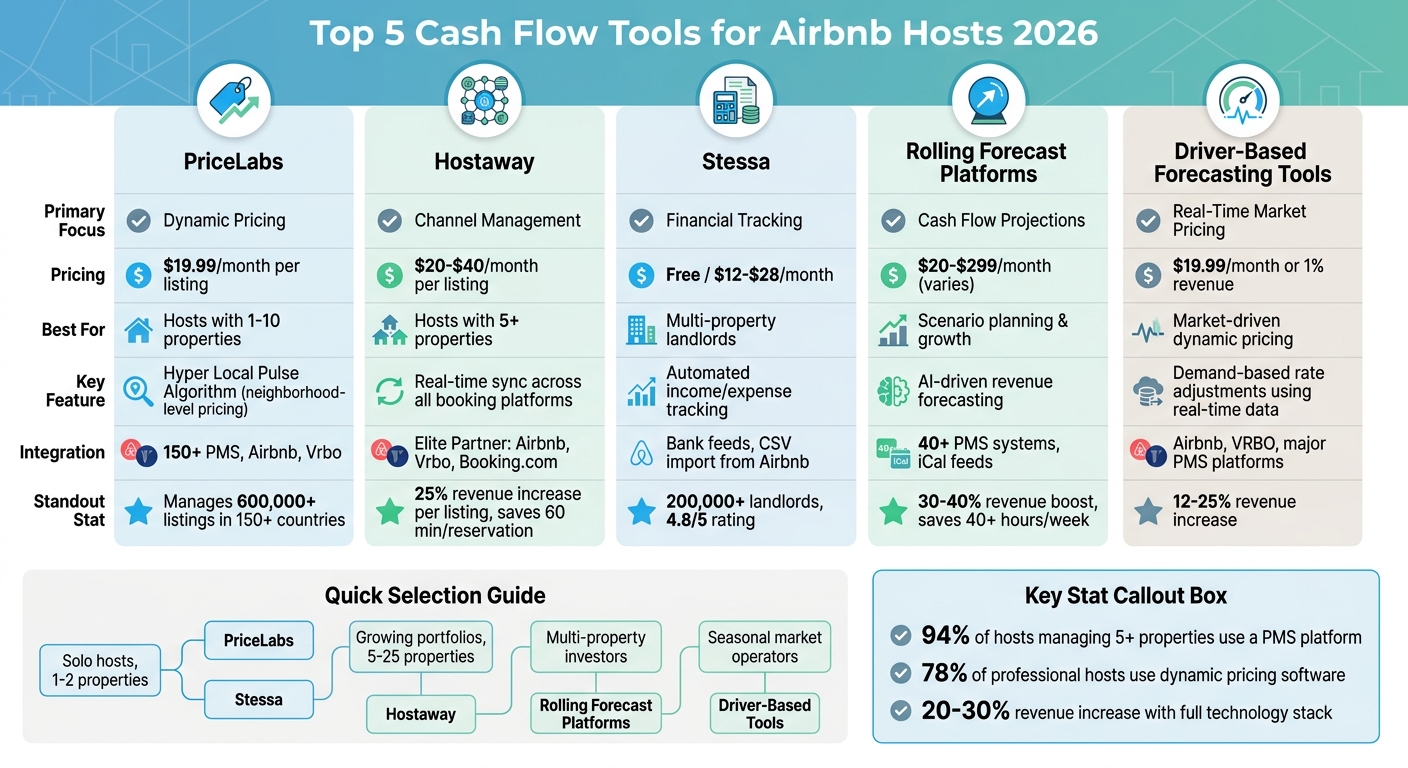
Top 5 Cash Flow Tools for Airbnb Hosts: Features and Pricing Comparison 2026
Airbnb Financials: FREE Cash Flow Calculator
sbb-itb-103bddb
1. PriceLabs
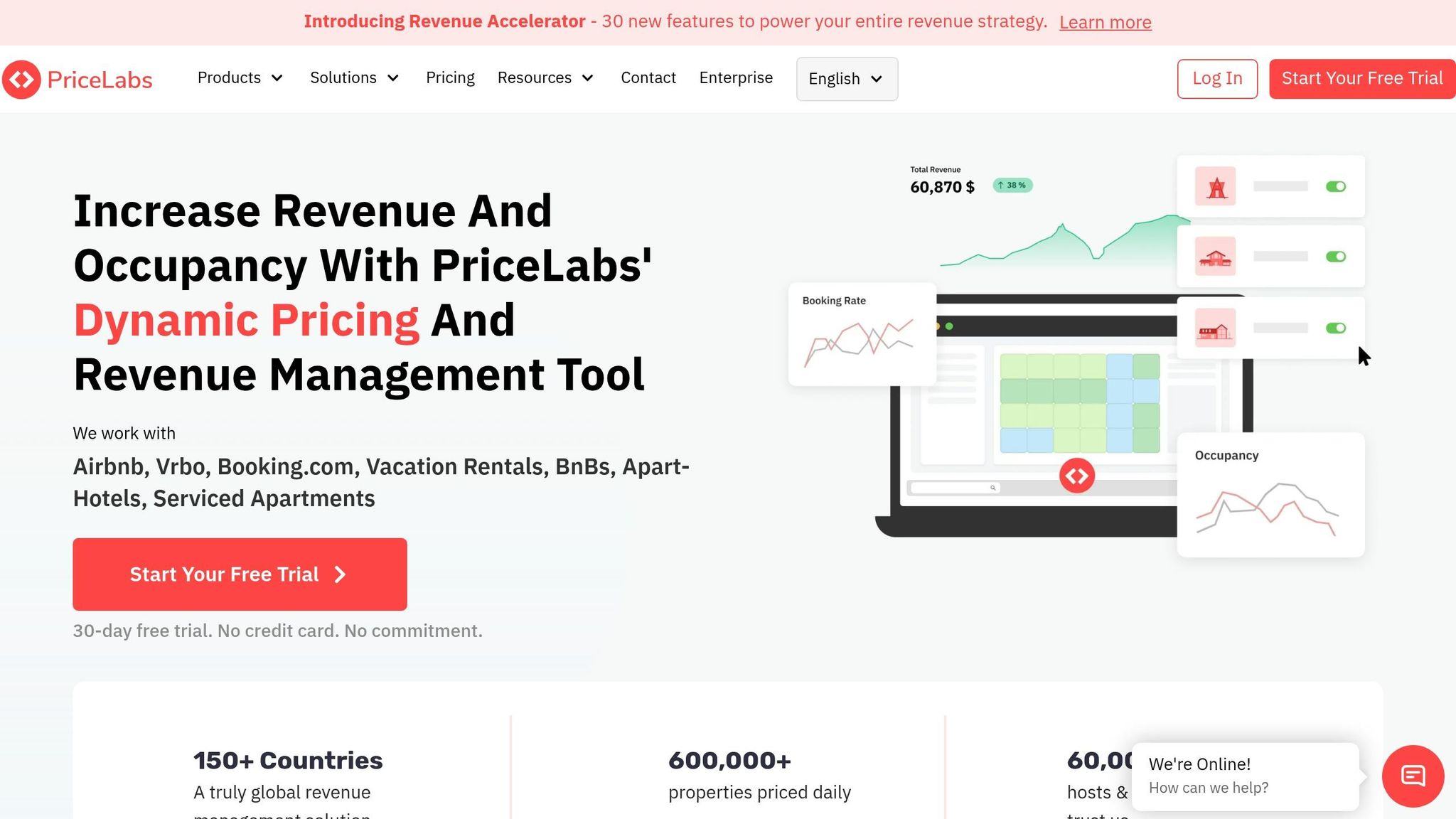
PriceLabs is a standout in dynamic pricing technology, managing over 600,000 listings across 150+ countries. Its Hyper Local Pulse Algorithm adjusts rates based on neighborhood-level demand, helping Airbnb hosts align pricing with local conditions and improve cash flow management.
Cash Flow Forecasting Capabilities
The platform’s Goal Setup feature allows hosts to define monthly revenue, occupancy, and ADR (Average Daily Rate) targets, which the algorithm works to achieve. The Portfolio Analytics dashboard helps track trends and identify underperforming listings, while Revenue Estimator Pro forecasts earnings using historical data and local trends. As Bill Faeth, a short-term rental investor and property manager, shared:
I’ve increased my short-stay rental revenues by at least 35% with PriceLabs[7].
Integration with Airbnb and Other OTAs
PriceLabs integrates seamlessly with over 150 property management systems and channel managers, including major platforms like Airbnb and Vrbo. This ensures daily synchronization of prices and minimum stay restrictions. Batch operations make it easy to apply universal rules, such as holiday pricing adjustments, across an entire portfolio[10].
Pricing Structure and Affordability
PriceLabs offers a flat rate of $19.99 per listing per month in the US, with volume discounts starting from the second property[10]. This pricing model becomes more economical than percentage-based tools when monthly revenue exceeds $2,000. For example, a listing generating $5,000 per month would pay $20 with PriceLabs versus $50–$62 under a 1% fee structure. New users can take advantage of a 30-day free trial, no credit card required[7]. Whether you’re managing a single property in Denver or overseeing a multi-market portfolio, this fixed-rate pricing simplifies financial planning.
Ease of Setup and Automation Features
Setting up PriceLabs takes about 2–3 hours initially[9]. Once configured, the platform automates tasks like orphan day pricing, last-minute discounts, and occupancy-based adjustments. Tools like the Base Price Helper and Future Prices & Occupancy Insights analyze past performance to recommend starting prices and establish pricing floors and ceilings[8]. After setup, PriceLabs runs on autopilot, making it a valuable tool for streamlining operations and maintaining strong cash flow – both crucial for Airbnb success in 2026.
2. Hostaway
Hostaway takes dynamic pricing tools like PriceLabs to the next level, simplifying vacation rental property management for property managers with expanding portfolios. As an Elite Partner of Airbnb, Vrbo, and Booking.com, it uses direct API connections to synchronize calendars, messages, and reviews in real time across major booking platforms.
Cash Flow Forecasting Capabilities
Hostaway provides advanced financial reporting tools to keep track of portfolio performance. It automates processes like guest charges and deposit collections, while features like built-in owner statements and rental activity analytics offer a clear view of revenue. Plus, its integration with QuickBooks makes tax prep and financial forecasting a breeze. A real-world example? Host Services Group in Canada saw 642% growth in just 12 months and doubled its efficiency after adopting Hostaway [11]. These tools ensure financial clarity while keeping all booking channels seamlessly aligned.
Integration with Airbnb and Other OTAs
Hostaway centralizes OTA messages, reviews, and bookings into a single dashboard, reducing the risk of double bookings and ensuring steady cash flow. Users have reported a 25% revenue increase per listing thanks to cross-channel distribution. With its extensive integrations, Hostaway connects to specialized tools like smart locks and cleaning management systems, saving hosts about 60 minutes per reservation through automation [11].
Pricing Structure and Affordability
Hostaway’s pricing ranges from $20 to $40 per listing per month, with one-time setup fees between $100 and $500 [12]. This pricing is ideal for portfolios with 10 or more properties, where the platform’s automation features can deliver a solid return on investment. As Brian L from Sage Vacations shared:
The best part is that they actually do customer onboarding. Hostaway makes sure that you’re set up for success [11].
Ease of Setup and Automation Features
Hostaway simplifies onboarding with dedicated support to configure financial and automation tools. It boasts a 4.8/5 star rating from over 5,500 reviews. Its AI-powered tools can automate up to 90% of guest and staff communications, allowing hosts to focus on scaling their business. For those with unique needs, an open API supports custom integrations, and 24/7 phone support ensures help is always available [11].
3. Stessa
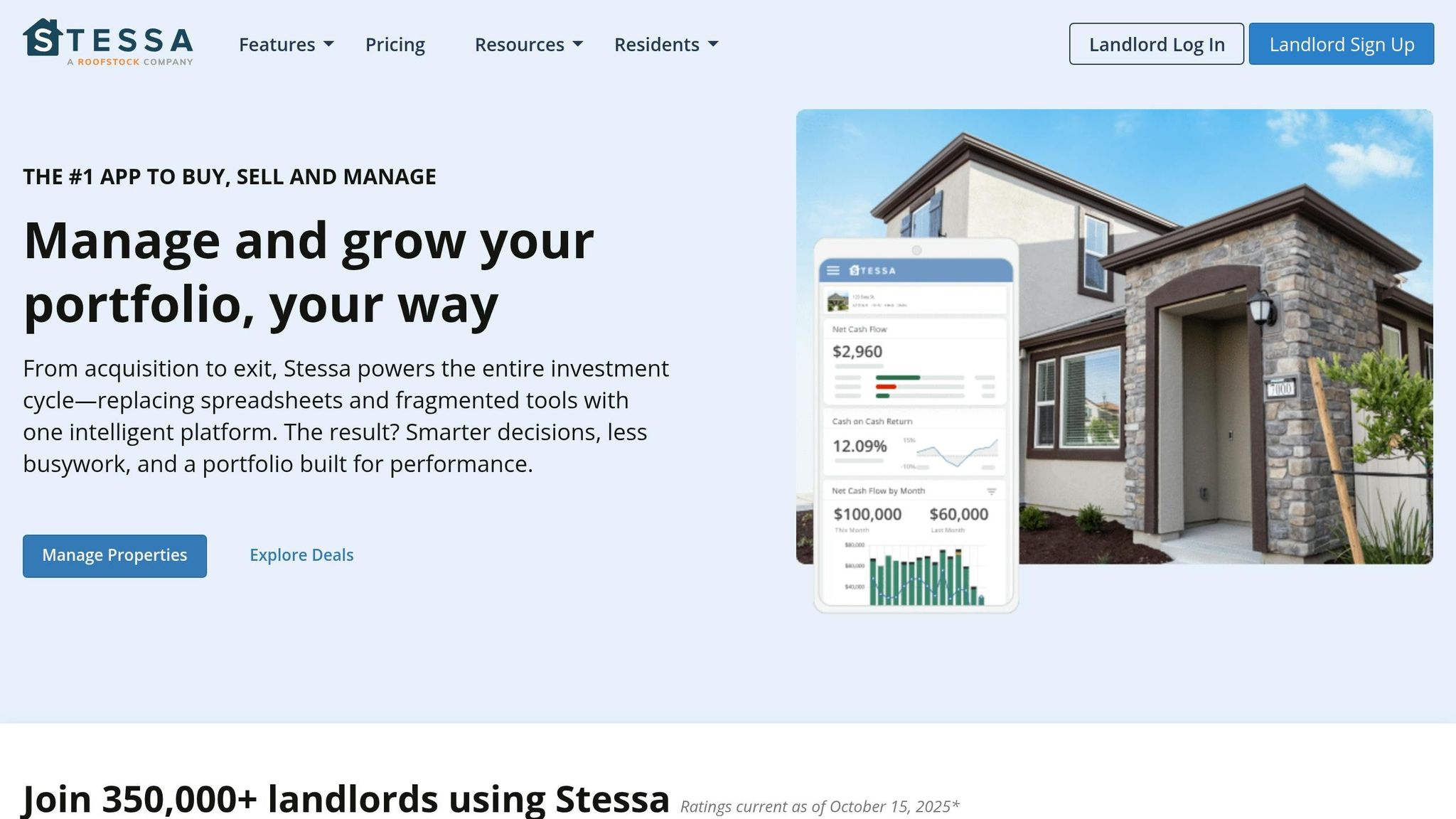
Stessa is a financial tracking platform designed specifically for Airbnb hosts, offering a free-to-start option. While tools like PriceLabs and Hostaway focus on pricing or property management, Stessa zeroes in on simplifying bookkeeping. With a 4.8/5 rating and over 200,000 landlords using it, the platform is ideal for those who want automated financial tracking without diving into complex accounting software [13].
Cash Flow Forecasting Capabilities
Stessa provides real-time dashboards that break down profit and loss for each property. By connecting your bank accounts, the platform automatically tracks income and expenses. A standout feature is its Pro Forma analysis, which allows you to input projected nightly rates and occupancy levels. This lets you compare expected income against actual performance, helping you identify potential cash flow issues early [16]. Transactions are also auto-categorized into groups like "Booking & Platform Fees", "Cleaning", and "Short Term Occupancy Taxes", making tax preparation much easier [16].
Integration with Airbnb and Other OTAs
Although Stessa doesn’t offer a direct API connection to Airbnb, it allows you to import your Airbnb Transaction History via CSV files. This feature helps separate gross revenue from fees and taxes, a critical distinction since standard bank feeds only show net payouts (e.g., $96 instead of $100 gross revenue minus $4 in fees) [14]. If you’re using both the CSV importer and connected bank accounts, Stessa’s "Bulk Edits" tool can help you eliminate duplicate transactions [16].
Pricing Structure and Affordability
Stessa offers three pricing tiers: a free Essentials plan, a Manage plan at $12/month (billed annually), and a Pro plan at $28/month (billed annually) [15]. All plans support unlimited properties, making it a cost-effective option for hosts managing multiple units. The Pro plan includes features like unlimited receipt scanning, budgeting tools, and a competitive 3.24% APY on cash balances starting April 1, 2026 [15]. Even the free tier comes with automated bank feeds and basic financial reports, which would typically cost $35 or more per month with tools like QuickBooks [2]. Pro users also benefit from 1.1% cash back on debit card purchases and FDIC insurance up to $3 million through Thread Bank [15].
Ease of Setup and Automation Features
Setting up Stessa involves four straightforward steps: importing your Airbnb CSV file, selecting "Short-term Rental" as the unit type, entering pro-forma expenses, and linking your bank accounts [16]. Once set up, the platform automates transaction imports, though you might need to make occasional manual adjustments for specific tax line items. The mobile app adds convenience by allowing you to scan receipts and track expenses on the go [13]. However, Stessa doesn’t track mileage or "material participation" hours, which are important for certain tax strategies. Hosts filing Schedule C may need to keep manual logs for these [2]. For those managing properties across markets like Denver or Pittsburgh, Stessa’s ability to handle unlimited properties – even on the free plan – makes it an excellent starting point for financial management.
Next, take a look at Rolling Forecast Model Platforms for a different approach to cash flow projections.
4. Rolling Forecast Model Platforms
Rolling forecast platforms offer a smarter way to manage cash flow by continuously analyzing booking trends, seasonal fluctuations, and upcoming expenses. Instead of relying on reactive spreadsheet updates, these tools enable strategic planning. For Airbnb hosts juggling multiple properties in competitive markets like Scottsdale or Denver, this approach can help avoid cash shortfalls while setting the stage for more advanced forecasting options.
Cash Flow Forecasting Capabilities
These platforms leverage AI algorithms to predict revenue using a mix of historical data and local market trends. Some platforms report revenue boosts of 30–40% thanks to AI-driven forecasting [6]. They also account for hidden expenses, offering a clearer view of net profits. On average, Airbnb hosts underestimate yearly expenses by about $4,200, highlighting the value of automated expense tracking [17].
Many platforms also feature AI co-pilots that answer specific questions like, "Why did my profit dip last month?" By analyzing your data, they can pinpoint issues like rising cleaning fees or lower occupancy rates [17]. HostOp even claims users save over 40 hours a week by syncing bookings, revenue, and expenses into a single, streamlined dashboard [18].
Integration with Airbnb and Other OTAs
Most rolling forecast platforms integrate seamlessly with Airbnb, VRBO, and Booking.com through iCal feeds or direct PMS (Property Management System) connections. For example, HostOp uses Guesty for detailed financial data integration, while ROIBot relies on iCal syncing to manage booking calendars [18][19]. Key Data takes it a step further, connecting with over 40 PMS systems and tracking more than 40 performance metrics – like occupancy rates, ADR (Average Daily Rate), RevPAR (Revenue Per Available Room), and booking windows – to ensure forecasts stay aligned with real-time reservations across all channels.
For hosts with larger property portfolios, platforms like HostOp provide white-glove setup services, ensuring that even complex financial data is accurately integrated from the start [18]. Once everything is connected, users gain access to real-time profit and loss dashboards that automatically deduct expenses from revenue, offering a clear snapshot of profitability.
Pricing Structure and Affordability
These platforms generally offer tiered pricing based on the size of your property portfolio. For instance:
- Black Cat Analytics provides a free tier for one property, with Starter plans at $29/month and Pro plans for up to five properties at $79/month [17].
- HostOp charges $20 per unit per month for portfolios with 1–10 units, dropping to $10 per unit for portfolios with 51 or more units [18].
- ROIBot stands out as a cost-effective option, priced at $5.99/month or $49.99/year for unlimited properties, including AI-driven insights and P&L reporting [19].
- Key Data starts at $7 per property, while AirDNA’s market intelligence and forecasting tools begin at $34/month [6].
These flexible pricing options make it easy for hosts to access advanced tools without the complexity of enterprise-level accounting software.
Ease of Setup and Automation Features
Setting up these platforms is quick and straightforward, with most taking less than five minutes [17][18]. The process typically involves syncing iCal feeds or PMS connections, categorizing expenses, and entering estimated costs. Once set up, the platforms automatically import transactions, reconcile data, and generate forward-looking cash flow reports. ROIBot even offers a 7-day free trial, allowing users to test its AI portfolio assistant before committing [19].
Beyond basic tracking, these platforms help differentiate between fixed costs (like mortgages or leases) and variable costs (such as cleaning and maintenance). This added layer of detail improves financial risk management [20]. Many also offer one-click exports to QuickBooks or CSV files, making tax preparation much easier [19]. For hosts managing properties in diverse markets or planning expansions, these tools can model growth scenarios, including startup costs, furnishing expenses, and increased operational needs [20]. By moving away from spreadsheets, rolling forecast platforms turn cash flow management into a tool for strategic financial planning.
5. Driver-Based Forecasting Tools
Driver-based forecasting tools take a dynamic approach to managing cash flow by focusing on real-time market variables. These tools analyze factors like Average Daily Rate (ADR), occupancy rates, seasonality, and demand from local events to fine-tune financial predictions. By identifying the balance between occupancy and pricing, hosts can often see revenue increases of 12–25% [3]. This level of precision is especially useful for property managers in markets like Denver and Pittsburgh, where seasonal demand can vary significantly.
Cash Flow Forecasting Capabilities
Driver-based tools use demand signals like Airbnb search trends, airline ticket prices, and even weather forecasts to make real-time adjustments to cash flow projections [3]. They also allow for scenario testing, which can help hosts plan for challenges such as a drop in occupancy or a spike in cleaning costs. This flexibility is essential since short-term rental expenses can consume as much as 72% of gross revenue before factoring in mortgage payments [21].
"The best deals survive stress testing. If you only analyze the best case, every deal looks good." – DealForge [21]
By connecting market trends to nightly rates, these tools help avoid underpricing during slow periods and ensure premium rates during peak seasons. This precision enhances cash flow management and integrates smoothly with existing OTA connections.
Integration with Airbnb and Other OTAs
Most driver-based tools integrate effortlessly with platforms like Airbnb, VRBO, and Property Management Systems such as Guesty, Hostfully, and Lodgify. Tools like Beyond and Wheelhouse ensure consistent pricing across all channels, avoiding double bookings or pricing inconsistencies [3][6]. Advanced platforms such as DPGO utilize machine learning to tailor pricing strategies to individual listings, rather than relying on generalized market data.
Features like orphan day pricing, which discounts single-night gaps, maximize occupancy [3]. For hosts working with vacation rental design services, these automated adjustments ensure no revenue opportunity is missed.
Pricing Structure and Affordability
These tools cater to various budgets and portfolio sizes. PriceLabs and Wheelhouse start at $19.99 per month per property, with discounts for larger portfolios [3][6]. Beyond charges 1% of booking revenue, while DPGO operates on a performance-based model, taking 1–2% of revenue [3]. For hyper-local insights, Airbtics offers plans starting at $126.32 per month [6]. This range of pricing options makes it easy for hosts to find a tool that aligns with their financial goals.
Ease of Setup and Automation Features
Driver-based tools are designed for quick and easy setup. Most platforms require just a few minutes to connect via API or iCal sync, after which they automatically update pricing across channels daily [6]. Features like minimum price floors ensure bookings never fall below break-even points, while last-minute discount triggers for gaps within 3–7 days help maintain cash flow during slower periods [3]. For those who prefer a hands-off approach or are exploring professional management services, these automation features eliminate the hassle of manual adjustments while optimizing revenue potential.
Comparison Table
This table breaks down key features, pricing, and integrations to help you quickly evaluate the best cash flow tools for your needs. By comparing these options side by side, you can identify the tool that aligns with your portfolio size and management style.
| Tool | Primary Focus | Pricing | Best For | Key Integration | Standout Feature |
|---|---|---|---|---|---|
| PriceLabs | Dynamic Pricing | $19.99–$39.99/month per property | Data-driven hosts (1–10 properties) | Direct to Airbnb/VRBO or via PMS | Granular control over pricing rules |
| Hostaway | Channel Management | $35–$109/month (tiered) | Multi-channel hosts (5+ properties) | Syncs Airbnb, VRBO, and Booking.com | Prevents double-bookings across platforms |
| Stessa | Financial Tracking | Free / ~$35/month Pro | Schedule E (passive) landlords | Automated bank feeds | Per-property P&L reports |
| Rolling Forecast Platforms | Investment Analysis | Free (Rabbu) / $99–$299/month (AirDNA) | Deal sourcing and scenario testing | Historical income data | ROI scores and financing connections |
| Driver-Based Tools | Revenue Optimization | $19.99/month (Wheelhouse) / 1% revenue (Beyond) | Active operators seeking automation | API sync with major PMS | Adjustments based on market drivers |
Choosing the Right Tool:
- Solo hosts with 1–2 properties may find fixed-rate tools like PriceLabs or free tools like Stessa ideal for basic management and financial tracking.
- Hosts managing 5–25 properties can benefit from a channel manager like Hostaway, which simplifies multi-platform operations.
- For properties in highly seasonal markets like Denver or Pittsburgh, driver-based tools offer market-driven precision to handle demand fluctuations.
One critical factor to consider is integration. Without native integrations, you’ll likely face manual tasks that reduce a tool’s effectiveness. For this reason, 94% of hosts managing 5+ properties rely on a PMS platform, while 78% of professional hosts use dynamic pricing software [4][5]. The right tool should not only save time but also boost revenue without adding unnecessary complexity to your operations.
Conclusion
The right cash flow tools can turn hosting into a streamlined, data-driven operation. These tools create a system that replaces guesswork with actionable insights. In fact, hosts who adopt a full technology stack often see a 20% to 30% increase in revenue per listing compared to those who don’t [5]. As the StayStrat Team explains, “The difference between a hobbyist host and a professional operator often comes down to systems” [5].
Each tool we’ve reviewed serves a specific purpose, catering to different hosting needs. For solo hosts managing just 1–2 properties, affordable options like PriceLabs ($19.99/month) for dynamic pricing or Stessa (free) for financial tracking are ideal. On the other hand, hosts managing five or more properties should consider more advanced platforms like Hostaway for channel management. If you’re filing a Schedule C, tools like DeductFlow can help ensure you capture all 17 IRS-aligned expense categories [1].
Investing strategically in these tools can lead to immediate improvements in both revenue and efficiency. A good rule of thumb is to allocate 3% to 5% of your gross rental revenue to your tech stack [5]. Start with free tiers to test what works for you, then upgrade as needed. If your budget is tight, prioritize dynamic pricing – it’s one of the quickest ways to see measurable results, often boosting RevPAR by 10% to 40% within the first year [4].
For hosts in competitive markets like Denver or Scottsdale, combining these tools with professional property management can create a winning combination. While the tools handle data and automation, experienced managers take care of guest communication, turnovers, and compliance. This approach can push occupancy rates from the market average of 40–50% to as high as 90–95%, significantly boosting property cash flow [22].
FAQs
Which tool should I start with for 1–2 listings?
For managing just 1–2 listings, consider starting with a free or budget-friendly tool like the Airbtics cash flow calculator. It provides solid income predictions without needing any upfront costs, making it perfect for quick and straightforward evaluations.
Do I need both a pricing tool and a channel manager?
Using a pricing tool alongside a channel manager can make a huge difference for Airbnb hosts, especially if you’re juggling multiple listings. Here’s why:
- Pricing tools help you adjust nightly rates automatically, factoring in demand, seasonality, and other market trends. This ensures you’re charging competitive rates without constant manual updates.
- Channel managers keep your listings synced across multiple platforms, reducing the risk of double bookings and saving you time.
If you only manage a few properties, a pricing tool might be enough. But as your portfolio expands, combining both tools can streamline your operations and help you boost revenue more effectively.
How do I forecast cash flow if payouts are net of fees?
To get a handle on your cash flow when payouts are net of fees, start by taking your gross income and subtracting all your operating expenses. These expenses might include platform fees, cleaning services, utilities, and management fees.
Using tools like cash flow calculators can make this process easier. By entering details such as your revenue, occupancy rates, and expenses, these tools can help you estimate your net cash flow. This approach gives you a clearer picture of your profitability and mirrors the strategies used by leading cash flow tools designed for Airbnb hosts.