
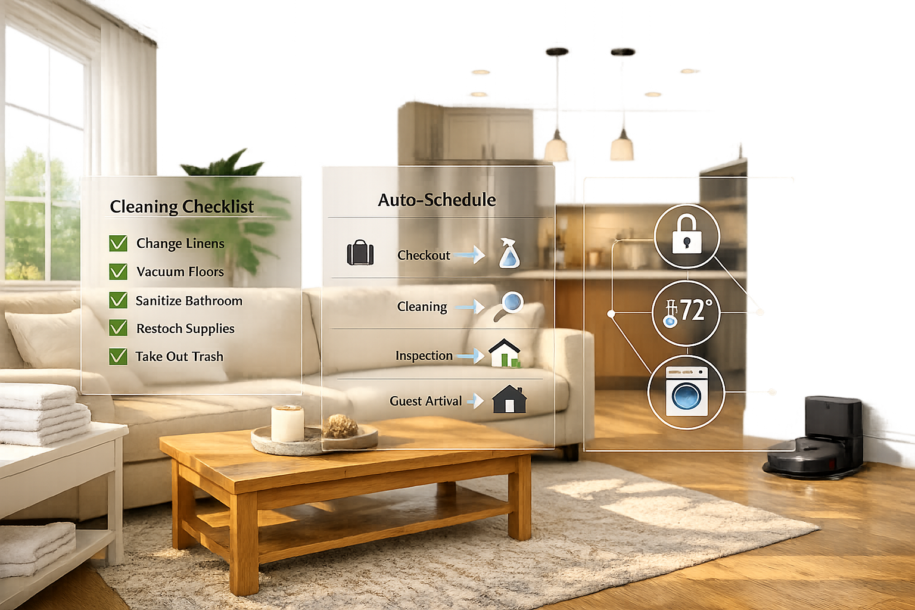
Automating cleaning for Airbnb properties saves time, reduces stress, and ensures consistent quality. Hosts can eliminate manual scheduling, improve cleanliness, and enhance security by integrating cleaning platforms with booking calendars. Key benefits include:
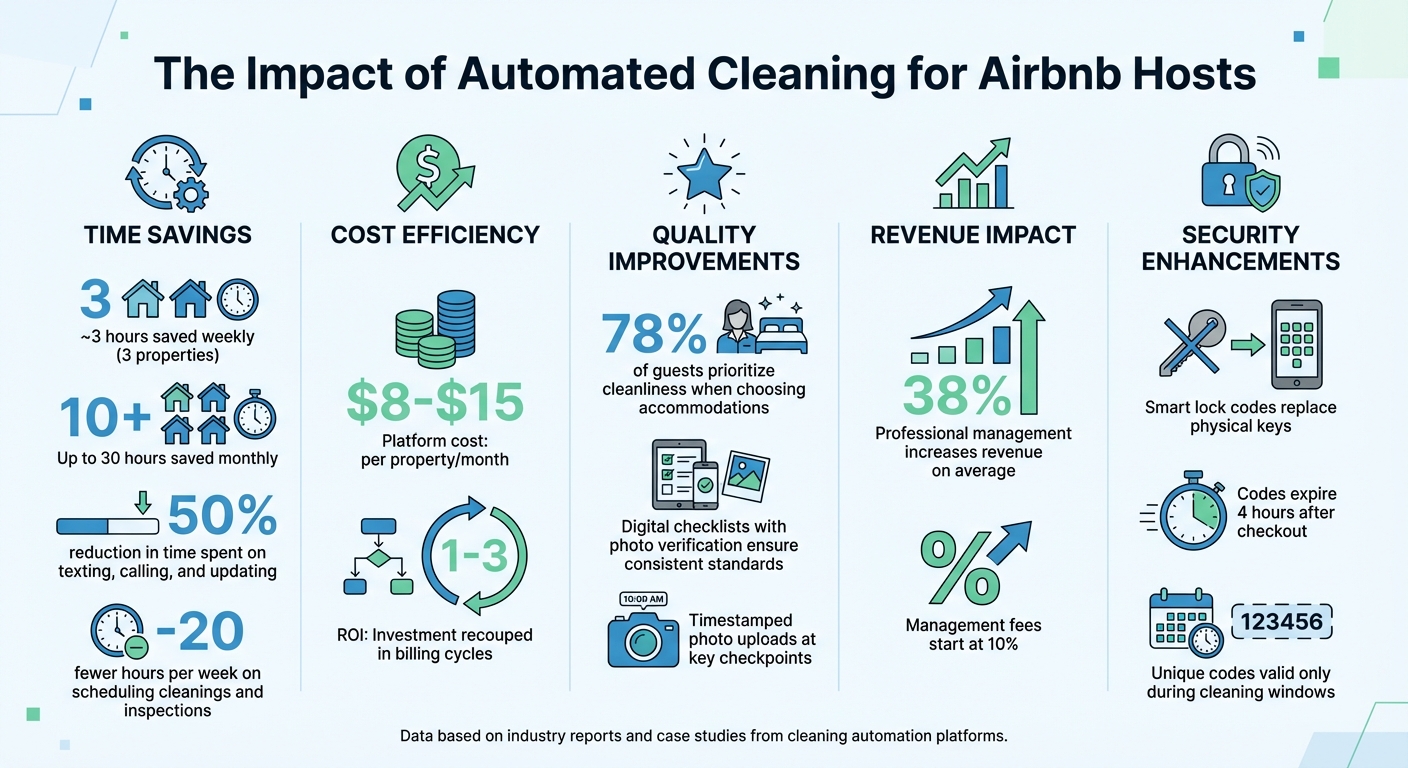
- Time Savings: Hosts with 3 properties save ~3 hours weekly; 10+ properties save up to 30 hours/month.
- Improved Quality: Digital checklists and photo verification maintain high standards.
- Enhanced Security: Smart lock codes replace physical keys, reducing risks.
- Cost Efficiency: Most platforms cost $8–$15 per property/month.
For growing portfolios, automation tools simplify operations, but professional property management, like Rank One Stays, can handle the workload while increasing revenue by 38%. Whether managing a few properties or scaling up, automation is a game-changer for Airbnb hosts.
Airbnb Cleaning Automation Benefits: Time Savings, Costs & ROI Statistics
Automate Your Short-Term Rental Cleaning with Turno’s Auto Scheduling Feature 🧹
sbb-itb-103bddb
What to Look for in Cleaning Automation Platforms
Choosing the right cleaning automation platform can make or break your ability to save time and streamline operations. The most effective systems simplify coordination, provide complete visibility, and integrate seamlessly with your booking calendars. They should also include real-time communication tools that keep your cleaning team updated without the need for constant texts or calls.
Automatic Scheduling Based on Booking Data
A key feature of any cleaning automation platform is its ability to sync with your Property Management System (PMS) or booking platforms like Airbnb and Vrbo. When a guest books or checks out, the system should automatically create a cleaning task – no manual input required. If there are changes, such as early checkouts, cancellations, or extended stays, the platform should update or cancel tasks immediately.
In July 2023, David Wilcox from Summit Mountain Rentals shared how Breezeway’s automation software transformed his team’s workflow:
"We’ve reduced the time we spend texting, calling and updating by 50%, and are spending 20 fewer hours each week scheduling cleanings and inspections."
- David Wilcox, Summit Mountain Rentals[2]
Platforms with auto-assign capabilities are particularly valuable. They use rules based on cleaner availability and property location to assign tasks automatically, removing you from the daily coordination process. For hosts managing properties in high-demand areas like Pittsburgh vacation rental management or Lighthouse Point vacation rental management, this automation ensures no turnovers are missed during peak seasons.
While scheduling automation simplifies task creation, effective communication is still a must.
Real-Time Notifications and Staff Communication
Timely updates are essential. The best platforms send automated notifications through SMS, email, or in-app messaging, ensuring your cleaning team receives task assignments and schedule updates instantly. This eliminates the need for follow-up calls or texts, which can be especially challenging when managing multiple properties.
Some advanced platforms go a step further by including inventory tracking. This feature allows cleaners to report low supplies directly through the app, avoiding situations where guests arrive to find missing essentials like soap or towels. Additionally, automated linen forecasting based on upcoming reservations helps ensure your team always has enough clean laundry ready. These tools contribute to smoother operations and save time.
Customizable Checklists and Quality Control
Digital checklists with photo verification are game-changers. They ensure tasks are completed to your standards and make training easier by including property-specific instructions and photos for unique features like hot tubs or pools.
| Feature | Why It Matters | What to Look For |
|---|---|---|
| PMS Integration | Prevents missed tasks and eliminates manual work | Two-way sync that updates automatically with booking changes |
| Smart Lock Connection | Provides secure access during cleanings | Unique codes that work only during scheduled cleaning windows |
| Photo Verification | Confirms job completion and resolves disputes | Timestamped photo uploads at key checkpoints |
| Inventory Alerts | Avoids supply shortages | Real-time notifications when stock levels fall below thresholds |
For hosts weighing the choice between managing operations themselves or outsourcing to professionals, platforms with these features provide a solid foundation for efficiency. However, as property portfolios grow beyond 10, even the most robust software can become overwhelming. At that point, many investors turn to professional property management services to handle both the technology and daily coordination.
Next, learn how to set up these automation tools for maximum efficiency.
How to Set Up Cleaning Automation
Setting up cleaning automation can help Airbnb hosts save time and streamline operations. Many hosts report recouping their investment in as little as one to three billing cycles[3].
Choosing the Right Platform for Your Needs
Start by evaluating platforms based on your portfolio size and budget. Most cleaning automation tools cost between $8 and $15 per property per month[1]. This small expense is worth the significant time savings – smaller portfolios can save hours every week, while larger ones may gain back up to 30 hours per month[2].
Look for platforms that integrate directly with Airbnb and Vrbo using API connections. These integrations provide more detailed information, like guest names, amenity preferences, and real-time updates when bookings change. Unlike iCal feeds, API connections ensure instant syncing, reducing the risk of double bookings or missed cleanings.
For larger portfolios, consider working with professional property management services, such as Rank One Stays. These services can handle the technical setup and day-to-day coordination, making the transition smoother. Once you’ve chosen a platform, focus on configuring your calendars and tasks to fully activate automation.
Syncing Booking Calendars and Configuring Tasks
The first step in automation is linking your booking calendars to the platform. To do this, export your Airbnb iCal URL from the Availability settings and paste it into the tool. If you’re listing on multiple platforms but don’t use a Property Management System, you can merge your Vrbo calendar into Airbnb first, then export the combined calendar.
Set default check-out (e.g., 11:00 AM) and check-in times (e.g., 4:00 PM) to establish a clear turnover window. To create flexibility, configure task offsets – schedule cleaning tasks to begin two hours after check-out to account for potential guest delays. Similarly, program smart lock codes to expire four hours after check-out, giving your cleaning team ample time to finish their work[8].
Double-check that the platform’s time zone matches your property’s location. Even a small mismatch can lead to tasks triggering at the wrong times, which could throw off the entire cleaning schedule.
Assigning Roles and Training Cleaning Staff
Once your system is live, assign roles and train your team for maximum efficiency. Use the platform to create specific "Cleaner" roles that only display essential details like guest counts, reservation dates, and property notes. This limits access to sensitive information while giving cleaners everything they need[9].
Provide training early to reduce back-and-forth communication. Use a mix of formats – written guides, videos, or in-person sessions – to cover all learning styles. Require cleaners to upload "after" photos of key areas, such as the kitchen, bathrooms, and living spaces. These photos serve as remote quality checks and help maintain high standards[2][4].
During the first month, gather feedback from your team. Ask if the digital checklists are clear or if any steps feel unnecessary. This feedback loop allows you to refine workflows and ensure your team is comfortable with the system before scaling it to additional properties.
Adapting Automated Cleaning for Different Booking Types
Managing cleaning routines effectively requires adjusting workflows based on the length of a guest’s stay. Automation platforms simplify this process by syncing with your booking calendar to identify the duration of each reservation and triggering the appropriate cleaning protocol – whether it’s a quick turnover or a detailed deep clean.
Short Stays and Same-Day Turnovers
Automation shines during short stays and same-day turnovers. These turnovers typically require 1–3 hours, depending on the property size[10]. Automated tools streamline access by generating unique door codes that are valid only during the scheduled cleaning window. This eliminates the hassle of physical key exchanges and ensures cleaners can enter the property when needed[3][8].
To maintain high standards, digital checklists and photo verification are used. Cleaners upload "after" photos of key areas before marking tasks as complete, providing remote quality control. This process helps catch issues – like a missed crumb or an unwashed sheet – before the next guest arrives[1][10]. As Uplisting points out:
"Turnover cleaning is where things often go sideways. A missed crumb, an unwashed sheet, or a forgotten bin bag can be the difference between a glowing review and a private complaint"[10].
For added security, configure door codes to expire within four hours, allowing some flexibility for late checkouts while keeping the property secure[8]. Digital checklists also include restocking tasks, ensuring essentials like toilet paper and trash bags are replenished. Cleaners can report low inventory levels directly through the platform, allowing hosts to address supply shortages promptly. For properties with frequent turnovers, partnering with Rank One Stays through their Scottsdale vacation rental management services ensures consistent results across multiple bookings.
Longer stays, however, require a different approach, focusing on more thorough cleaning protocols.
Long Stays and Deep Cleaning Protocols
Extended stays demand a more detailed cleaning routine compared to short-term turnovers. For these bookings, automation platforms initiate deep cleaning workflows that go beyond the basics. These tasks often target areas prone to accumulating grime over time, such as appliance interiors, upholstery, baseboards, and air filters.
To streamline the process, provide extra linens and towels for long-term guests. This "swap and go" method allows cleaners to remove dirty laundry while focusing on other tasks, ensuring a comprehensive cleaning experience[11]. Keeping a locked closet stocked with bulk cleaning supplies at the property also minimizes delays caused by transporting heavy equipment for deep cleans[11].
Automation can also schedule additional maintenance tasks – like replacing batteries, checking light bulbs, or changing air filters – alongside deep cleaning appointments. This consolidation reduces the need for multiple trips and simplifies coordination[6][12]. For hosts working with Rank One Stays, these automated adjustments eliminate the constant back-and-forth communication often required with manual scheduling.
Measuring and Improving Cleaning Automation Performance
After implementing automated scheduling and quality control, the next step is measuring your performance. This helps you identify areas for improvement and ensures you’re meeting goals like saving time and boosting guest satisfaction. Start by reviewing cleanliness ratings in guest feedback – 78% of hotel guests say cleanliness is their top priority when choosing where to stay [5]. Pay attention to keywords like "spotless", "dirty", or "dusty" in reviews to spot recurring issues. Your dashboard can also highlight if specific cleaning tasks are being skipped repeatedly, helping you address problems right away [7].
Key Metrics to Track
Focus on metrics that reflect both efficiency and guest satisfaction. These include cleanliness scores verified through photo checklists, the time saved by automating manual tasks, and your ability to grow your property portfolio. For instance, Vanwaw Corporate Rentals in Atlanta saw their portfolio double in March 2024 after automating cleaning operations with Breezeway. At the same time, they improved their guest ratings [7]. Monitoring these metrics can show whether your business is thriving without adding to your workload.
Using Data to Improve Operations
Your dashboard is a powerful tool for spotting inefficiencies and refining processes. For example, if guests frequently mention dust on ceiling fans, you can update your digital checklist to require cleaners to upload a photo of that area [10]. Inventory tracking data can also help reduce costs by showing patterns in supply usage – like lower coffee consumption during the summer – so you can adjust your orders accordingly [2]. Daugherty Management saved hours each week by having cleaners log supply levels [7]. You can go a step further by setting up automated alerts for low-stock items like soap or toilet paper, avoiding last-minute runs to the store [2]. These small adjustments can make a big difference in streamlining your operations.
Scaling with Professional Management Services
Once your data confirms operational efficiency, it’s time to think about scaling. As your portfolio grows, managing automation tools and daily operations can become overwhelming. This is where professional services like Rank One Stays come in. They integrate cleaning automation into a broader operational framework, covering everything from guest screening to handling damage claims. This approach allows you to scale without getting bogged down in daily coordination. On average, Rank One Stays partners earn 38% more revenue than the market standard, with fees starting at 10%. If you’re ready to expand beyond managing individual tools, qualifying for professional management can ease the operational load while keeping the benefits of automation intact.
Conclusion
Automated cleaning is changing the game for Airbnb hosts, eliminating hours of manual coordination every week. By reducing the time spent on communication and scheduling, hosts with three properties can save about 3 hours weekly, while those managing 10 or more properties can reclaim up to 30 hours each month [2].
But the advantages go well beyond saving time. Features like digital checklists and photo verification help ensure the high standards guests expect. As Koryn Okey, VP of Community & Engagement at Breezeway, puts it, automation guarantees "the work is being done right, and that the standards you uphold are being met" [2]. This level of consistency not only safeguards your reviews and guest satisfaction but also offers peace of mind.
For hosts juggling multiple properties, automation platforms typically cost between $8 and $15 per property per month [1]. It’s a small price to pay for the hours saved. However, as your portfolio grows, managing automation tools alongside guest communication, maintenance, and pricing can become overwhelming. For those feeling the strain of daily coordination, full-service management might be the next step.
With Rank One Stays, full-service management combines automation with 24/7 guest support, dynamic pricing, and damage claims handling across key locations like Scottsdale, Denver, Pittsburgh, and Lighthouse Point. Their approach helps hosts scale operations without sacrificing quality, boosting revenue by 38% with fees starting as low as 10%. If you’re ready to shift from managing tools to enjoying hands-off ownership, qualify for professional management and experience the perfect balance of automation and expert support.
FAQs
How do cleaning automation tools work with Airbnb and Vrbo?
Cleaning automation tools work effortlessly with platforms like Airbnb and Vrbo by connecting directly to booking systems and property management software (PMS). Once a reservation is confirmed, these tools take over, automatically scheduling cleanings, assigning tasks to cleaning crews, and sending out notifications – all without requiring manual effort. This ensures that cleaning schedules match guest check-ins and check-outs perfectly.
Many of these tools also come with handy features like smart lock integration and mobile app access. This allows cleaning teams to securely enter properties and complete their tasks more efficiently. With automated updates and real-time communication, errors are minimized, turnovers are faster, and cleanliness standards remain consistently high. By simplifying the entire process, these tools not only save time and reduce hassle but also help create a better experience for guests.
How can automated cleaning tools save Airbnb hosts time and money?
Automated cleaning tools are a smart way for Airbnb hosts to save time and money. These tools simplify scheduling, streamline communication, and make task management for housekeeping much easier. By reducing the need for constant manual oversight, they help prevent scheduling mishaps and ensure cleanings are completed smoothly between guest stays.
With repetitive tasks handled automatically, hosts can shift their focus to improving the guest experience and growing their rental income. This streamlined approach not only lowers operational costs but also helps maintain consistent cleanliness, which can lead to glowing reviews and higher occupancy rates. For hosts looking to boost their profits, automation can make a huge difference.
How does photo verification help ensure high cleaning standards for Airbnb properties?
Photo verification plays a key role in keeping cleaning standards high by offering visual confirmation that tasks such as changing linens, sanitizing bathrooms, and wiping down surfaces are done correctly. This approach ensures consistency, minimizes overlooked areas, and boosts guest satisfaction.
By examining these photos, hosts can identify and resolve any problems before guests check in, reducing complaints and protecting positive reviews. It also promotes clear communication with cleaning teams, making it easier to provide specific feedback or request touch-ups when necessary. Using photo verification establishes a dependable system that reinforces cleanliness standards and strengthens your property’s reputation.