

If you’re deciding between dynamic pricing and fixed discounts for your vacation rental, here’s the quick takeaway:
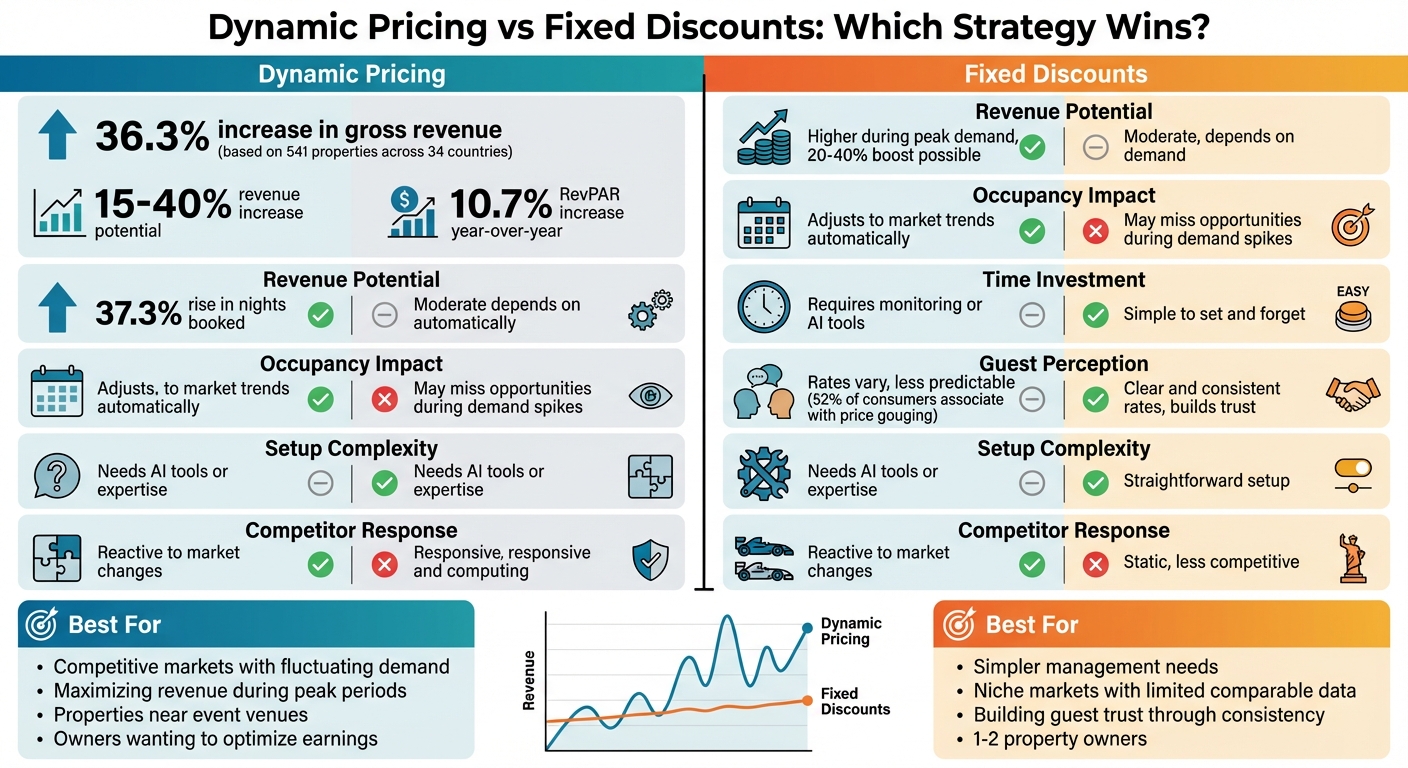
- Dynamic pricing automatically adjusts rates based on demand, local events, and market trends. It can increase revenue by 15% to 40% and works best for maximizing income during peak periods.
- Fixed discounts offer predictable, consistent pricing, making them easier to manage but less flexible. They’re ideal for securing steady bookings but may miss opportunities for higher earnings.
A study of 541 properties across 34 countries revealed that dynamic pricing boosted gross revenue by 36.3% compared to fixed rates. However, fixed discounts build trust with guests by offering stable rates. Your choice depends on your revenue goals, property type, and the time you can dedicate to managing pricing.
Quick Comparison:
| Feature | Dynamic Pricing | Fixed Discounts |
|---|---|---|
| Revenue Potential | Higher during peak demand | Moderate, depends on demand |
| Occupancy Impact | Adjusts to market trends | May miss opportunities |
| Time Investment | Requires monitoring or tools | Simple to set and forget |
| Guest Perception | Rates vary, less predictable | Clear and consistent rates |
| Setup Complexity | Needs AI tools or expertise | Straightforward setup |
Dynamic pricing suits competitive markets with fluctuating demand, while fixed discounts are better for simpler management or niche markets. For maximum earnings, consider tools or services like Rank One Stays that handle dynamic pricing for you.
Dynamic Pricing vs Fixed Discounts Comparison for Vacation Rentals
5 Pricing Strategies Every Airbnb Host Should Use (Backed by Data)
sbb-itb-103bddb
What is Dynamic Pricing?
Dynamic pricing is a strategy where nightly rates adjust in real-time based on market conditions. Instead of sticking to a single, unchanging price, this approach uses technology to continuously recalibrate rates, aiming to maximize revenue while keeping your calendar as full as possible.
Modern dynamic pricing systems process thousands of data points simultaneously. Gone are the days of relying on a simple four-season model. Today, these systems can identify over 75 micro-seasons, influenced by hyper-local events like music festivals, sports tournaments, or even school district spring breaks [7].
The goal isn’t just to charge higher prices – it’s to find the perfect balance where your rate maximizes Revenue Per Available Room (RevPAR), a key metric discussed when hiring a vacation rental manager. This approach moves beyond focusing solely on occupancy or price. For instance, during peak demand, algorithms may increase your Average Daily Rate (ADR) by up to 178%. On the flip side, during slower periods, rates are lowered strategically to fill empty nights [7].
How Dynamic Pricing Works
Dynamic pricing systems pull data from a wide variety of sources, including:
- Local event calendars
- Competitor rates
- Historical booking trends
- Airline seat availability
- Booking velocity (how quickly similar properties are being reserved)
- Local demand forecasts [7]
With this data, the system calculates the optimal price, balancing potential rate increases against the risk of losing bookings. For example, if a major conference is scheduled nearby, the algorithm raises your rates. Alternatively, if competitors are dropping prices for an unbooked weekend, it adjusts your rates downward to stay competitive.
These AI-powered algorithms don’t just react to immediate conditions – they also forecast demand weeks or even months in advance, analyzing booking trends and seasonal patterns. On platforms like Airbnb, pricing now plays a critical role in search rankings, with "rate relevance" becoming almost as important as photo quality by 2025-2026 [3]. This means your pricing strategy directly impacts your property’s visibility.
The results speak for themselves: on average, dynamic pricing boosts RevPAR by 10.7% year-over-year [7].
Examples of Dynamic Pricing in Action
Take the example of Sandra Janecke, Founder of Blue Ocean Rentals. In September 2025, she adopted dynamic pricing through the integration of Your.Rentals and PriceLabs. By switching from manual seasonal updates to an automated system that analyzed local events and demand, her properties became part of a study involving 541 listings. The results? A 36.3% increase in gross revenue per unit and a 37.3% rise in nights booked [4].
"At first I was nervous about letting go of control, but once I saw the results – more bookings, higher ADR – I was sold. Dynamic pricing does the hard work for me." – Sandra Janecke, Founder, Blue Ocean Rentals [4]
Dynamic pricing also shines in markets like Denver, where rates spike during ski season or major concerts at Red Rocks. Similarly, in Scottsdale, prices adjust for events like spring training baseball and golf tournaments. The beauty of these systems? They manage these shifts automatically, so you don’t have to keep track of every single event.
What are Fixed Discounts?
Fixed discounts provide a steady pricing structure that’s easy to manage and predict. Unlike dynamic pricing, which adjusts based on market demand, fixed discounts remain constant. Once you set your rates – whether for seasonal deals, early booking incentives, or weekly stay discounts – they stay unchanged. This consistency makes it simpler to plan finances and forecast annual revenue. For example, during high-demand periods like spring break or summer weekends, you’ll know exactly what to charge. However, the trade-off is that fixed discounts may limit your ability to capitalize on sudden demand surges or address market slowdowns.
"Fixed pricing is a static pricing model where the cost of a rental property remains unchanged regardless of market conditions." – Jason Astono, Business Journalist, Bukit Vista [2]
Guests also appreciate stable pricing. Regular rates, such as those offered during spring break at Lighthouse Point, help build trust and encourage repeat bookings.
Common Fixed Discount Strategies
Property owners often rely on a few tried-and-true fixed discount methods:
- Seasonal Discounts: Offer lower rates during slow periods, like winter in beach destinations or summer in ski towns, to keep bookings steady when demand dips.
- Early Booking Discounts: Reward guests who book well in advance – typically 60 to 90 days – with reduced rates, ensuring revenue is secured early.
- Length-of-Stay Discounts: Provide discounts for extended stays, such as 15% off for a week or 20–30% off for a month. Longer stays cut down on turnover costs, boosting overall profit margins by 10–15%.
- Last-Minute Discounts: Use fixed reductions, often 15–27% off, for bookings made within a week of check-in to fill last-minute availability.
Fixed-dollar discounts (e.g., "$300 off") are often more appealing and easier for guests to grasp than percentage-based offers. Tiered discounts, like $100 off for a one-bedroom unit and $200 off for a two-bedroom, can also make promotions more attractive and straightforward.
These strategies show why fixed discounts appeal to property owners who value simplicity and predictability.
Why Some Property Owners Prefer Fixed Discounts
Fixed discounts are perfect for owners who don’t want to constantly monitor market trends or competitor pricing. This makes them especially appealing for those managing just one or two properties or for listings in niche markets where comparable data is hard to find.
The predictability of fixed rates allows you to plan for expenses like mortgage payments, utilities, and property taxes with confidence. Marketing is also easier – when you share your rates through email campaigns, social media, or your website, you can confidently promote them without fear of sudden changes. Simple pricing strategies, like adjusting $2,300 to $1,999, can also be applied to encourage more bookings.
That said, properties using dynamic pricing often earn 15% to 36% more revenue than those sticking to static models [5].
Key Differences Between Dynamic Pricing and Fixed Discounts
When deciding between dynamic pricing and fixed discounts, you’re essentially choosing between flexibility and predictability. Dynamic pricing adjusts rates based on market trends and demand, offering flexibility to optimize revenue. In contrast, fixed discounts stick to a "set-it-and-forget-it" model, where rates remain constant regardless of market changes [9][10].
This difference shapes how each strategy impacts revenue. Dynamic pricing allows you to maximize profits during high-demand periods, while fixed discounts focus on securing steady bookings. For example, properties in popular destinations like Denver or Orlando have reported 20% to 40% higher revenue after transitioning from fixed discounts to dynamic pricing [12].
Guest Perceptions and Challenges
How guests perceive these pricing approaches also matters. Fixed discounts are straightforward, building trust with consistent pricing. On the other hand, dynamic pricing can frustrate some guests – around 65% notice price changes, and 38% feel negatively when they discover they paid more than someone else. A 2023 survey even revealed that 52% of consumers associate dynamic pricing with price gouging [11].
"The biggest mistake I see new hosts make is setting one price and forgetting about it. Your competition is adjusting daily. If you’re not, you’re leaving money on the table or sitting with empty nights." – Sean Rakidzich, Short-Term Rental Expert [5]
Operational Effort
Dynamic pricing demands active monitoring, often relying on AI-powered tools to keep up with market shifts [9][10]. This allows you to capitalize on spikes in demand, such as during concerts or festivals, where guests are willing to pay premium rates [5][8]. Fixed discounts, while simpler to manage, lack this adaptability and may miss out on such opportunities.
Dynamic Pricing vs Fixed Discounts: Comparison Table
| Feature | Dynamic Pricing | Fixed Discounts |
|---|---|---|
| Revenue Potential | High, if optimized effectively | Moderate, depends on demand |
| Occupancy Impact | Flexible, adjusts to demand | Fixed, may miss opportunities |
| Time Investment | Higher, requires monitoring | Low, simple to set and forget |
| Competitor Response | Reactive to market changes | Static, less competitive |
| Guest Predictability | Rates vary, less predictable | Rates are clear and consistent |
| Setup Complexity | Requires tools and expertise | Straightforward and easy |
Pros and Cons of Each Strategy
Pros and Cons of Dynamic Pricing
Dynamic pricing adjusts rates in real-time based on factors like competitor pricing, local events, and supply-and-demand trends [1][14]. Properties using this strategy often see a 5% to 15% increase in Average Daily Rate (ADR) and a 2% to 3% boost in occupancy rates compared to static pricing. Additionally, cancellations drop by 20%, as pricing aligned with market demand tends to attract more committed bookings [1][4][5].
However, dynamic pricing isn’t without its challenges. It requires sophisticated algorithms and constant monitoring to work effectively [1][3]. There’s also the potential for brand reputation issues – steep price increases during major events can lead to public backlash if not handled tactfully [1]. Another concern is guest perception: a 2025 survey found that 52% of consumers associate dynamic pricing with price gouging, which can harm trust [11].
Pros and Cons of Fixed Discounts
Fixed discounts offer a simple, predictable pricing model that’s easy to manage. It’s a "set-it-and-forget-it" approach, requiring minimal ongoing adjustments [2]. This stability helps build guest trust through consistent rates, especially with repeat visitors, and simplifies revenue forecasting by eliminating daily rate fluctuations [2].
That said, fixed discounts have their downsides. They don’t take advantage of peak demand periods, missing out on potential revenue during high-demand times like festivals or special events [2]. Conversely, during low-demand periods, static rates can be too high compared to competitors using dynamic pricing, leading to unsold rooms and lost revenue opportunities [2]. In a rapidly shifting market, fixed pricing often struggles to stay competitive [2].
Factors to Consider When Choosing a Pricing Strategy
Choosing the right pricing strategy for your rental means aligning it with your goals, property type, local market dynamics, and the time you can dedicate to managing it.
Start by clarifying your primary goal. Are you aiming for maximum occupancy, or is your focus on boosting net profit? While a fully booked calendar might sound ideal, offering rates that are too low can shrink your margins. To avoid this, calculate your minimum nightly rate by factoring in fixed costs (like your mortgage, insurance, and HOA fees) alongside variable costs (such as cleaning, utilities, and maintenance). Since operational costs typically consume 40%–50% of total revenue[3][5], knowing your break-even point is essential before deciding on a pricing strategy.
The type of property you own also matters. Standard condos are well-suited for automated dynamic pricing tools, which adjust rates based on demand and other factors. However, if your property has unique features – like a treehouse with a hot tub – a hybrid strategy might work better. This approach combines automated pricing with manual adjustments to ensure distinctive amenities are properly valued[3][13].
Your local market conditions should also influence your strategy. For instance, in smaller or rural markets, such as a cabin in Vermont, guests often book far in advance. Offering early-bird discounts, like 10% off for bookings made 60 or more days ahead, can help secure steady revenue. On the other hand, urban markets like Chicago often require last-minute discounts to attract travelers who book closer to their stay. Discounts of 15% for bookings within seven days or up to 27% for same-day reservations can be effective in these cases[5]. Additionally, keeping track of local events – festivals, conferences, or sports seasons – and adjusting for micro-seasonal demand shifts can significantly improve your pricing. For example, if you manage a Scottsdale vacation rental, events like spring training or golf season offer opportunities to adjust rates dynamically, capturing revenue that static discounts might miss.
Lastly, think about the time and effort you can dedicate to managing your pricing. Fixed discounts require minimal oversight but may result in missed opportunities during high-demand periods or unnecessary vacancies during slower times. Dynamic pricing, which involves frequent adjustments or the use of third-party tools like PriceLabs or Beyond, can increase revenue by 10%–40% but demands consistent monitoring and fine-tuning[7]. If managing rates daily feels overwhelming, partnering with a professional service like Rank One Stays can help. They use advanced pricing tools to optimize revenue while saving you time.
These considerations form the foundation for how Rank One Stays leverages dynamic pricing to maximize earnings for property owners.
How Rank One Stays Implements Dynamic Pricing for Maximum Revenue
Rank One Stays takes dynamic pricing to the next level, blending cutting-edge technology with market insights to help property owners achieve better-than-average rental income. Their system adjusts rates in real time, factoring in variables like occupancy, booking lead times, and calendar gaps. This ensures that pricing remains competitive and optimized for maximum revenue at all times[6].
Using tools like Market Scanners and Competitor Calendars, the company keeps a close eye on nearby listings to fine-tune rates. For instance, if you manage a Denver vacation rental, the system tracks shifting demand during ski season. It raises rates during high-demand weekends while maintaining steady bookings during quieter periods. This data-driven approach can boost annual revenue by 20% to 40%, far outperforming manual pricing methods[16].
"Set the perfect rate and increase your occupancy and boost revenue by 20%-40% compared to static rates." – Rank One Stays[15]
This quote highlights how dynamic pricing can transform rental income in a competitive market.
Rank One Stays doesn’t stop at pricing. They also focus on listing optimization to improve visibility and click-through rates. By refining keywords, SEO, and amenity descriptions, they ensure properties rank in the top six search results, where mobile users are most likely to click[3]. Their 4.93-star rating from over 1,860 guest reviews further strengthens their properties’ search rankings and justifies higher pricing[15]. This creates a win-win situation: better reviews lead to higher rates, and higher rates incentivize exceptional service.
Additionally, their strategy includes automated communication and round-the-clock guest support, which improve guest satisfaction and cut cancellation rates by 20%[4]. This holistic approach helps property owners maximize earnings while addressing the complexities of staying competitive in a crowded market. With professional expertise and advanced tools, Rank One Stays makes it easier for property owners to excel without the steep learning curve[15].
Conclusion
Deciding between dynamic pricing and fixed discounts comes down to your revenue targets, local market conditions, and how much time you can dedicate to management. Dynamic pricing uses real-time market data to adjust rates, helping properties capture peak demand and boost revenue by 15% to 36% on average [5]. It’s an excellent option for owners aiming to maximize income without constant hands-on involvement. On the other hand, fixed discounts offer predictable pricing but might leave money on the table during high-demand periods.
The data makes a strong case for dynamic pricing. Properties using this model have seen notable increases in both gross revenue and nights booked compared to static pricing approaches [4]. For instance, Blue Ocean Rentals’ founder shared that after adopting dynamic pricing in September 2025, they captured additional earnings that would’ve been missed with fixed rates. This approach clearly demonstrates the value of adapting to market shifts to optimize profits.
In highly competitive markets like Scottsdale or Denver, dynamic pricing expertise is a game-changer. Companies like Rank One Stays leverage cutting-edge algorithms and local market knowledge to help property owners earn 38% more revenue than the market average. Their data-driven strategies take the hassle out of pricing, allowing you to focus on growing your business while they handle maximizing your revenue potential.
FAQs
When should I use dynamic pricing vs fixed discounts?
Dynamic pricing shines in situations where market demand fluctuates frequently, like during seasonal trends or local events. It adjusts rates in real-time, helping maximize revenue based on current conditions. On the other hand, fixed discounts are perfect for targeted approaches, such as promoting longer stays or addressing off-peak vacancies. By blending these strategies – using dynamic pricing for day-to-day adjustments and fixed discounts for special promotions – property owners can boost revenue while maintaining the flexibility to adapt to market needs.
What’s my minimum nightly rate before discounts?
Your minimum nightly rate before discounts needs to cover your operating costs while staying in line with market trends. Here’s how you can determine it:
- Use your expenses as a baseline and make sure your rate remains competitive in your area.
- Align it with your income goals by setting it as a portion of your weekly or monthly targets.
- Leverage dynamic pricing tools to adapt your rates based on demand, seasonal changes, or local events.
Pick the approach that matches your objectives and is backed by thorough market research.
Will dynamic pricing upset guests?
Dynamic pricing can sometimes make guests uneasy, especially if rates feel unpredictable or sky-high during busy periods. But when applied carefully, it aligns prices with factors like demand, seasonal trends, and local events, creating a balanced approach. To maintain trust, it’s crucial to clearly explain pricing policies and put limits in place to avoid extreme rate hikes. When managed well, dynamic pricing strikes a balance – boosting revenue while keeping guests happy.