
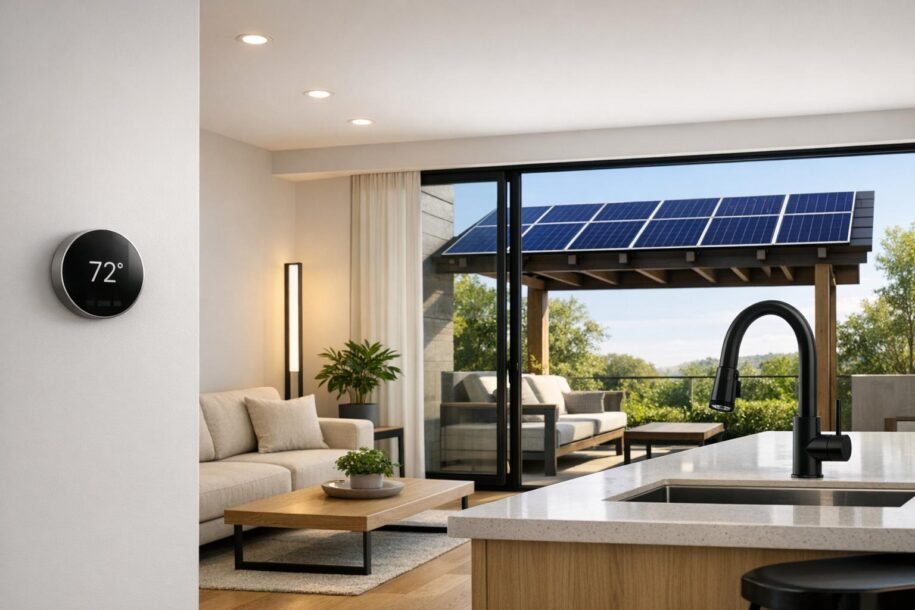
Eco-friendly upgrades can increase rental income while reducing costs. Travelers value sustainability, with 73% willing to pay more for green accommodations. Simple changes like LED lighting or smart thermostats offer quick savings, while larger investments like solar panels and efficient HVAC systems yield long-term benefits. These upgrades can:
- Cut energy costs by 20–40%.
- Increase nightly rates by 10–15%.
- Boost property value by 4–6%.
Start small with affordable changes like LED lights or water-saving fixtures, then consider larger upgrades like solar panels when ready. Highlight these features in listings to attract eco-conscious guests and justify higher rates. Smart investments can improve profits while meeting guest preferences.
1. LED Lighting and Smart Controls
Switching to LED lighting is one of the quickest and most affordable ways to cut energy costs. These upgrades are simple to implement and can reduce energy use by 40–75%, with a payback period of just 1–3 years [5]. In fact, LED retrofits pay for themselves quickly, making them an ideal starting point for property managers looking to improve energy efficiency.
ENERGY STAR-certified LED bulbs are especially efficient, consuming 20–25% less energy than traditional bulbs. Plus, they last 15–25 times longer than incandescent options, which means fewer replacements and less maintenance – particularly helpful if you’re managing properties across multiple locations and can’t easily change bulbs between guest stays [2].
"Starting with low-cost, high-impact changes such as LED lighting can deliver quick wins. These improvements are inexpensive and immediately noticeable to tenants." – Mia Robinson, Property Management [4]
Pairing LED lighting with smart controls takes savings to the next level. Motion-activated lights in areas like bathrooms or outdoor spaces ensure that energy isn’t wasted when guests forget to turn lights off [2]. Beyond lowering energy bills, smart lighting offers a modern convenience that eco-conscious guests appreciate, showcasing your property as both efficient and well-managed.
Start with a lighting audit to identify high-use areas like kitchens, bathrooms, and outdoor spaces. Combine LED upgrades with occupancy sensors or dimmers to get the most out of your investment. Don’t forget to check for utility rebates or Section 179D deductions, which can shorten the payback period even further [5]. These simple lighting upgrades not only save money but also lay the groundwork for more advanced sustainability measures.
| Upgrade | Energy Savings/ROI | Payback Period | Guest Appeal |
|---|---|---|---|
| LED Bulb Replacement | 40–75% reduction [5] | 1–3 years [5] | High |
| Motion-Activated Controls | Enhances LED savings | Short | High |
| Outdoor LED Lighting | Up to 85% ROI [6] | Short | High (safety, curb appeal) |
| Recessed LED Lighting | 70% ROI [6] | Short-to-medium | Medium (modern aesthetic) |
sbb-itb-103bddb
2. Smart Thermostats and HVAC Upgrades
After upgrading your lighting, the next big opportunity for savings lies in climate control. HVAC systems are often the largest energy expense for a property [5]. While the initial investment can be higher than replacing light bulbs, the potential for long-term savings makes it a worthwhile consideration.
Here’s the good news: you don’t need to overhaul your entire HVAC system to see results. Installing a smart thermostat, which typically costs between $150 and $250, can pay for itself in just 9–15 months. These devices allow for remote energy monitoring, guest control, and optimized energy usage during vacancies. Options like Google Nest or Ecobee not only reduce utility bills but also give guests more control over their comfort [1][4][7].
If you’re ready for a bigger upgrade, replacing your entire HVAC system is a significant investment – ranging from $12,000 to $18,000 [6]. High-efficiency systems, particularly those rated 16+ SEER and equipped with heat pump technology, can reduce heating costs by 40–60% in moderate climates [7]. While the upfront cost is steep, the payback period typically falls within 3 to 7 years [5].
To ease the financial burden, federal tax credits and local rebates can help. Starting in 2025, you’ll be able to claim a 30% federal tax credit on qualifying energy improvements, up to $3,200 annually. This includes $2,000 specifically for heat pump systems and $600 for central air conditioning [6]. By combining these credits with utility rebates available on DSIRE.org, you can significantly shorten the time it takes to recoup your investment.
Here’s a quick comparison of potential upgrades:
| Upgrade | Upfront Cost | Annual Savings | Payback Period |
|---|---|---|---|
| Smart Thermostat | $150–$250 [7] | $100–$200 [7] | 9–15 months [7] |
| High-Efficiency HVAC | $5,000–$12,000 [7] | $300–$800 [7] | 6–15 years [7] |
| Full HVAC Modernization | $12,000–$18,000 [6] | Varies | 3–7 years [5] |
Beyond the financial benefits, HVAC upgrades can improve guest comfort and enhance your property’s appeal. Consistent temperatures and better indoor air quality often translate to positive guest reviews [1][4]. Features like smart thermostats and energy-efficient systems also resonate with Millennial and Gen Z travelers, who value eco-friendly amenities. Highlighting these upgrades in your Airbnb or VRBO listing can justify higher nightly rates and attract eco-conscious guests.
To make the most of your sustainable investments, consider partnering with Rank One Stays. They can help you market these upgrades effectively, boost your rental ROI, and draw in guests who prioritize sustainability.
3. Water-Saving Fixtures and Systems
Upgrading to water-saving fixtures is a budget-friendly way to cut utility costs while keeping water pressure comfortable for guests. Mia Robinson of 302 Properties sums it up well:
"Water-saving upgrades such as low-flow toilets, faucets, and showerheads contribute to lower utility costs. These installations are inexpensive compared to major retrofits." [4]
A complete set of low-flow fixtures for a home typically costs between $50 and $200 [7]. Here’s a closer look at individual upgrades:
| Fixture | Upfront Cost | Typical Annual Savings | Payback Period |
|---|---|---|---|
| Low-Flow Showerheads | $10 – $80 | 15%–35% on shower water | 3–12 months |
| WaterSense Toilets | $150 – $600 | ~$130 or 20%–40% per flush | ~1 year |
| Faucet Aerators | $10 – $20 | Part of ~2,700 gal/year savings | Under 6 months |
If you’re replacing toilets, consider dual-flush models. They cost a bit more but allow guests to choose a reduced flush for liquids, which can maximize water savings [8].
These upgrades do more than save money – they can boost your property’s marketability. Airbnb, for instance, now highlights sustainable features like low-flow fixtures in its listings. Mentioning these upgrades in your rental description can make your property stand out and even justify higher nightly rates. Including a short note for guests about the benefits of these fixtures can also encourage positive reviews and greater guest satisfaction.
Next, we’ll dive into renewable energy solutions to further enhance your property’s sustainability and profitability.
4. Solar Panels and On-Site Renewables
Solar panels are an investment that delivers long-term energy savings while boosting property value with professional management. Though they come with the highest upfront cost among sustainable upgrades, the returns can last for decades. A standard 7 kW solar system costs around $19,950 before incentives. Thanks to the federal Investment Tax Credit (ITC), which reduces costs by 30%, the price drops to about $13,965. Payback periods vary depending on electricity rates – ranging from 5–7 years in states like California and Massachusetts to 9–12 years in states with lower rates, such as Texas and Florida [10].
On average, properties equipped with solar panels save approximately $3,000 annually on electricity. Modern panels typically come with warranties spanning 20–25 years [1].
"Going solar also offers something operators value: predictable energy costs. High-demand seasons can lead to heavy use of air conditioning, heating, and appliances, and solar generation helps stabilize your monthly expenses." – The Turno Team [1]
Beyond energy savings, solar installations enhance resale value, often increasing property prices by 4% to 6%. Homes with solar systems generally sell at a premium of $15,000 to $25,000 compared to non-solar properties [10]. For vacation rental owners in sunny locations like Scottsdale or South Florida, the combination of strong solar production and high guest turnover makes this upgrade even more appealing.
If you want to take energy independence further, battery storage systems like the Tesla Powerwall 3 or Enphase IQ 5P are worth considering. These systems, priced at $10,000–$16,000, provide reliable backup power during outages – a key feature for ensuring a seamless guest experience. In California, where NEM 3.0 has reduced net-metering credits, pairing solar panels with storage is becoming a financially savvy choice [10].
| Option | Estimated Cost | Annual Savings | Payback Period | Property Value Lift |
|---|---|---|---|---|
| Solar Only (7 kW, after ITC) | ~$13,965 | ~$3,000 | 5–12 years | 4%–6% |
| Solar + Battery Storage | $25,000–$45,000+ | Varies by market | 6–12 years | – |
Practical Installation Tips
To maximize the benefits of solar panels, keep these points in mind:
- Roof Condition: Ensure your roof has at least 15–20 years of remaining life before installation.
- Panel Placement: Install panels on south-facing, shade-free sections for optimal sunlight exposure.
- Maintenance: Budget $150–$350 annually for cleaning and inspections to maintain efficiency [1].
- Tax Benefits: If your property qualifies as a business asset, you can combine the federal ITC with state-level rebates and MACRS depreciation to significantly reduce your payback period [1].
5. Energy-Efficient Appliances and Interior Materials
While appliances and interior finishes might not grab as much attention as solar panels, they play a crucial role in reducing operating costs and leaving a positive impression on guests. These upgrades align perfectly with other energy-saving initiatives, strengthening your property’s eco-friendly appeal.
For instance, a minor kitchen remodel, which typically costs between $26,000 and $35,000, yields a 96% ROI [6]. On the other hand, a major kitchen overhaul averaging $85,000 only recoups 38% of its cost [6]. Simply replacing outdated appliances with stainless ENERGY STAR-certified models offers a 75% ROI [6], while also cutting down on electricity and water consumption throughout their lifespan. When considering appliance upgrades, factor in not just the purchase price but also utility savings, maintenance, and longevity.
Flooring upgrades also deliver strong returns. Refinishing hardwood floors can generate a 147% ROI, while luxury vinyl plank (LVP) provides a 25–50% return and is hypoallergenic [6]. Bamboo flooring, a renewable option that matures in just 3–5 years, is another excellent choice, offering durability comparable to hardwood [12].
Interior finishes matter too. Low-VOC paints improve indoor air quality, avoid harsh chemical odors, and cost about the same as traditional paints [11]. Quartz countertops, which hold up well under heavy use, provide an 80% ROI [6]. If you’re furnishing a property from scratch, consider integrating materials like organic linen bedding, reclaimed wood accents, or recycled-glass décor. These choices not only enhance the aesthetic but also resonate with the 80% of global travelers who prioritize sustainable travel in 2024 [1].
"Green renovations that reduce utility costs are not only attractive to environmentally conscious tenants but can also be a major financial selling point." – Laurie Mega, Senior Manager of Content, Buildium [9]
Additionally, a 30% federal tax credit (up to $3,200 annually) applies to qualifying energy-efficient upgrades through 2025 [6]. This incentive further improves the financial case for appliance upgrades. If you’re collaborating with a vacation rental interior design team, make sure they select durable, eco-friendly materials. For example, moisture-resistant boards in bathrooms can help avoid premature repairs, saving money in the long run.
Combining energy-efficient appliances with sustainable interior materials not only boosts your bottom line but also enhances guest satisfaction, making these upgrades a smart investment for any property. This sets the stage for a deeper dive into the advantages and potential drawbacks of these improvements.
Pros and Cons of Each Upgrade
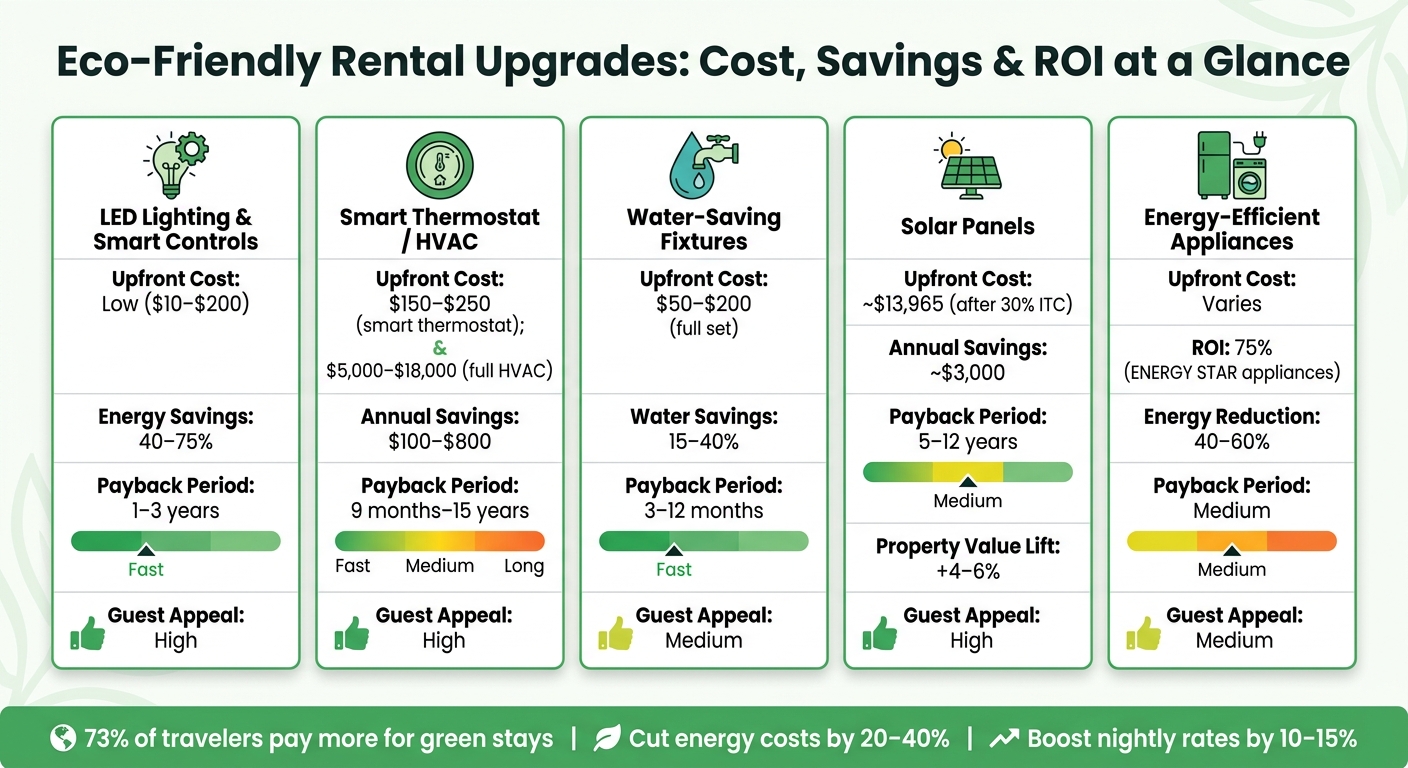
Eco-Friendly Rental Upgrades: Cost, Savings & ROI at a Glance
Every upgrade comes with its own set of advantages and drawbacks. Some offer quick returns with minimal hassle, while others require a larger initial investment for more substantial, long-term benefits. Here’s a breakdown to help you weigh your options and make informed decisions.
| Upgrade | Pros | Cons | Ideal For | Challenges |
|---|---|---|---|---|
| LED Lighting & Smart Controls | Quick payback (1–3 years); saves 40–75% on energy; bulbs last 25× longer [5] | Minimal impact on guest experience visually | Suitable for all property types | Ensuring consistent bulb color temperature can be tricky |
| Smart Thermostats & HVAC | Allows remote management; reduces energy waste during vacancies; payback in 9–15 months [7] | Needs reliable Wi‑Fi; guests may override settings | Best for properties in extreme climates | Guest tampering and reliance on Wi‑Fi |
| Water‑Saving Fixtures | Affordable ($50–$200); fast payback (3–12 months); cuts water bills by 15–30% [3] | Some guests may dislike lower water pressure | Ideal for multi-unit properties with owner-paid water | Balancing water savings with maintaining good flow |
| Solar Panels | Saves around $3,000 annually on utilities; eligible for 30% federal tax credit; increases property value by 4–6% [1] | High upfront cost ($15,000–$45,000+); longer payback period (8–11 years) [5] | Perfect for areas with abundant sunlight, like Scottsdale or South Florida | HOA restrictions and roof condition can complicate installation |
| Energy‑Efficient Appliances | Updates the property’s look; cuts core energy use by 40–60% [3] | Expensive if current appliances still work well | Best for full renovations or replacing old appliances | Ensuring proper disposal and recycling of old units |
To maximize returns quickly, focus on affordable upgrades like LED lighting, water-saving fixtures, and smart thermostats. These options not only improve cash flow but also make your property more appealing to eco-conscious travelers. Larger investments, such as solar panels or HVAC upgrades, make sense once you’re confident in your property’s long-term revenue potential.
When making these upgrades, don’t forget to showcase them in your property listings. Mentioning features like "100% solar-powered" or "equipped with water-saving fixtures" can attract eco-minded travelers. This is especially relevant since 73% of global travelers are willing to pay more for sustainable accommodations [3]. Highlighting these upgrades in listing photos and descriptions can help you capture a potential 10–15% revenue premium. Work with your vacation rental interior design team to ensure these features stand out.
Conclusion
Eco-friendly upgrades do more than reduce your carbon footprint – they save money and increase returns. For example, cutting operational costs by 20–40% [3], achieving 10–15% higher nightly rates [3], and boosting property value by 4–6% with solar installations [1] are all measurable benefits. The trick is to align your upgrades with your budget and long-term goals.
If you’re new to sustainable improvements, start with affordable, impactful changes like LED lighting, low-flow fixtures, and smart thermostats. These upgrades typically pay off in just a few months and can pave the way for larger investments down the line. By focusing on these initial steps, you can meet property needs while staying ahead of market demands.
To get the most out of your efforts, consider tailoring upgrades to your property’s location and the preferences of your guests.
Choosing the right upgrades can feel overwhelming, but professional guidance makes a difference. A vacation rental management company like Rank One Stays offers data-driven insights to pinpoint the upgrades with the highest return for your property. They can also help you take advantage of tax incentives, such as the 30% Federal Investment Tax Credit for solar [1]. Plus, they ensure your upgrades are highlighted in your listing to attract premium guests. On average, property owners working with Rank One Stays earn 38% more revenue than the market norm. That advantage grows even further when eco-friendly improvements are marketed effectively.
Profitability and sustainability can go hand in hand. With the right strategy and support, going green could become one of your smartest investments.
FAQs
Which eco-upgrades should I prioritize on a tight budget?
If you’re working with a tight budget, focus on affordable upgrades that deliver quick savings. Installing low-flow water fixtures is a simple way to lower water bills almost immediately. Switching to energy-efficient appliances and LED lighting can also cut energy costs without requiring a big initial investment. While larger projects like solar panels or smart HVAC systems can save more over time, they may not be the best starting point when funds are limited.
How do I calculate ROI for upgrades when I pay utilities?
To figure out the ROI for upgrades when you’re responsible for utilities, you’ll want to factor in both the money saved on energy bills and any boost in property value. Here’s the formula you’ll use:
ROI = [(Net Savings + Increase in Value) – Initial Cost] / Initial Cost × 100
For example, if installing solar panels saves you $1,200 a year on energy costs, calculate the total savings over their lifespan. Add any increase in your property’s value, subtract the upfront cost of the installation, and then divide by the initial investment. The result will give you the ROI percentage.
How should I market green features to raise nightly rates?
To market eco-friendly features effectively, showcase amenities like solar panels, energy-efficient appliances, and water-saving systems as key attractions for environmentally conscious travelers. Highlight how these upgrades not only appeal to guests seeking sustainable options but also contribute to increasing revenue. Stress the practical benefits, such as lower utility costs and an improved guest experience, which can justify charging higher nightly rates. By focusing on these advantages, you can underline their potential to enhance both guest satisfaction and your bottom line.