
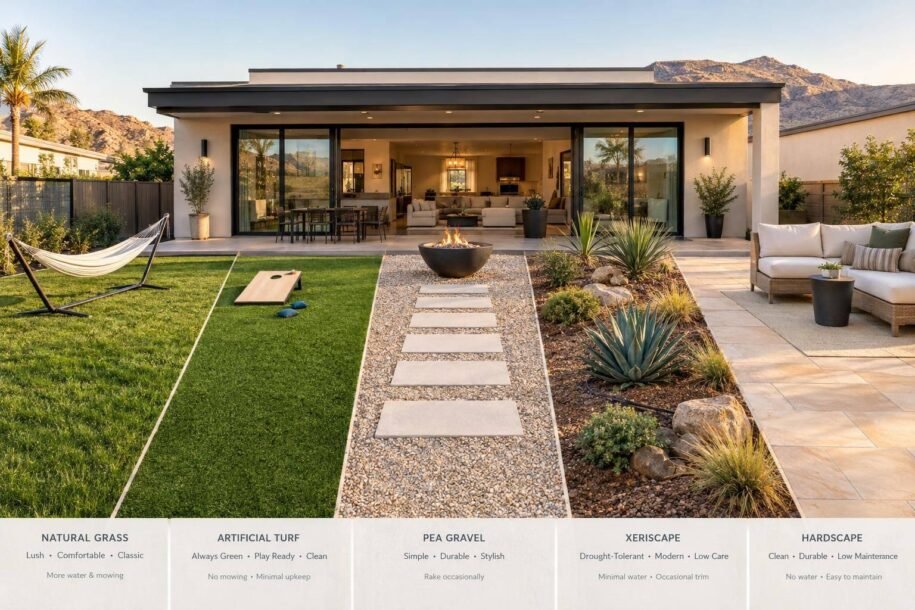
I’d start with firm paths, shaded seating, and plants suited to your climate – not a full yard of one material. Keep grass where guests will play, and compare installation, water, cleaning, repairs, and replacement costs before choosing.
I compare five options below by water use, care frequency, guest comfort, durability, and long-term cost. The catch? Less mowing doesn’t mean less work in every case. Artificial turf, for example, needs cleaning and can reach 160°F in direct sun under some conditions.[12][14]
Quick Comparison
| Yard option | Water use | Routine care | Guest comfort and wear | Cost factors |
|---|---|---|---|---|
| Natural grass | Higher in hot, dry climates | Weekly mowing during peak growth | Soft for play; traffic can cause mud and bare spots | Lower starting cost; recurring water and lawn service |
| Artificial turf | No routine irrigation; rinsing still needed | Cleaning, brushing, seam checks | Stays green; heat and pet odors need attention | Higher installation cost; eventual replacement |
| Gravel and rock | Very low for stone | Weeding, raking, debris removal | Best outside main walking and play areas; loose stones shift | Base, edging, weed removal, replacement stone |
| Xeriscape | Lower after plants establish | Plant care, pruning, drip checks | Adds planting and shade; beds need protection from traffic | Installation, early watering, plant replacement |
| Hardscape-heavy | Very low except cleaning and nearby plants | Sweeping, joint and drain checks | Firm space for dining; heat and uneven surfaces need attention | Construction, drainage, cleaning, surface repairs |
My rule: <u>choose for guest use first, then price the upkeep</u>. This approach ensures your outdoor space complements your vacation rental design and overall guest experience. Check shade, drainage, local rules, and vendor availability, and compare quotes over the same ownership period.
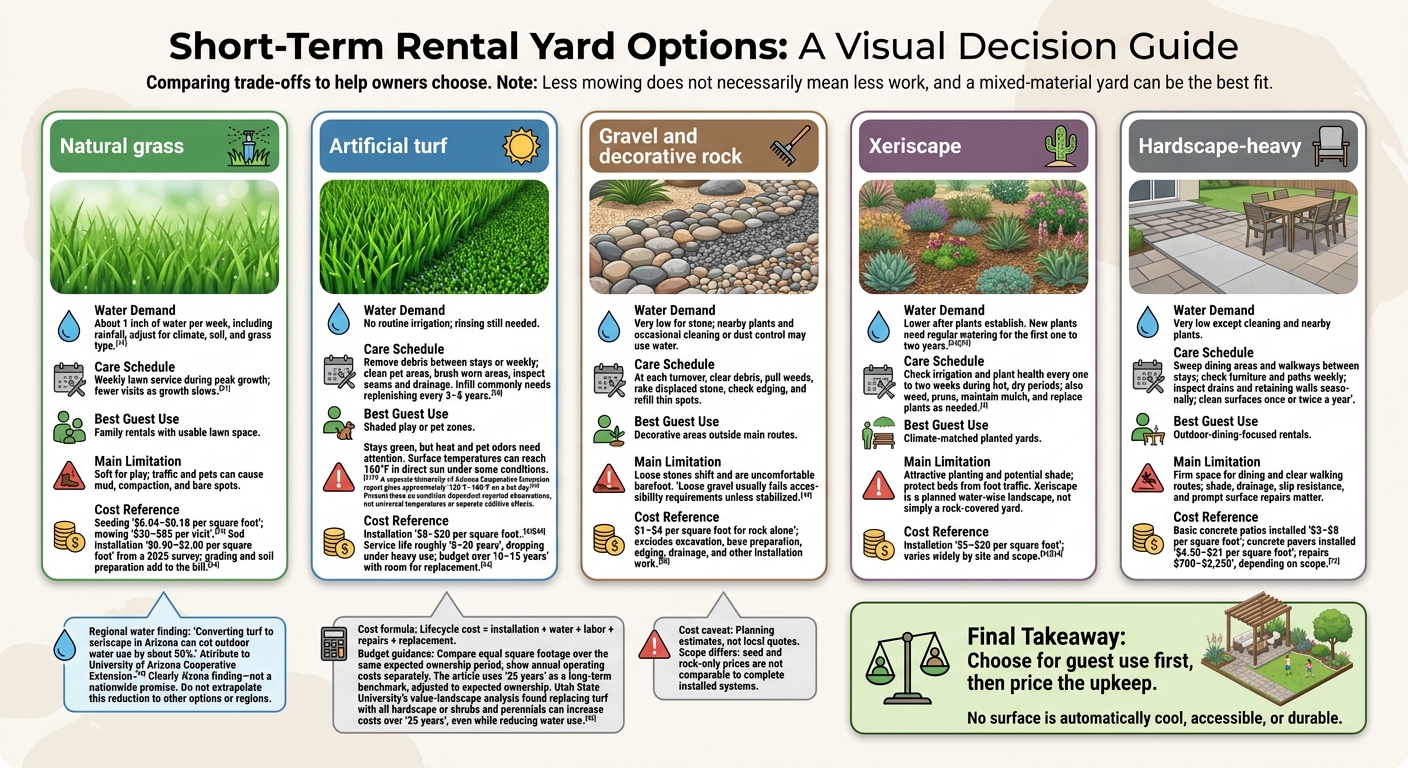
Low-Maintenance Rental Yards: Compare 5 Options
1. Natural Grass
Water Demand
Plan for about 1 inch of water per week, including rainfall, and adjust for climate, soil, and grass type.[7] Use a rain gauge rather than a fixed daily watering schedule. Water early in the morning, inspect sprinkler heads monthly, and consider weather-based or soil-moisture controllers to reduce waste.[4][6][7]
Cool-season grasses suit northern climates; warm-season grasses suit hotter ones.[5] Match the grass to your climate, then schedule irrigation around guest use and local weather. Once watering is set, mowing and turf health account for the rest of the work.
Maintenance Frequency
Budget for weekly lawn service during peak growth, with fewer visits as growth slows.[8] Follow the grass variety’s recommended mowing height, and never cut more than one-third of the blade at once.[5]
Service should include edging, weed control, leaf removal, and irrigation checks. Use soil tests to guide fertilizing, and schedule aeration or overseeding between bookings. Before installing grass, confirm that local providers can handle both routine visits and urgent repairs.
Guest Appeal and Durability
Grass gives families a soft, cool surface for relaxing and light outdoor activity. But repeated foot traffic can compact the soil and leave mud or thin patches. Keep seating on patios and give guests defined paths to limit wear.
Before installation, check soil texture, compaction, drainage, sunlight, slope, irrigation coverage, and access. Compacted soil restricts water movement, while heavy shade thins turf.[5] Fix the underlying issue before reseeding, and keep guests off repaired areas until roots take hold. Grass can work well with light traffic and suitable conditions, but its cost extends beyond installation to regular care.
Lifecycle Cost
Planning estimates put seeding at $0.04–$0.18 per square foot and mowing at $30–$85 per visit.[9] A 2025 survey put sod installation at $0.90–$2.00 per square foot, with grading and soil preparation adding to the bill.[10]
Request separate bids for grading and soil preparation, irrigation, establishment care, and regular service to keep the lawn guest-ready. Seed costs less upfront but takes longer to establish. Sod gives you immediate coverage – not immediate resistance to heavy traffic.
Include water, seasonal treatments, sprinkler repairs, and recurring patching in your long-term budget. Grass puts comfort first; the next options cut water use and mowing but offer less softness.
sbb-itb-103bddb
7 Landscaping Choices That Make the Yard Easier to Maintain Years Later
2. Artificial Turf
Artificial turf cuts irrigation and mowing compared with grass. But it trades those chores for cleaning, heat management, and professional vacation rental management tasks like periodic repairs.
Water Demand
Artificial turf eliminates routine irrigation. You’ll still need to rinse away dust, pollen, spills, and pet waste. Rinsing also cools the surface, but only briefly. Water savings depend on the lawn it replaces, climate, rainfall, and turf size.[15][16]
Maintenance Frequency
Sweep debris between stays or weekly. Brush worn areas, rinse pet spots, treat odors, pull weeds along the edges, and inspect seams and infill. Infill commonly needs replenishing every 3–5 years.[11] At each turnover, check for odors, lifted edges, and standing water.
Guest Appeal and Durability
Turf stays green and helps keep mud from being tracked indoors. Guest comfort, though, depends on heat control: sun exposure can make turf uncomfortable for guests and pets. Studies have reported surface temperatures as high as 160°F under some conditions.[12][14] In hot climates, pair turf with shade and hardscape paths.
Durability starts with the base. Excavate, grade, and compact a crushed limestone or decomposed granite base, then secure seams and plan drainage. Use a 3–4-inch compacted base, adjusted for site conditions.[11] Choose turf designed for high traffic. Before and after high-occupancy seasons, inspect for matting, fading, open seams, displaced infill, and base settlement.[13][18]
Lifecycle Cost
Industry guidance puts installation at $8–$20 per square foot. Drainage and pet-specific upgrades affect the total.[17][18] Budget over 10–15 years, with room for replacement: service life is roughly 8–20 years and drops under heavy use.[13] Check warranty coverage for UV fading, seams, backing, wear, labor, removal, disposal, replacement, and infill.
3. Gravel and Decorative Rock
Gravel needs less water and weekly care than turf. It works best for paths, borders, and low-traffic areas.
Water Demand
Gravel brings irrigation needs close to zero and removes the need to mow covered areas. Nearby plants may still need watering, so keep rock areas separate from planting beds and aim drip irrigation at plant roots only. Budget for occasional water use to control dust or clean the stone.
Maintenance Frequency
At each turnover, clear debris, pull weeds, rake displaced stone back into place, check edging, and refill thin spots. Use permeable landscape fabric only where it helps separate materials. It won’t stop weeds from growing in debris on the surface.[20]
Guest Appeal and Durability
Angular gravel stays put better than rounded pea gravel. Larger decorative rock works better for accents than main walking routes. Use durable edging to keep stone contained, and keep entry and luggage paths firm and stable. Loose gravel usually fails accessibility requirements unless stabilized.[21] Fine gravel can produce dust, and rock heats up in the sun, making shade and stable seating pads important.
Before installation, check soil drainage, grades, and downspout flow. Gravel alone won’t fix ponding. Prepare a suitable compacted base, and prevent runoff from washing stone onto sidewalks or neighboring property. Steep slopes may need terraces, retaining edges, or plants to hold the soil in place rather than loose rock.[3]
Lifecycle Cost
Plan on $1–$4 per square foot for rock alone as a rough estimate.[22] Itemize excavation, base preparation, fabric, edging, drainage, and five-year upkeep. Include weed removal, storm cleanup, edging repairs, and replacement stone.
4. Xeriscape
Xeriscape is a planned, water-wise landscape – not a yard covered in rocks. It brings together climate-suited plants, soil preparation, mulch, efficient irrigation, and limited turf where guests need space to play. Choose plants that fit the property’s climate, soil, and exposure. This is especially critical for Scottsdale vacation rental management, where desert-hardy species are essential for survival. Xeriscape sits between turf and hardscape: it uses less water than grass and feels softer than rock.
Water Demand
Group plants by water needs, then water each zone separately with drip lines. New plants need regular watering for the first one to two years. As roots develop, water less often and adjust for rainfall.[23][24] Keep moisture-retaining mulch away from trunks and plant crowns. This setup cuts irrigation waste, but plants still need regular care while they get established.
Maintenance Frequency
Check irrigation and plant health every one to two weeks during hot, dry periods, and keep up with weeding and litter removal.[2] Prune based on each plant’s seasonal needs, check drip emitters for clogs, replenish mulch as needed, and replace dead or damaged plants. Keep plant labels and care instructions so crews know how to prune and water each plant.
Guest Appeal and Durability
Choose trees, shrubs, grasses, and flowering perennials that won’t spread aggressively, with blooms at different times of year. This mix adds visual variety and reduces the risk of losing plants because one species fails. Before buying, check mature size and litter production. Avoid prominent thorns, irritating sap, strong allergens, and aggressive spread near guest areas.
Protect delicate beds from furniture and foot traffic, keep sightlines open, and retain a small lawn only where guests are likely to use it.
Lifecycle Cost
Published installation estimates range from $5–$20 per square foot, with costs varying widely by site and scope.[24][23] Ask for itemized bids covering turf removal, soil work, plants, irrigation, and mulch.
Compare five-year costs, including establishment watering, pruning, plant replacements, and irrigation repairs. Xeriscape can reduce recurring expenses, but a short ownership period may not leave enough time to recover the upfront investment. For less planting and watering, compare it with hardscape-heavy yards.
5. Hardscape-Heavy Yards
Hardscape-heavy yards mean less plant care, but more attention to surfaces, drainage, and repairs.
Water Demand
Patios, concrete, pavers, and paths usually need little or no irrigation. Nearby plants, cleaning, and dust control may still use water.
Concrete and sealed pavers shed runoff, so direct water away from foundations and low spots. Where site conditions allow, use permeable pavers, drainage swales, or rain gardens. Permeable pavement stores stormwater and lets it soak into the ground, but sediment and debris can clog it.[26][31]
Maintenance Frequency
Sweep dining areas and walkways between guest stays. Check furniture and paths weekly, inspect drains and retaining walls seasonally, and clean surfaces once or twice a year.
Remove weeds from joints early, and refill eroded joints with the material specified for the system. Avoid pressure washing that strips out joint sand. Permeable systems need periodic vacuum cleaning.[27][29][31]
Seal conventional surfaces only when the manufacturer recommends it. Film-forming sealers can block permeable pavement.[33]
Guest Appeal and Durability
Use hardscape for shaded dining, a stable grill pad, and clear paths – not paving for its own sake. For short-term rentals, this usually creates more usable outdoor space with less daily upkeep. Dark surfaces can overheat, while light surfaces can cause glare. Add shade and choose textured, slip-resistant finishes near wet areas.
Hardscape provides firm, level walking routes that can be repaired. Fix rocking pavers, lifted edges, and settled concrete promptly. Individual pavers can often be replaced, while damaged concrete may need larger repairs.[28][30][32]
Lifecycle Cost
HomeAdvisor lists installed costs of $3–$8 per square foot for basic concrete patios and $4.50–$21 per square foot for concrete pavers. Repairs can cost $700–$2,250, depending on the scope.[34] When comparing options, account for recurring cleaning, joint replacement, resealing, drainage repairs, and snow or ice care.
Before accepting a bid, confirm that it includes excavation, grading, a compacted aggregate base, edging, and drainage. Check permit requirements for patios, retaining walls, and stormwater changes. Walls that support slopes may need engineering and drainage behind them.
Plan electrical work for lighting or outlets before installing the base. Poor preparation can turn a low-care yard into repeated settlement and repair work.
Compare Yard Care, Comfort, and Costs
The tables below compare the five yard types profiled above across the trade-offs that matter most for short-term rentals. Compare how guests will use the yard – not just how it looks. Ratings are relative. Climate, shade, drainage, pets, occupancy, and local rates all affect upkeep and cost.
| Yard option | Water Demand | Care Frequency | Main Recurring Tasks | Guest Appeal | Guest-Use Durability | Climate or Site Limitations | Upfront Cost Level | Main Cost Drivers | Best-Fit Property Type |
|---|---|---|---|---|---|---|---|---|---|
| Natural grass | High in hot, dry regions; moderate in wetter climates | Frequent during growth; between-stay checks | Mowing, edging, watering, waste removal | Comfortable play space when healthy | Traffic and pets can create bare spots | Unsuitable sun exposure | Low–moderate; site-dependent | Water, labor, lawn repair | Family rentals with usable lawn space |
| Artificial turf | Low; cleaning uses water | Between-stay checks; periodic cleaning | Waste removal, rinsing, brushing, infill care | Consistently green; heat affects comfort | Seams, matting, concentrated wear | Direct sun | Moderate–high | Cleaning, infill, repairs, replacement | Shaded play or pet zones |
| Gravel and rock | Very low for stone; nearby plants determine total demand | Between-stay checks; weeding and raking | Debris removal, weeds, redistribution | Dry-climate visual appeal | Shifts under traffic | Erosion on slopes | Low–moderate | Weed control, labor, replenishment | Decorative areas outside main routes |
| Xeriscape | Low–moderate after establishment | Regular plant and irrigation checks; seasonal care | Weeding, pruning, drip checks | Attractive planting and potential shade | Plants need protection from traffic | Local plant suitability | Moderate–high | Establishment, pruning, plant replacement | Climate-matched planted yards |
| Hardscape-heavy | Very low directly; nearby plants vary | Between-stay checks; periodic surface care | Sweeping, cleaning, joint and drain checks | Useful dining and seating space | Depends on base, drainage, repairs | Runoff management | Moderate–high | Surface repairs, joints, drainage | Outdoor-dining-focused rentals |
Water use is only part of the decision. Each yard type has different watering needs during establishment and regular use.
Water Needs by Climate
University of Arizona Cooperative Extension reports that converting turf to xeriscape in Arizona can cut outdoor water use by about 50%[35]. That finding applies to the region – it’s not a nationwide promise.
| Option | Establishment Water | Regular Water Needs | Climate Caveats |
|---|---|---|---|
| Natural grass | Water while seed or sod establishes | Irrigation during dry periods | Rainfall and restrictions affect demand |
| Artificial turf | None | Rinsing for dust, waste, odors | Cooling from rinsing is temporary |
| Gravel and rock | None for stone; new plants need water | Little for stone; planted borders vary | Dry-climate plants may need irrigation |
| Xeriscape | Regular watering until roots establish | Lower demand with suitable plants and irrigation | Drought tolerance does not ensure climate suitability |
| Hardscape-heavy | None for paving; new plants need water | Cleaning and adjacent plant irrigation | Trees and planters determine irrigation demand |
Routine Care and Seasonal Inspections
Use between-stay checks and a service schedule based on climate. Not every yard needs weekly service. Check more often after pet stays, heavy occupancy, leaf fall, storms, and extreme weather.
Inspect irrigation, lighting, drainage, weeds, debris, surfaces, settlement, and furniture. Require dated photos after each service visit, plus prompt reports of leaks, pet waste, storm damage, and unsafe surfaces.
| Option | Routine Tasks | Seasonal Tasks | Inspection Triggers |
|---|---|---|---|
| Natural grass | Mow, edge, remove waste, check irrigation | Adjust watering; aerate or overseed where appropriate | Mud, bare patches, heavy traffic, drought |
| Artificial turf | Remove debris and waste; clean pet areas; brush; redistribute infill; check seams and drainage | Deep clean; check matting, odors, and infill; repair seams | Odors, puddles, lifted edges, extreme heat |
| Gravel and rock | Rake debris; pull weeds; sweep paths; check edging and depth | Replenish rock; correct erosion or settlement; check drainage | Storms, exposed edging, stone on paths |
| Xeriscape | Check drip lines and plant health; weed; prune; clear debris | Adjust irrigation; replace plants; renew mulch; prune; check weather damage | Leaks, wilting, frost, erosion |
| Hardscape-heavy | Sweep; check joints, drains, furniture, and lighting | Clean appropriately; reseal or repair where required; check freeze-thaw damage; secure furniture before storms | Standing water, movement, slick surfaces, storms |
Easy upkeep doesn’t guarantee a yard will be comfortable or easy to use.
Guest Comfort, Wear, and Accessibility
| Option | Family/Pet Use | Dining and Play | Accessibility | Heat Exposure | Guest-Related Wear | Regional Limits |
|---|---|---|---|---|---|---|
| Natural grass | Good when dry, clean, healthy | Picnics and casual play | Soft or muddy ground hinders wheels | Depends on sun and moisture | Compaction, digging, bare areas | Humid-region disease pressure |
| Artificial turf | Needs waste removal and drainage | Casual play; check temperature first | Base, transitions, and infill affect travel | Can become dangerously hot in direct sun | Matting, odors, seam damage | Exposed hot-climate sites |
| Gravel and rock | Uncomfortable barefoot | Better outside play areas | Loose stone hinders mobility devices | Heats in direct sun | Scattering, displacement | Storm erosion |
| Xeriscape | Keep thorny, toxic, or fragile plants away from activity areas | Outdoor rooms; protect beds from traffic | Keep firm routes separate from beds | Shade depends on plant maturity | Trampling, broken plants | Freeze-sensitive species |
| Hardscape-heavy | Practical seating; falls remain a concern | Dining and grilling | Slope and transitions matter | Exposed paving heats up | Stains, furniture wear, damaged edges | Freeze-thaw movement |
No surface is automatically cool, accessible, or durable. Provide shade and firm, stable routes with suitable slopes and transitions. University of Arizona Cooperative Extension reports artificial-lawn surface temperatures of approximately 120°F–180°F on a hot day[25]. Check guest-use areas during hot periods and after storms.
Look beyond the installation price to the total cost over your ownership period.
Installation and Lifecycle Costs
| Option | Installation Requirements | Recurring Expenses | Repair or Replacement Drivers | Local Quote Considerations |
|---|---|---|---|---|
| Natural grass | Soil preparation, grading, seed or sod, irrigation | Water, mowing, fertilizer, weed control | Bare spots, irrigation failures, compaction | Grass species, soil work, irrigation scope |
| Artificial turf | Excavation, base, drainage, edging, seams, infill | Cleaning, brushing, odor control | Seam failure, worn fibers, infill loss | Base, drainage, warranty, replacement disposal |
| Gravel and rock | Grading, drainage, edging, delivery | Weeding, debris removal, redistribution | Migration, erosion, settlement | Rock type, depth, access, delivery |
| Xeriscape | Soil preparation, plants, mulch, irrigation zones | Water, pruning, weeding, plant care | Failed plants, emitter damage, mulch loss | Plant sizes, establishment care |
| Hardscape-heavy | Excavation, base, drainage, paving, required permits | Cleaning, joint care, inspections | Settlement, cracking, drainage failures | Materials, base specifications, site access |
Lifecycle cost = installation + water + labor + repairs + replacement. Compare equal square footage over the same ownership period, and show annual operating costs separately. Use 25 years as a long-term benchmark, adjusted to how long you expect to own the property.
Get two or three local quotes covering the same scope. Include applicable water and sewer charges, guest-use intensity, a storm contingency, and a replacement allowance. Utah State University’s value-landscape analysis found that replacing turf with all hardscape or shrubs and perennials can increase total costs over 25 years, even while reducing water use[19].
Pros and Cons of Each Yard Option
Compare these yard options based on how guests use the space, the local climate, and the upkeep you can provide.
| Yard Option | Main Advantages | Main Drawbacks | Best-Fit Rental |
|---|---|---|---|
| Natural grass | Soft, familiar space for play and family time | Frequent upkeep, seasonal changes, mud, and bare spots | Family rentals with usable lawn space |
| Artificial turf | Stays green without mowing or routine irrigation | Needs cleaning; pet odors, heat, installation costs, and eventual replacement | Compact rentals with shade and reliable cleaning |
| Gravel and decorative rock | Uses very little water; works best in borders and low-traffic areas | Scattered stones, debris, discomfort under bare feet, and unstable footing | Dry-climate rentals with stable paths and seating |
| Xeriscape | Plants suited to the climate; lower water use once established | Watering during establishment, pruning, weeding, and plant replacement | Water-conscious rentals with locally suited plants |
| Hardscape-heavy yards | Makes small yards usable for dining and lounging | Higher construction costs; drainage, heat, stains, and repairs need attention | Urban or entertainment-focused rentals |
Conclusion: Match the Yard to the Property
Use the comparison above to choose a yard that fits the property. Balance water use, upkeep, guest comfort, and long-term cost with the climate, site conditions, guest use, inspection frequency, and access to reliable local vendors. Compare costs over the full expected ownership period, not just installation.
After completing the site checks, confirm water restrictions, HOA rules, short-term rental rules, stormwater requirements, and fire-safety limits before approving the design. If the property needs mixed surfaces, combine the five yard options in a hybrid layout. Keep lawn where it serves a purpose.[1][37]
Put the chosen yard on a standing service plan. Document vendor duties and service timing, schedule work between bookings, and inspect paths, irrigation, lighting, and furnishings after checkout. Plan seasonal checks and tasks before peak occupancy, including freeze protection, storm cleanup, or wildfire mitigation when needed.[36]
Rank One Stays can coordinate maintenance, housekeeping, and damage claims to keep yard care consistent between stays. Qualified local providers should still handle landscaping design and installation. Aim for the lowest-care yard that fits the climate, guest use, and property character.
FAQs
Which yard option works best for a pet-friendly rental?
Artificial turf works best for pet-friendly rentals. It’s durable, easy to clean, and helps keep muddy paws from tracking dirt indoors. Unlike natural grass, it doesn’t need mowing or watering, and it stays neat despite pet activity.
Rank One Stays offers professional management and staging to help your rental stand out. The team also handles maintenance and cleaning so your yard stays ready for guests.
How can I phase yard upgrades without disrupting bookings?
Schedule yard upgrades during periods that are already blocked or have low demand. Maintenance blocks don’t count as available nights, so keep owner-blocked nights to a minimum to keep pricing and availability data accurate. Use dynamic pricing to reduce gaps between bookings (“orphan nights”).
Rank One Stays coordinates cleaning, maintenance timing, and guest support to help protect bookings, the guest experience, and ratings while upgrades happen in phases.
How do I calculate the payback period for replacing grass?
Divide the total installation cost – materials, labor, and professional design fees – by the annual savings to calculate the payback period in years. Factor in lower water bills, reduced recurring landscaping costs, and any potential increase in rental revenue from improved curb appeal.
Rank One Stays offers expert guidance on property improvements that help maximize rental revenue and investment returns.