
A well-maintained vacation rental keeps guests happy, reduces costs, and protects your investment. Regular appliance upkeep prevents breakdowns, ensures safety, and complies with legal requirements like California’s AB 628, effective in 2026. This checklist organizes tasks by frequency – daily, monthly, seasonal, and annual – covering everything from refrigerators to HVAC systems. Key benefits include fewer repairs, better reviews, and meeting guest expectations.
Key Maintenance Tips:
- Between Stays: Test appliances, clean lint traps, and check for leaks.
- Monthly: Inspect GFCI outlets, clean dishwasher filters, and check HVAC filters.
- Seasonal: Deep clean fridge coils, inspect dryer vents, and service HVAC systems.
- Annually: Flush water heaters, schedule professional HVAC servicing, and inspect electrical systems.
Pro Tip: Use a digital log to track appliance details and maintenance schedules. Smart tools like leak detectors and subscription services for filters can simplify upkeep. If managing this feels overwhelming, professional property management services can handle everything for you, ensuring smooth operations and guest satisfaction.
How to Use the Appliance Maintenance Checklist
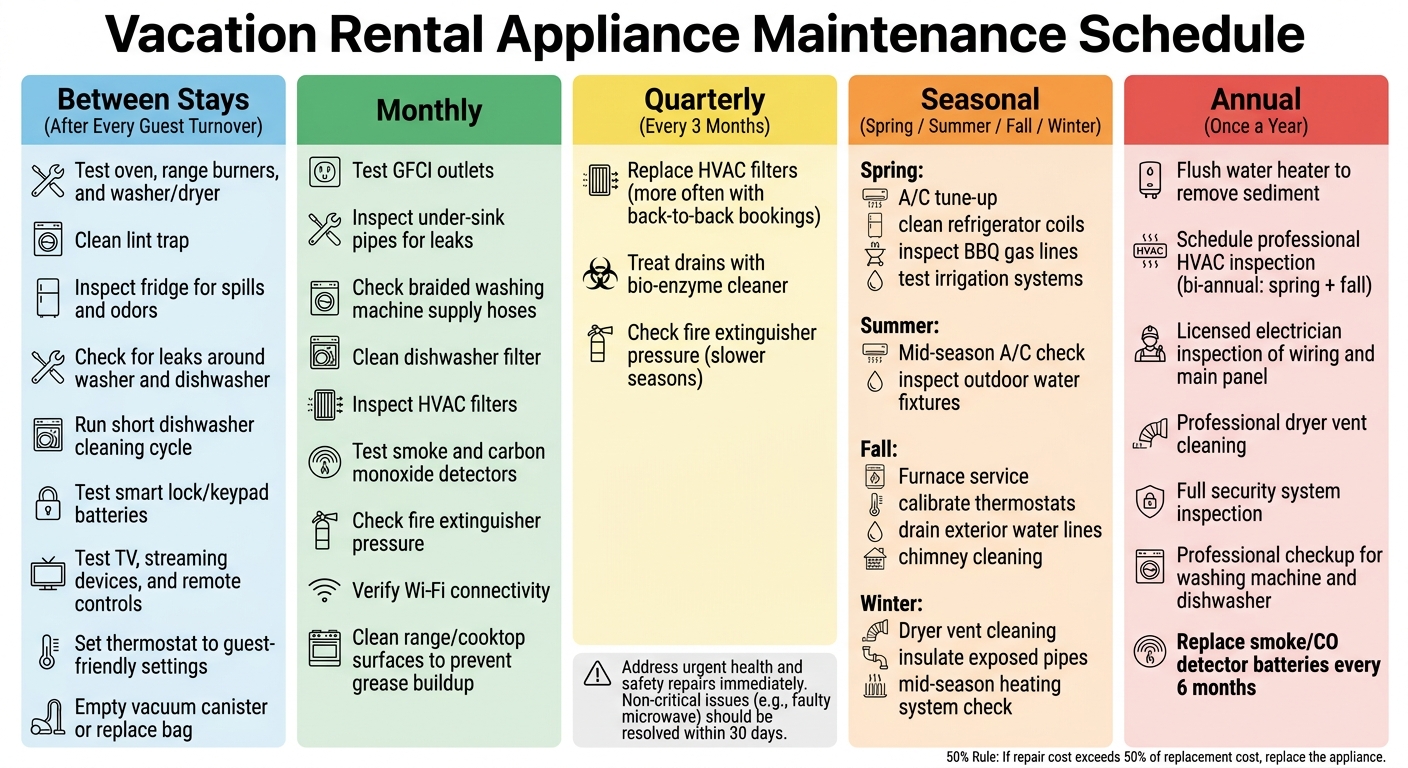
Vacation Rental Appliance Maintenance Schedule by Frequency
This checklist is designed to be a practical tool for daily turnovers, monthly inspections, and seasonal preparations, ensuring every maintenance task is accounted for.
Maintenance Cadence Categories
Each task is grouped into one of five intervals, helping you prioritize and plan effectively:
| Cadence | When It Happens | Example Tasks |
|---|---|---|
| Between Stays | After every guest turnover | Test oven and washer/dryer, check for debris |
| Monthly | Once a month | Test GFCI outlets, inspect under-sink pipes |
| Quarterly | Every 3 months | Replace HVAC filters, treat drains with bio-enzyme cleaner |
| Seasonal | Spring, fall, or before peak seasons | Deep-clean fridge coils, inspect dryer vents |
| Annual | Once a year | Flush water heater, schedule professional HVAC inspection |
Address urgent health and safety repairs immediately. For less critical issues, like a faulty microwave, aim to resolve them within 30 days [2].
Incorporating these cadence categories into your routines will make property upkeep more manageable and efficient.
Adding the Checklist to Your Operations
Integrating the checklist into your workflow is key. Assign turnover tasks to cleaning crews and set up recurring monthly or quarterly maintenance for property managers.
Consider using smart tools to simplify operations. For instance:
- Install a smart thermostat and water leak detectors.
- Maintain a centralized digital log for appliance details.
- Use subscription services for HVAC filters to ensure timely replacements.
"The most successful property managers understand that waiting for things to break is a failing strategy. The key to maximizing occupancy and revenue lies in shifting from reactive fixes to a proactive, systematic maintenance approach." – Gethostai.com [4]
If in-house scheduling feels overwhelming, professional management can help ensure every task is handled promptly.
Professional Management Support
For managers juggling multiple responsibilities, a full-service rental management company, like Rank One Stays, can take over appliance maintenance. From regular housekeeping checks to coordinating repairs and tracking inventory, they ensure nothing falls through the cracks.
sbb-itb-103bddb
Core Kitchen Appliance Maintenance Checklist
Keeping your kitchen appliances in top shape is essential, especially in vacation rentals where the kitchen often becomes a central hub for guests. Regular maintenance not only ensures smooth operation but also helps prevent small issues from turning into expensive repairs.
Refrigerator and Freezer Maintenance
The refrigerator is one of the hardest-working appliances in any rental. After each guest stay, inspect it for spills, odors, or signs of wear. Twice a year, pull the unit away from the wall to check for hidden water leaks that could damage floors or subflooring [1]. A reliable refrigerator is key to maintaining a well-equipped rental.
"proactive vacation rental maintenance is the foundation of a successful vacation rental business." – Central Oregon Vacation Homes [1]
Range, Oven, and Cooktop Maintenance
Every six months, test all burners and ovens to ensure they heat evenly and maintain proper temperatures [1]. If you have a gas range, inspect the gas line connections for any wear or leaks to prevent safety hazards. Don’t forget to clean the surfaces monthly to avoid grease buildup, which can stain cooktops and surrounding counters [3].
Microwave and Dishwasher Maintenance
Before every guest stay, check that the microwave is working properly. For dishwashers, run a short cleaning cycle after each stay and clean the filter once a month. Most dishwasher filters are easy to remove – just twist them out from the bottom of the tub. These simple steps keep the kitchen running efficiently and ensure guests have a hassle-free experience.
Small Kitchen Appliance Maintenance
Small appliances like toasters and coffee makers also need attention. Clean out the toaster tray regularly, and descale the coffee maker as needed – especially in areas with hard water. Inspect power cords for signs of fraying or damage; if a cord is worn, replace the appliance immediately [6].
"Build-up can cause inefficiency and breakdowns." – Standard TV & Appliance [6]
To help guests use appliances correctly, provide a printed kitchen guide with clear instructions. This can reduce misuse and extend the life of your appliances [5]. Finally, remember the 50% rule: if repairing an appliance costs more than half the price of a new one, it’s better to replace it [6]. For instance, microwaves typically last 7 to 10 years [6]. Regular checks and smart replacements can save you time and money in the long run.
Laundry and Cleaning Appliance Maintenance Checklist
To keep your rental running smoothly and avoid guest complaints, it’s crucial to stay on top of maintenance for your laundry and cleaning appliances. A broken washer or dryer can lead to frustration, and poorly maintained cleaning tools can slow down your team. A regular maintenance routine helps sidestep these problems.
Washing Machine Maintenance
After each guest checks out, take a moment to inspect the washer. Look around and behind it for any signs of moisture. Monthly, check braided supply hoses for wear to catch potential leaks early [1][3]. Fix minor issues within 30 days, but handle water leaks immediately to avoid bigger problems [2].
Dryer Maintenance
Always clean the lint trap after every guest stay, and schedule a professional vent cleaning once a year to clear out any built-up debris [1]. To ensure guest safety, place a sign near the dryer reminding them to check the lint trap and locate the nearest fire extinguisher [7]. Including a note in your checkout instructions asking guests to report unusual dryer noises can help you catch potential issues early [7].
Don’t forget about the tools that help you keep floors spotless – they need care, too.
Vacuum and Floor-Care Equipment Maintenance
Vacuums and floor-care tools often get overlooked, but clogged filters or damaged parts can make cleaning less effective. After every turnover, empty the vacuum canister or replace the bag, and check the filter – clean it based on the manufacturer’s instructions [1]. Look over the equipment for any physical damage, like cracks or frayed cords, and replace items that are too worn to work efficiently.
"When it comes to vacation rentals with the guest favorite badge, their average cleanliness rating soars to 4.98. That’s a significant jump from the average rating of 4.73 for hosts without the badge." – Scott Sage, Senior Vice President, Marketing & Customer Experience, AirDNA [8]
Keeping your laundry and cleaning appliances in good shape is essential for meeting guest expectations and maintaining high cleanliness standards.
Comfort, Entertainment, and Safety Appliance Maintenance
Beyond keeping the kitchen and laundry appliances in top shape, ensuring the upkeep of comfort, safety, and entertainment systems is just as important. These elements play a huge role in delivering a seamless guest experience, and even small issues can disrupt the impression of a five-star stay.
HVAC-Related Appliance Maintenance
Check HVAC filters every month and replace them at least every three months – or more often if you have back-to-back bookings [9][1]. A dirty filter not only strains the system but also increases energy costs and worsens air quality. To stay ahead of potential problems, schedule a professional HVAC service once a year, preferably before peak seasons. This way, you’re not scrambling for help when technicians are in high demand. During turnovers, set the thermostat to guest-friendly settings, double-check programming, and replace batteries as needed.
"The first thing I noticed after going digital was that my cleaners started flagging issues they would have previously messaged me about and forgotten. When it goes into a work order, someone has to close it." – Short-Term Rental Portfolio Manager, 19-Property Airbnb and VRBO Portfolio [9]
Safety Device and Lock Maintenance
Smoke and carbon monoxide detectors should be tested monthly, and their batteries replaced every six months. Don’t wait for the dreaded chirping sound – by then, it could already disturb your guests’ stay.
"A smoke detector chirping at 3 AM generates the kind of review that costs future bookings." – Miratag [10]
Fire extinguishers also need regular attention. Check their pressure and expiration dates monthly during busy seasons and quarterly during slower months [10]. At every turnover, test smart locks or keypad batteries to avoid any lockout situations, and inspect manual locks on doors and windows to ensure they’re secure [9][10].
Entertainment Electronics Maintenance
Before new guests arrive, test TVs, streaming devices, and Wi-Fi routers. Replace remote control batteries and make sure all accounts are logged in and ready to use. Something as small as dead remote batteries can lead to late-night calls for help.
"Change remote control batteries (we know this seems excessive, but when you get the call at 10 pm for new batteries in the middle of peak season, you’ll wish you had!)" – Scenic Stays [11]
A digital guestbook that includes the Wi-Fi password, TV instructions, and troubleshooting tips can also cut down on repetitive questions and help maintain great reviews [12].
| Frequency | HVAC & Comfort | Safety Devices | Entertainment |
|---|---|---|---|
| Every Turnover | Set thermostat; check batteries [9] | Test smart lock or keypad batteries [9] | Test TV/streaming devices; check remotes [9] |
| Monthly | Inspect HVAC filters [9] | Test smoke/CO detectors; check extinguisher pressure [9][10] | Verify Wi-Fi connectivity [9] |
| Every 6 Months | – | Replace smoke/CO detector batteries [9] | – |
| Annually | Professional HVAC service; duct cleaning [9][1] | Full security system inspection [1] | – |
Seasonal and Annual Appliance Maintenance
While daily and monthly upkeep keeps things running smoothly, some maintenance tasks are better suited for specific times of the year. Seasonal adjustments allow you to address environmental factors and ensure appliances remain efficient and reliable.
Seasonal Maintenance Tasks
Every season comes with its own maintenance priorities. In spring, it’s all about preparing for the heat. Have your A/C system inspected by a professional before temperatures climb, replace HVAC filters, and clean refrigerator coils to improve energy efficiency during the warmer months. This is also a great time to inspect gas lines for outdoor grills and test irrigation systems.
In fall, the focus shifts to heating and preparing for winter. Schedule a furnace or heat pump service, calibrate thermostats, and drain exterior faucets and sprinkler lines to prevent freezing. If your property includes a fireplace, fall is the perfect time for a chimney cleaning. Moving into winter, mid-season heating system checks are essential, along with insulating exposed pipes in unheated spaces like attics or crawl spaces. Winter is also peak time for clothes dryer use, making it crucial to clean dryer vents to prevent fire hazards [1][13].
These seasonal efforts not only enhance daily maintenance but also set the stage for smoother annual servicing.
| Season | Primary Focus | Key Tasks |
|---|---|---|
| Spring | Cooling & Exterior | A/C tune-up, clean refrigerator coils, inspect BBQ gas lines, test irrigation systems |
| Summer | Cooling & Refrigeration | Mid-season A/C check, inspect outdoor water fixtures |
| Fall | Heating & Safety | Furnace service, calibrate thermostats, drain exterior water lines, chimney cleaning |
| Winter | Safety & Efficiency | Dryer vent cleaning, insulate exposed pipes, mid-season heating system check |
Annual Professional Servicing
Some maintenance jobs are best left to the experts. For example, flushing the water heater annually helps remove sediment buildup, which can harm efficiency and reduce the appliance’s lifespan. It’s also wise to have a licensed electrician inspect your wiring, main panel, and ensure everything is up to code once a year [4].
"A single faulty outlet or an overloaded circuit isn’t just an inconvenience; it’s a serious safety risk that can lead to property damage, guest injury, and significant legal and financial repercussions." – GetHostAI [4]
HVAC systems benefit from bi-annual professional servicing – once in spring to prepare for cooling and again in fall to ensure heating is ready. This includes checking refrigerant levels, cleaning coils, and inspecting electrical components [1][4]. Additionally, high-use appliances like washing machines and dishwashers should get a professional checkup annually.
To avoid downtime during busy periods, schedule these services during your off-season. Smart thermostats and leak detectors can also help you monitor your appliances remotely, making it easier to stay on top of maintenance [4].
Tracking, Budgeting, and Replacement Planning
Regular maintenance is important, but tracking and budgeting for your appliances can make a huge difference in extending their lifespan and keeping your guests happy. While seasonal and annual servicing keeps things running, knowing the age, condition, and replacement cost of your appliances can separate proactive landlords from those constantly playing catch-up.
Building an Appliance Inventory
Start by creating a detailed spreadsheet. Organize it by room and include every appliance – from the fridge to the coffee maker. For each item, note the make, model, purchase date, warranty expiration, and keep a digital folder with scanned receipts, photos, and instruction manuals for easy reference [14].
To make things easier, divide your inventory into two categories: must-haves (like refrigerators, stoves, and HVAC systems) and nice-to-haves (like wine coolers or gaming consoles). This way, you can prioritize spending when something inevitably needs replacing [14]. And don’t forget to involve your cleaning crew or property manager – they can flag damaged or underperforming appliances during turnovers. An inventory is only useful if it’s kept up to date [15].
"Proactive attention to some key areas around your home can help you avoid costly repairs." – Travelers [3]
With more than 6 million active Airbnb listings today, having well-maintained appliances is one of the easiest ways to stand out and secure those five-star reviews [15]. A reliable inventory helps you plan for replacements without scrambling at the last minute.
Budgeting for Appliance Replacements
Budgeting for replacements is easier when you work backward from each appliance’s expected lifespan. For example, a refrigerator typically lasts 10–15 years, a washer or dryer 8–12 years, and a dishwasher about 9–10 years. Since vacation rentals often see heavier use, it’s smart to plan for the shorter end of these ranges. To set aside funds, divide the appliance’s replacement cost by its remaining useful years to calculate an annual reserve.
Be sure to document every purchase with receipts and photos. Not only does this keep your inventory accurate, but it also simplifies insurance claims if needed [3]. Staying informed about local regulations is another key step – compliance is becoming increasingly tied to proper appliance upkeep, not just guest satisfaction.
If all this feels overwhelming, companies like Rank One Stays can handle the heavy lifting for you. They manage everything from tracking your inventory to coordinating with vendors and planning replacements, so you can focus on running your rental business smoothly.
Conclusion: Keeping Appliance Maintenance Simple
Regular and straightforward maintenance can save you from unexpected repair bills. Tasks like cleaning coils, descaling coffee makers, and checking smoke detectors not only prevent emergencies but also cut costs and improve guest satisfaction.
This checklist provides a clear roadmap to stay on top of appliance care. Knowing what needs attention and when helps you protect your property, your investment, and your reputation.
Making Maintenance Easier with Professional Help
While these steps simplify maintenance, professional management can make the process even smoother. Juggling maintenance schedules and coordinating with vendors can quickly become overwhelming. That’s where professional vacation rental management steps in to lighten the load. A dedicated team can handle preventive care, provide 24/7 emergency support, and ensure compliance with regulations – like California’s AB 628, effective January 1, 2026, which requires landlords to maintain functional stoves and refrigerators or risk the unit being deemed uninhabitable [2].
Rank One Stays integrates all of this into their full-service approach, with management fees starting at just 10%. Property owners partnering with Rank One Stays see 38% higher revenue than the market average, thanks to efficient operations, improved guest experiences, and fewer unexpected expenses. Whether your rental is in Scottsdale, Denver, Pittsburgh, or Lighthouse Point, consistent appliance care is a small detail that makes a big difference. By sticking to this checklist and leveraging professional expertise, you ensure your property remains a standout rental while protecting your investment.
FAQs
What’s the fastest way to set up a maintenance schedule for a new vacation rental?
The fastest way to create a maintenance schedule is by using vacation rental management software to automate tasks. Begin by crafting a thorough checklist that covers everything from quarterly appliance inspections to seasonal upkeep. The software allows you to assign tasks, set deadlines, and send notifications to service providers, streamlining the entire process. This method saves time, minimizes manual work, and helps maintain your property in top shape.
Which appliance issues should be treated as emergencies vs. fixed later?
Emergency appliance problems are the ones that either threaten guest comfort or create safety hazards. For instance, a broken refrigerator, a leaking dishwasher, or a dryer with excessive lint buildup (a potential fire hazard) all demand quick action. On the other hand, smaller issues, like minor glitches, can typically wait to be addressed later. While regular maintenance can help avoid these emergencies, focusing on urgent repairs is key to keeping guests happy and safeguarding your property.
How do I budget for appliance replacements in a high-use short-term rental?
To plan for appliance replacements in a high-use short-term rental, it’s important to consider how long key appliances typically last. For example, refrigerators usually last 10–18 years, dishwashers around 7–12 years, and washers and dryers between 10–14 years. Given the heavy use in rentals, it’s smart to set aside funds with these ranges in mind, factoring in the extra wear and tear. While regular maintenance can help extend their lifespan, keep an eye out for warning signs like unusual noises or leaks. Being proactive ensures smooth operations and keeps your guests happy.