
Vacation rental maintenance is all about staying ahead of problems before they impact guests or your wallet. A structured approach can reduce repair costs by 34% and prevent the 72% of complaints tied to unresolved issues before check-in. Here’s the core of what you need to know:
- Routine Inspections Save Money: Reactive repairs cost 4.2x more than preventative fixes.
- Organize Tasks by Frequency:
- Monthly: Test alarms, inspect for leaks, replace keyless entry batteries.
- Seasonal: Change HVAC filters, clean gutters, inspect outdoor spaces.
- Annual: Flush water heaters, check chimneys, deep clean carpets.
- Between-Stay Essentials: Clean thoroughly, sanitize high-touch areas, test systems (Wi-Fi, keyless locks, appliances), and document property conditions with photos.
- Digital Tools Help: Platforms like Breezeway streamline task tracking, reduce missed issues, and improve efficiency.
- Professional Management Boosts Revenue: Properties under professional care earn 38% more on average.
Key takeaway: A proactive maintenance system protects your property, enhances guest satisfaction, and avoids costly emergencies. Whether you manage tasks yourself or hire professionals, consistency and organization are critical.
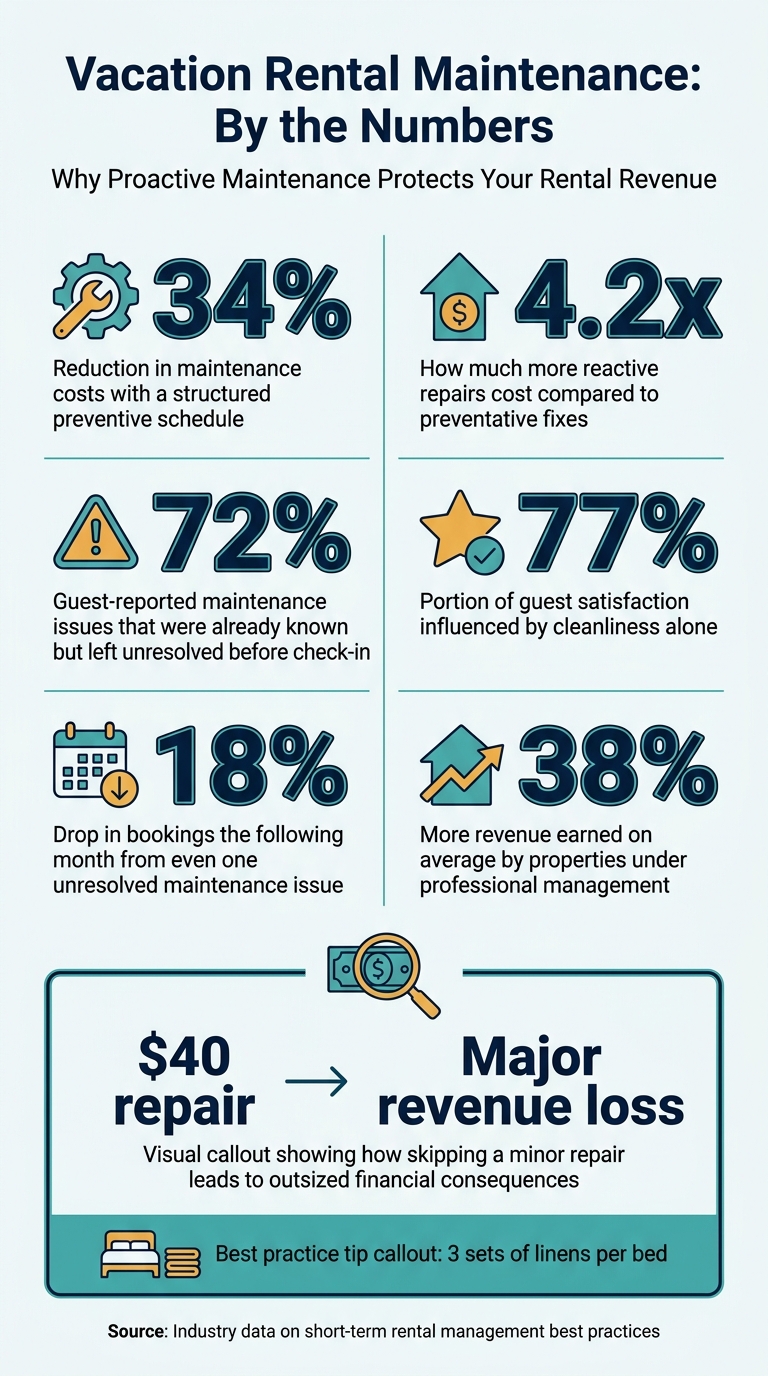
Vacation Rental Maintenance: Key Stats & Cost-Saving Facts
Maximizing Vacation Rental Cleaning Checklists with Breezeway: Pro Tips & Strategies
sbb-itb-103bddb
Building a Vacation Rental Maintenance System
A well-organized maintenance system can turn last-minute chaos into a smooth, predictable process. By assigning tasks, setting deadlines, and maintaining records, you can keep your properties in top shape without the stress.
Organizing Maintenance Tasks by Frequency
The easiest way to structure your system is by grouping tasks based on how often they need attention. For example, between-stay tasks focus on the guest experience – checking appliances, testing smart locks, and looking for leaks under sinks. Beyond these turnovers, tasks can be divided into monthly, seasonal, and annual categories.
| Frequency | Key Maintenance Tasks |
|---|---|
| Monthly | Test alarms and detectors, inspect faucets for leaks, check keyless entry batteries, clean garbage disposal, and look for pests. |
| Seasonal | Change HVAC filters, clean dryer vents, wash outdoor furniture, inspect gutters, and check the driveway for cracks. |
| Annual | Flush the hot water heater, inspect the chimney/fireplace, rotate mattresses, inspect window seals, and oil wood furniture. |
Monthly tasks can often be scheduled alongside regular cleaning turnovers. This allows cleaners or inspectors to handle both housekeeping and maintenance checks in one visit, saving time and effort.
Once tasks are grouped by frequency, you can further tailor your checklist to meet the specific needs of each property. For owners who prefer a hands-off approach, professional vacation rental management services can handle these schedules and inspections on your behalf.
Standardizing and Customizing Your Checklist
Start with a general checklist that applies to all your properties. Then, add specific tasks based on each property’s unique requirements. For instance, a beach house near the Florida coast might need regular checks for salt corrosion on outdoor fixtures, while a mountain cabin in Colorado might require seasonal winterization. Organizing tasks by zones – like Kitchen, Bathrooms, Bedrooms, Exterior, and Mechanical – makes the checklist easier to follow and reduces the chance of missing anything [1].
A well-structured checklist works best when paired with tools that help track and manage tasks efficiently.
Tools for Tracking Maintenance
Digital tools are a game-changer for keeping up with maintenance. Unlike paper lists or text messages, a digital system ensures timely updates and better record-keeping. Industry data shows that using digital preventative maintenance tracking can reduce average costs by 34% [1].
"The first thing I noticed after going digital was that my cleaners started flagging issues they would have previously messaged me about and forgotten. When it goes into a work order, someone has to close it." – Short-Term Rental Portfolio Manager [1]
Smart home devices can also boost efficiency. For example, Ecobee or Nest thermostats let you monitor temperatures remotely and send alerts between stays [3]. Flo by Moen leak detectors can even shut off the water supply automatically if a major leak occurs, helping to prevent costly damage [3].
To stay organized, maintain a centralized digital folder containing appliance model numbers, warranty details, and time-stamped inspection photos. This simplifies repairs and speeds up insurance claims when problems arise [3].
Between-Stay Turnover and Inspection Checklist
The short 2–4 hour window between check-out and check-in is a critical time for vacation rental hosts. Why? Because cleanliness alone influences 77% of guest satisfaction [4].
Interior Cleaning and Reset
A room-by-room cleaning approach ensures no detail is overlooked. Start with the kitchen: sanitize countertops, clean appliances inside and out, scrub the stove and hood vents, and ensure all dishes and utensils are washed and stored. Replace kitchen sponges with a fresh one for every turnover – this small step helps avoid negative feedback [4].
In bathrooms, disinfect toilets, sinks, tubs, and showers thoroughly. Polish chrome fixtures and clear any clogged drains. Bedrooms require fresh linens for every stay, so strip all bedding and replace it. Don’t forget to dust headboards, ceiling fans, and hidden spots like behind nightstands. A smart tip? Keep three sets of linens per bed – one for use, one in storage, and one in the wash – to handle back-to-back bookings seamlessly [4].
Living areas need vacuuming under sofa cushions, sanitizing of remote controls, and dusting of baseboards. Arrange pillows and décor neatly to create a welcoming look, a key element of effective vacation rental design. High-touch surfaces – like doorknobs, light switches, thermostats, and cabinet handles – should be sanitized before the next guest arrives. Once cleaning is complete, move on to a quick check of operational systems [1].
Safety and Systems Checks
After cleaning, it’s time to ensure everything works as it should. Test keyless entry systems and check keypad battery levels to avoid lockout issues [1]. Use a mobile device to confirm Wi-Fi is working at normal speeds in the main living areas. Set the thermostat to a comfortable temperature for incoming guests [1].
Inspect GFCI outlets and check the electrical panel for any tripped breakers. Replace burnt-out lightbulbs, especially in entryways and outdoor areas. Run a quick cycle on appliances like the dishwasher and washer/dryer to confirm they’re operational, and clear the dryer’s lint trap. Ensure the refrigerator is maintaining a temperature between 35–38°F [1].
"A maintenance issue that exists but is not resolved in that window becomes a guest experience problem within hours – and unlike a hotel, there is no front desk to absorb the complaint. There is only the review." – Liam Neeson, OxMaint [1]
| System Category | Essential Turnover Check |
|---|---|
| Security | Test keyless entry and check keypad batteries [1] |
| Utilities | Verify Wi-Fi speed and thermostat settings [1] |
| Electrical | Test GFCI outlets and check for tripped breakers [1] |
| Appliances | Clear dryer lint traps and confirm fridge temperature (35–38°F) [1] |
| Lighting | Replace burnt-out bulbs, especially in entryways [1] |
Exterior and Outdoor Amenities
Don’t stop at the front door. Sweep patios and sidewalks, remove bird droppings or pollen from outdoor furniture, and check cushions for dampness [4]. For properties with pools, clear debris and confirm chemical levels are balanced. In warmer locations, outdoor amenities can heavily influence guest reviews, so these details matter [4].
After inspecting outdoor spaces, document their condition and inventory levels to avoid overlooking anything.
Damage and Inventory Documentation
Before every guest arrives, document the property’s condition with timestamped "before" and "after" photos. This helps distinguish guest-caused damage from pre-existing wear and tear – especially important for filing damage claims [1].
Restocking supplies is equally important. Stick to minimum inventory levels to ensure guests have what they need without the property running short.
| Item | Restocking Minimum | Purpose |
|---|---|---|
| Toilet Paper | 2 rolls per stay | Avoids one of the most common guest complaints [4] |
| Toiletries | At least 60% full | Anything less feels reused [4] |
| Kitchen Sponge | 1 brand-new sponge | Replace every turnover [4] |
| Trash Bags | 3 spare bags per bin | Encourages guests to manage trash [4] |
| Coffee/Tea | 2 cups per guest per day | Prevents the host from seeming stingy [4] |
| Laundry Detergent | Enough for 4 loads | Supports longer stays without extra requests [4] |
Tools like Breezeway and Turno simplify the documentation process by letting cleaners upload photos to a task dashboard and flag inventory shortages in real time. Issues remain open until resolved, ensuring everything is guest-ready before the next check-in. These thorough checks protect both guest satisfaction and the property’s condition.
Recurring Maintenance Checklist by Frequency
Turnover checks are great for keeping your property guest-ready between stays, but they’re just the tip of the iceberg. To truly protect your property and avoid costly repairs, you need a recurring maintenance schedule that tackles tasks by frequency.
Weekly Maintenance Tasks
Weekly maintenance goes beyond turnover inspections, targeting high-use areas like bathrooms, kitchens, and living spaces. These spaces need regular attention to catch potential issues before they escalate. For example, check all light fixtures and replace any burnt-out bulbs promptly – LED bulbs are a smart choice since they last longer and require fewer replacements [2]. Also, test the thermostat and confirm the Wi-Fi is working smoothly, as tech glitches are a common guest frustration [2].
Don’t forget outdoor spaces. Clean BBQ grills, clear firepits of debris, and inspect patio furniture for wear or dampness [2][5]. A weekly inventory of essentials like toilet paper, paper towels, and dishwashing detergent ensures you’re always stocked up and ready for the next guest [5].
Monthly Maintenance Tasks
Monthly tasks are all about preventing wear and tear on your property’s systems and appliances. Start with HVAC filters – these should be inspected and replaced every month, especially in homes with pets or during high-usage seasons. This keeps air quality high and prevents strain on the system [1].
Check for leaks under sinks, around water lines, and at faucets. Water stains on ceilings or walls could signal hidden plumbing issues [1]. Appliances need attention, too. Run cycles on dishwashers and washing machines, clean refrigerator coils and door seals, and test GFCI outlets to ensure they’re functioning properly [1]. Take this time to review your linen and towel inventory, swapping out any worn items that could leave a bad impression on guests [6].
| Category | Monthly Task | Why It Matters |
|---|---|---|
| HVAC | Replace air filters | Prevents strain on the system and improves air quality [1] |
| Plumbing | Inspect for leaks under sinks | Detects water damage early [1] |
| Safety | Test smoke detectors and GFCI outlets | Ensures guest safety and compliance [1] |
| Appliances | Clean fridge coils and run dishwasher cycle | Extends appliance life [1] |
| Linens | Replace worn towels and sheets | Keeps guests happy and improves reviews [6] |
While monthly tasks handle routine upkeep, quarterly and annual maintenance focuses on deeper, long-term care.
Quarterly and Annual Maintenance
Quarterly maintenance helps address issues that develop gradually over time. This includes cleaning dryer vents, clearing gutters, conducting exterior safety inspections, and scheduling pest control visits [1][2]. If you’re not replacing HVAC filters monthly, make sure to replace them at least quarterly to maintain system efficiency and air quality [2].
Annual tasks take an even deeper dive into property care. Schedule professional HVAC servicing, flush the water heater, inspect chimneys and fireplaces, and deep clean carpets and rugs to remove allergens and stains [2][1]. Keep an eye on your appliance repair history – if something like a dishwasher has needed multiple repairs in a short period, replacing it may save you money in the long run [1]. Following a structured maintenance schedule can cut overall maintenance costs by up to 34% [1].
If managing all these tasks feels overwhelming, consider working with Rank One Stays. They can simplify your workflow and keep your vacation rental in excellent shape.
Coordinating Maintenance with Housekeeping and Management
Keeping a rental property in top shape requires more than just completing tasks – it’s about ensuring they’re done on time and in sync. When housekeeping and maintenance teams work in isolation, important issues can get overlooked. Bridging these workflows is what sets consistently high-rated properties apart from those constantly dealing with last-minute fixes.
Assigning Roles and Responsibilities
Every task on your maintenance checklist needs a specific person in charge. Here’s how responsibilities typically break down:
- Housekeepers: Manage turnovers and report any issues they notice.
- Technicians: Handle repairs related to structural, mechanical, or electrical problems.
- Owners: Oversee scheduling, budgets, and vendor relationships.
The tricky part? The handoff. Let’s say a cleaner notices a leaking faucet and sends a quick text. If that text gets lost in the shuffle, the issue doesn’t get fixed. Turning that initial flag into a formal work order – with a vendor assigned and a due date – solves this problem.
If juggling multiple vendors feels overwhelming, consider working with a full-service management company like Rank One Stays. They handle everything from coordinating housekeeping to dispatching vendors, ensuring nothing gets missed.
Once roles are clearly defined, the next step is integrating them into a single, streamlined workflow to resolve issues efficiently.
Managing the Maintenance Workflow
Think of every checkout as a built-in inspection opportunity and every check-in as a firm deadline for resolving issues. This approach keeps everyone on track. Housekeepers should document problems with photos instead of relying on verbal communication, and technicians should provide "after" photos to confirm the job is done.
"The first thing I noticed after going digital was that my cleaners started flagging issues they would have previously messaged me about and forgotten. When it goes into a work order, someone has to close it." – Short-Term Rental Portfolio Manager, 19-Property Airbnb and VRBO Portfolio [1]
Switching from informal text threads to a centralized digital platform can make all the difference. A digital checklist takes less than 8 minutes to complete per turnover [1], and catching issues during inspections – rather than after a guest complains – can save significantly on repair costs. This kind of coordination ensures no task is missed, reinforcing the value of a well-maintained property.
| Workflow Element | Text Threads | Digital Platform |
|---|---|---|
| Issue Tracking | Lost in message history; no formal assignment | Logged as a work order with assigned vendor and due date |
| Verification | Verbal confirmation only | Timestamped sign-off and photo documentation required |
| Oversight | Separate threads per property | Live dashboard showing all open tasks across the portfolio |
| Recurring Faults | Patterns rarely noticed | Auto-flags assets with multiple failures in a short period |
Budgeting and Long-Term Planning
A well-organized workflow doesn’t just keep repairs on schedule – it also lays the groundwork for smarter financial planning. Digital records make it easy to track repair history, helping you spot trends. For example, if a dishwasher has needed repairs twice in one season, it’s probably time to replace it instead of scheduling another service call.
Use these records to build an annual budget that includes recurring costs like HVAC servicing, carpet cleaning, and safety equipment updates. It’s also wise to set aside 1–2% of the property’s value for unexpected repairs. Properties that stick to a preventive maintenance schedule typically cut overall maintenance costs by 34% [1], which protects your long-term return on investment.
Conclusion and Key Takeaways
Keeping your vacation rental in top shape isn’t just about aesthetics – it’s about protecting your revenue, reviews, and long-term investment. Did you know that 72% of guest-reported maintenance issues were already known but left unresolved before check-in? [1] That’s a staggering number, highlighting why a solid maintenance plan is so important. Plus, having a structured schedule can reduce maintenance expenses by 34% and eliminate costly reactive repairs, which can be 4.2 times more expensive [1].
Even one unresolved issue can have a ripple effect, potentially slashing your bookings by 18% the following month [1]. And skipping a seemingly minor $40 repair? That could end up costing you far more in lost revenue. If you’re an Airbnb Superhost, you already know that maintaining your property is directly tied to retaining that coveted status – and the extra bookings it brings.
For those looking for smoother operations, Rank One Stays offers a solution. Their maintenance workflows help property owners simplify tasks and increase revenue, with clients earning an average of 38% more than the market – all with management fees starting at just 10%.
Whether you handle maintenance yourself or bring in professionals, having a proactive and well-documented system is non-negotiable. It’s the key to protecting your rental’s reputation, keeping guests happy, and ensuring your property remains profitable for years to come.
FAQs
What’s the easiest way to set up a maintenance schedule for my rental?
The simplest approach is to rely on a structured checklist or a digital tool to simplify inspections and keep track of tasks. You can either use a pre-made checklist or design one specifically for your property’s needs. Set up regular inspections – whether monthly or after guest stays – and utilize apps to track progress efficiently. Modify your schedule as needed based on your property’s condition and feedback from guests to stay ahead of maintenance issues and enhance their experience.
What should I always check during the 2–4 hour turnover window?
During the 2–4 hour turnover window, it’s crucial to focus on cleaning and sanitizing the property from top to bottom. Pay special attention to surfaces, bathrooms, and kitchens to ensure they are spotless and hygienic. Check that linens are fully stocked and rotated, and make sure all supplies are neatly organized. High-touch areas should be a top priority to balance speed with quality. To keep everything running smoothly, consider using automated checklists and tracking the cleaning team’s performance – this can help ensure consistency and efficiency during this tight timeframe.
When does it make sense to hire Rank One Stays for maintenance and housekeeping?
If you’re looking for a hassle-free way to manage your vacation rental, hiring Rank One Stays is a smart choice. They take care of everything – from round-the-clock guest support to property maintenance and maximizing your rental income. This is perfect for property owners in Scottsdale, Denver, Pittsburgh, or Lighthouse Point who want dependable, full-service management that increases revenue while keeping their property in top shape.