
Airbnb interior design can directly impact your earnings by increasing nightly rates, boosting occupancy, and enhancing guest satisfaction. A well-designed space attracts more bookings, stands out in listings, and handles wear and tear effectively. Here’s what you need to know when hiring a designer:
- Experience Matters: Choose someone with vacation rental expertise. They understand guest needs, durability, and market trends.
- Portfolio Check: Look for designs that balance function, style, and durability. Avoid generic or overused themes.
- Market Knowledge: Designers should use data to tailor designs to your target audience and location.
- Durability Focus: Opt for commercial-grade furniture, performance fabrics, and materials like quartz or LVP flooring.
- Guest Comfort: Prioritize layouts that maximize usability and include thoughtful touches like USB ports, layered lighting, and practical entryways.
- Budget and ROI: Expect to spend $5,000 per room on furniture and decor. Designers may charge hourly ($100–$300) or flat fees ($3,000+). Ensure they can demonstrate measurable results, such as increased ADR or occupancy.
Investing in the right designer can lead to higher revenue, better guest experiences, and reduced maintenance costs. Always ask for references, clear timelines, and a detailed contract to protect your investment.
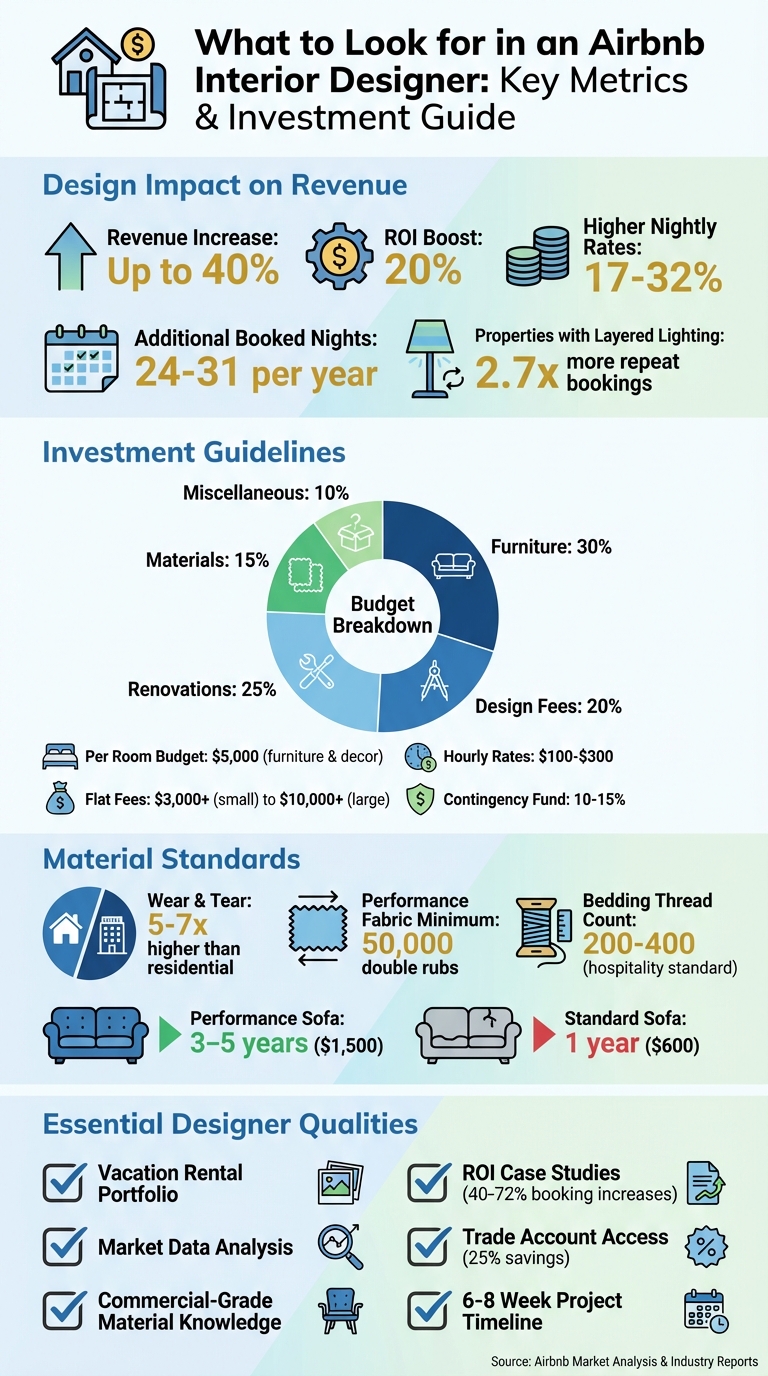
Airbnb Interior Design ROI and Key Investment Guidelines
Top Airbnb Designer Reveals 13 Things To Remove From Your home RIGHT NOW
Experience with Vacation Rental Design
Designing for vacation rentals is a whole different ball game compared to residential spaces. While residential designers focus on creating cozy, long-term family homes, vacation rental designers must consider the extraordinary challenges of short-term stays: 5–7 times more wear and tear, a variety of guest preferences, and the need for eye-catching listing photos that grab attention instantly [4]. These factors are critical because they directly influence guest satisfaction and, ultimately, your revenue.
"Designing for short-term rentals isn’t about filling rooms with furniture. It’s about creating an intentional experience that leaves guests feeling calm, cared for, and connected" [9].
Beatrice Tokayer of BRT Interior Design highlights the importance of durability and functionality in these spaces. For example, she opts for commercial-grade fabrics that can withstand over 50,000 double rubs, solid wood furniture that lasts, and carefully designed micro-zones to accommodate different guest activities [9].
Choosing the wrong designer can be costly. Someone without experience in vacation rentals might select fabrics that stain easily or fragile décor that won’t survive multiple guest stays. In contrast, a seasoned vacation rental designer knows to prioritize performance fabrics like Crypton or Sunbrella, washable rugs, and open shelving that prevents guests from leaving behind forgotten items [9][10].
The visual appeal of your property is just as important as its functionality. Designers with expertise in this field understand that listing photos need to stand out – often in the form of bold, statement pieces like murals, hanging chairs, or striking chandeliers that pop even in thumbnail images [9][11]. Their ability to balance aesthetics with practicality is what sets them apart, and their portfolio will speak volumes.
Portfolio of Vacation Rental Projects
When evaluating a designer, always ask to see their portfolio of vacation rental-specific projects. Residential designs, no matter how elegant, don’t necessarily translate to the demands of short-term rentals. A well-rounded portfolio should showcase designs that balance durability, functionality, and visual appeal. Look for contract-grade furniture, performance materials, and standout focal points that encourage guests to share photos of your property [9][11].
Avoid designs that rely on overused local clichés – like vintage skis in every mountain cabin. Instead, skilled designers will add a creative twist that makes your property memorable and distinct from the competition [7]. Their work should also reflect a deep understanding of operational efficiency, with thoughtful touches like labeled remotes, accessible storage solutions, and layouts that make cleaning and turnovers faster [9][11]. A portfolio isn’t just about style – it’s a window into a designer’s ability to merge aesthetics with the practical needs of a rental.
Knowledge of Current Market Trends
The vacation rental market changes quickly, and staying ahead of these shifts can make or break your property’s success. The best designers keep up with emerging trends and incorporate them into their work. This includes adding biophilic elements, local art, and multi-sensory details like textured fabrics, white-noise machines, or subtle scent diffusers [9][11][6].
Beyond aesthetics, top designers use a data-driven approach. They analyze local competitor performance and guest demographics to tailor their designs to your market. This strategy can lead to impressive results, such as a 64% increase in occupancy rates or a 40% boost in average daily rates [2]. A designer who can explain their research process and how they adapt trends to your property’s unique needs will likely deliver far better results than one who simply follows their own preferences.
Guest-Centric Design Principles
Creating a standout vacation rental goes beyond aesthetics – it’s about crafting an experience that feels effortless and welcoming for your guests. At the heart of this approach is understanding who your guests are. Families, business travelers, and couples all have different expectations, and tailoring your design to their needs can significantly improve their stay.
For instance, small touches like bedside lamps with built-in USB ports add convenience [9]. Ensuring pathways are at least 36 inches wide creates a sense of openness [2]. Thoughtful lighting design – combining ambient, task, and accent lighting – can make a space feel warm and inviting. In fact, properties with layered lighting see 2.7 times more repeat bookings compared to those with generic setups [9][4].
Next, let’s look at how smart layouts can enhance guest comfort.
Layouts That Maximize Guest Comfort
A well-designed layout is key to making guests feel at ease. This means carefully arranging spaces to meet the needs of your visitors. Designers often use what Tokayer calls "micro-zones" – dedicated areas within a room for specific activities like socializing, working, or unwinding [9]. For example, angling chairs in the living area encourages conversation, while a quiet corner with a desk can cater to business travelers. Adding a cozy reading nook with appropriate lighting can also elevate the space.
Don’t underestimate the importance of sleep. Providing medium-firm mattresses, clean white sheets, lightweight quilts, and a mix of pillow types (two soft and two firm per bed) ensures a comfortable rest [9]. The entryway is another area that deserves attention. A clutter-free space with a bench for shoes and hooks for coats or bags makes a great first impression.
"When the entryway feels intentional and welcoming, guests carry that sense of calm through the rest of the home" [9].
Lighting plays a crucial role, too. Using warm LEDs (between 2,700K and 3,500K) creates a soothing atmosphere that encourages relaxation [9]. A professional designer can craft a lighting plan that balances functionality with ambiance, using ambient lighting for general glow, task lighting for focused activities, and accent lighting to highlight unique features [9][4].
Once comfort is covered, it’s time to focus on creating unforgettable moments.
Creating Memorable Guest Experiences
To stand out, your property needs to offer those Instagram-worthy moments that guests can’t wait to share. Properties with distinctive, cohesive designs can charge 17–32% higher nightly rates [4]. Think about bold, eye-catching elements like a mural, a hanging rattan chair, or a statement chandelier that photographs beautifully [9][3].
Incorporating local touches can make the experience even more special. Regional art, locally made crafts, and color palettes inspired by the surroundings – like sandy hues for a beach house or earthy tones for a mountain retreat – add a sense of place [5][3]. However, avoid overdone clichés, like vintage skis in every mountain cabin [7]. Multi-sensory details, such as textured fabrics, subtle lavender or eucalyptus scents, and white-noise machines, can further enhance the stay [9].
Every thoughtful detail helps create a stay that guests will remember – and recommend.
Durability and Functionality in High-Traffic Spaces
Vacation rentals face wear and tear at a rate 5–7 times higher than typical homes, with constant guest turnover putting every item to the test [4]. A skilled interior designer understands this challenge, focusing on materials and layouts that can withstand heavy use while still impressing your next guest.
Durability isn’t just about saving on replacements – it’s about safeguarding your revenue. A worn-out sofa or a scratched table doesn’t just cost money to fix; it can also lead to unhappy guests. By designing with durability in mind, you can reduce maintenance downtime while keeping your property appealing to visitors. Below, let’s explore some material choices that protect your investment without compromising on style.
Choosing Low-Maintenance Materials
The right materials can make all the difference in shielding your property from frequent use. For upholstery, performance fabrics like Crypton and Sunbrella are excellent choices. These fabrics should have a minimum "double rub" count of 50,000 (measured by the Wyzenbeek method), which indicates their ability to endure wear. As Brian Sekerak from WRF Design Center explains:
"A $1,500 performance sofa may last 3–5 years in a guest-intensive environment, while a $600 standard fabric option might need replacement annually" [13].
Dining and living room seating should feature leather or faux leather (vinyl), as these non-porous surfaces are easy to clean [13][15]. For bedding, stick to percale cotton with a thread count between 200 and 400 – the hospitality standard for durability. While higher thread counts may seem more luxurious, they often wear out faster due to thinner yarns.
Flooring is another critical area. Luxury Vinyl Plank (LVP) is a standout option for high-traffic zones. It’s scratch-resistant, water-resistant, and easy to sanitize, outperforming carpet and even hardwood [17]. For tables and case goods, prioritize solid wood or metal frames over particleboard. Trish Khoury, Founder of Grace Interior Designs, notes:
"Some of my favourite materials include solid timber rather than veneers. Veneers scratch and fade, whereas solid timbers add value to the overall aesthetic" [14].
The goal is to create a space that balances durability with a polished, inviting look.
Balancing Aesthetics with Practicality
Great design combines style with functionality. Darker sofa colors and subtle patterns can help disguise wear, while quartz countertops offer a sleek, modern look and resist stains better than marble, which is prone to etching from acidic spills like wine [13][15][17].
Practicality doesn’t have to mean sacrificing style. Furniture with removable, machine-washable cushion covers can extend the life of your pieces without compromising on design [13][16]. Washable rugs from brands like Ruggable offer both elegance and easy maintenance [9]. For outdoor areas, materials like POLYWOOD and teak stand up to weather exposure while maintaining an upscale appearance [17].
When collaborating with a designer for vacation rental design, it’s smart to allocate more of your budget to high-touch items like mattresses, sofas, and dining tables. These are the pieces that directly affect guest comfort and property longevity. Meanwhile, spend less on decorative elements that guests interact with less frequently. This thoughtful approach ensures your investment goes toward items that matter most.
sbb-itb-103bddb
Questions to Ask Potential Designers
It’s essential to ensure your designer understands the specific needs of vacation rentals. Focus on questions that reveal whether they prioritize boosting revenue alongside creating visually appealing spaces.
Experience with Short-Term Rentals
Start with the basics: "What experience do you have designing interiors for short-term rental properties like Airbnbs?" This question helps distinguish designers who understand the unique demands of vacation rentals from those who focus solely on aesthetics. Designers with relevant experience will talk about market research, guest preferences, and booking trends rather than just personal design style [8][17]. They should also explain how they incorporate "Instagrammable moments" – features like striking mural walls or cozy reading nooks that guests love to photograph and share [8][17].
Dive deeper into their space planning strategies. For example, ask if they’ve worked on projects that required creative solutions like custom-built bunk beds to increase guest capacity or divided spaces into micro-zones for different uses [8][9]. Additionally, inquire about their procurement process. A knowledgeable designer should have access to commercial-grade furniture through trade accounts, ensuring durability and long-term value [17][19].
Many traditional designers focus on personal style, which might not align with the revenue-driven goals of a rental property:
"This approach falls short for investment properties where the goal is maximum financial return" [8].
If your property is in a competitive market, like a Denver vacation rental management scenario, confirm that the designer incorporates local competitive data to carve out a niche that maximizes profitability [8].
Finally, address their ability to stick to deadlines and adapt to challenges.
Project Timelines and Flexibility
Ask for a clear timeline and a contingency plan for potential delays. Most turnkey design projects take about 6–8 weeks to complete [18]. However, delays can be expensive. For instance, if your property could earn $1,000 per night and the project runs a month late, you might lose around $15,000 in revenue [1].
If you’re an out-of-town investor, confirm that the designer can handle contractor management and logistics. This is especially important if you’re working with a Scottsdale vacation rental management team or managing properties remotely.
Beyond meeting deadlines, you’ll want to see evidence of measurable results.
Client References and ROI Examples
Ask for "before and after" data that demonstrates how their design choices have impacted key metrics like Average Daily Rate (ADR) and occupancy [20][21]. A designer who understands the business side of vacation rentals should be able to provide specific numbers, not just generic testimonials.
For example, Sukkha Interior Design used a $300 vintage bench and planters to boost booking clicks by 40% and increase the nightly rate by $25, achieving a 3,000% ROI within the first year [20]. Similarly, Laurie Mattson Interiors completed a project in Cabo, Mexico, that led to a 72% increase in bookings and a nightly rate hike of over $150 within 90 days [21].
Request references from past clients who can share how the designer’s work improved guest satisfaction and revenue. Well-designed properties can command 30–50% higher nightly rates compared to more generic ones in the same area [8]. If a designer can’t provide concrete ROI examples, they might not have the expertise needed for a successful vacation rental design project.
Understanding Costs and Contracts
After finding a designer with the right experience and proven results, it’s time to talk pricing and contracts. Just like design can impact your revenue, having clear financial terms ensures your investment is protected. A transparent pricing structure and a strong contract set the stage for a smooth collaboration, leaving no room for misunderstandings.
Common Pricing Models
Designers typically charge in one of two ways: hourly rates or flat-fee packages. Hourly rates usually fall between $75 and $250 per hour, although specialized vacation rental designers may charge anywhere from $100 to $300 per hour [22][23]. This pricing model works well for smaller tasks, like a quick two-hour consultation on color choices. However, it can become risky if the project grows beyond its original scope [22].
Flat-fee packages, on the other hand, provide more predictability, making it easier to plan for your expected returns. For smaller rentals, fees often start around $3,000, while mid-sized properties range between $6,000 and $9,000. Larger homes or projects requiring turnkey services can cost $10,000 or more [24][18]. In addition to design fees, you’ll need to budget approximately $5,000 per room for furniture and decor [18].
"For STR investors, where every invested dollar must be justified by its potential return, predictability isn’t just convenient, it’s essential for business planning." – STR Cribs [22]
Some designers offer trade-only pricing through platforms like HostGPO or Minoan, potentially saving you up to 25% off retail costs [26][23]. Be sure to ask how these discounts are handled – some designers pass the savings directly to you, while others may include a markup [23]. To get a clearer picture of costs, consider this general budget breakdown:
- 30% for furniture
- 20% for design fees
- 25% for renovations
- 15% for materials
- 10% for miscellaneous expenses [23]
It’s also a good idea to set aside an extra 10–15% contingency fund for surprises like structural repairs or price changes [23].
Key Contract Elements
Once you’ve evaluated ROI and set a project timeline, a detailed contract is your next step. A solid agreement should clearly outline the scope of work. This includes everything from initial concept planning to final staging, covering tasks like market analysis, space planning, and procurement [22][18]. Deliverables such as mood boards, detailed floor plans, and itemized shopping lists should also be listed [22][25].
Pay close attention to revision policies. The contract should specify how many revision rounds are included and what additional changes will cost to avoid scope creep [22]. If you’re managing properties from a distance – perhaps through a Denver vacation rental management service – make sure the contract clarifies who handles vendor coordination, delivery tracking, and quality control [18][25].
Most payment schedules require a 50% deposit to secure the project, with the remaining balance due either upon completion or in milestones for larger projects [24][22]. Additionally, ask if the contract includes a pivot strategy. This ensures the designer can suggest cost-effective alternatives if certain selections exceed your budget [25].
The Benefits of Partnering with Rank One Stays
Combined Design and Management Services
Juggling multiple vendors can slow down projects and lead to miscommunication. Rank One Stays solves this problem with an all-in-one approach that takes your property from design to active management without a hitch – all handled by one team.
The process is completely hands-off for property owners. The team takes care of everything, from procurement to coordinating subcontractors, ensuring a smooth transition to management. Once the design phase is complete, professional photography is arranged immediately, so your listing is ready to go live without unnecessary delays. This streamlined system means your property can start earning income from day one, avoiding weeks of back-and-forth with different vendors. Beyond simplifying logistics, this approach also boosts your property’s financial potential.
Take Prima M. from Port Charlotte, FL, for example. In 2024, she launched her first Airbnb with the help of Rank One Stays. By entrusting them with both the design and setup, she secured her first booking just 15 minutes after the listing went live – and her property was fully booked for the first two months. As she shared:
"Guest experience and design are what will set your property apart so it’s worth having experts in your corner!" [27]
Impact on Revenue and Guest Satisfaction
Rank One Stays doesn’t just focus on making properties look good – they focus on making them perform. Their design process is backed by market research, creating "scroll-stopping" listings that rank higher and attract more clicks on booking platforms.
This combination of design and management can lead to impressive results. Properties managed by Rank One Stays often see revenue increases of up to 38%, with overall earnings boosted by 30–50%. Professionally staged rentals can command 20–40% higher rates [27]. Keon P. from Pompano Beach, FL, experienced this transformation firsthand. After months of no bookings, he turned to Rank One Stays for a full redesign and management overhaul. The result? A fully booked calendar. As Keon noted:
"I recommend to anyone searching for property management and/or Airbnb design, Rank One Stays is where you’d want to go. I vouch for them and plan on working with them exclusively moving forward." [27]
Whether you’re setting up in Denver, Scottsdale, Pittsburgh, or Lighthouse Point, combining design and management services ensures your property is ready to perform right from the start. With typical timelines of just 2 to 4 weeks from consultation to a fully furnished, listing-ready property, Rank One Stays makes it easy to hit the ground running [27].
Conclusion
Picking the right interior designer for your Airbnb isn’t just about making a space look good – it’s about creating an environment that attracts bookings and withstands wear and tear. As Justin Miller, Founder of Showplace, explains:
"Design is the second most important factor for the performance of a short‑term rental, right after the choice of investment market and property" [12].
The numbers back this up. Professionally designed rentals can see up to a 40% revenue increase, a 20% boost in ROI, and command 17–32% higher nightly rates. Plus, they often gain 24–31 extra booked nights annually [5][4]. However, with more guests comes more wear, making durable, commercial-grade materials and expert design essential [4].
When choosing a designer, focus on those who understand how to balance style with practicality. Look for professionals who emphasize key investments – like durable mattresses and stain-resistant performance fabrics – while crafting spaces that stand out in photos. Make sure they have experience with vacation rentals, ask for client references with measurable results, and ensure they understand the preferences of your target guests.
FAQs
What are the best ways to design my Airbnb to attract more bookings?
To make your Airbnb stand out and attract more bookings, focus on creating a space that’s both visually appealing and guest-friendly. A well-designed property grabs attention with high-quality photos and a cohesive style that matches what guests are looking for and aligns with current trends. Investing in professional staging and photography can make a big difference, helping your listing get more clicks and, ultimately, more bookings.
Guest comfort is key. Optimize layouts to make the space functional, choose inviting color schemes, and go for durable furnishings that can handle heavy use. Small but thoughtful details, like a welcoming entrance and a consistent design theme, can leave a strong impression on guests. These efforts often translate into better reviews, higher occupancy rates, and a stronger return on your investment.
What should I consider when choosing durable materials for my Airbnb rental?
When choosing materials for your Airbnb rental, focus on durability and low-maintenance options to handle the wear and tear of frequent guest use. Go for fabrics that resist stains, like performance upholstery or treated textiles. For surfaces, quartz countertops and hardwood floors are excellent picks – they’re scratch-resistant and easy to clean, making your job as a host much simpler.
At the same time, aim for furniture and decor that combine style with practicality. Think about pieces with sturdy, reinforced frames or washable slipcovers. This way, your space stays welcoming and cozy while holding up to everyday use over time.
How can I calculate the ROI of hiring an Airbnb interior designer?
To figure out the ROI of hiring an Airbnb interior designer, start by analyzing how your property performed before and after the design updates. Focus on key metrics like occupancy rates, average nightly rates, and total revenue. A thoughtfully designed space can draw in more guests and support higher pricing, ultimately boosting your income.
Another way to gauge potential returns is by researching similar properties in your area that have been professionally designed. Pay attention to details like guest reviews, listing photos, and pricing patterns. The main objective is to weigh the initial investment in design services against the long-term increase in income and improved guest experience they can provide.